
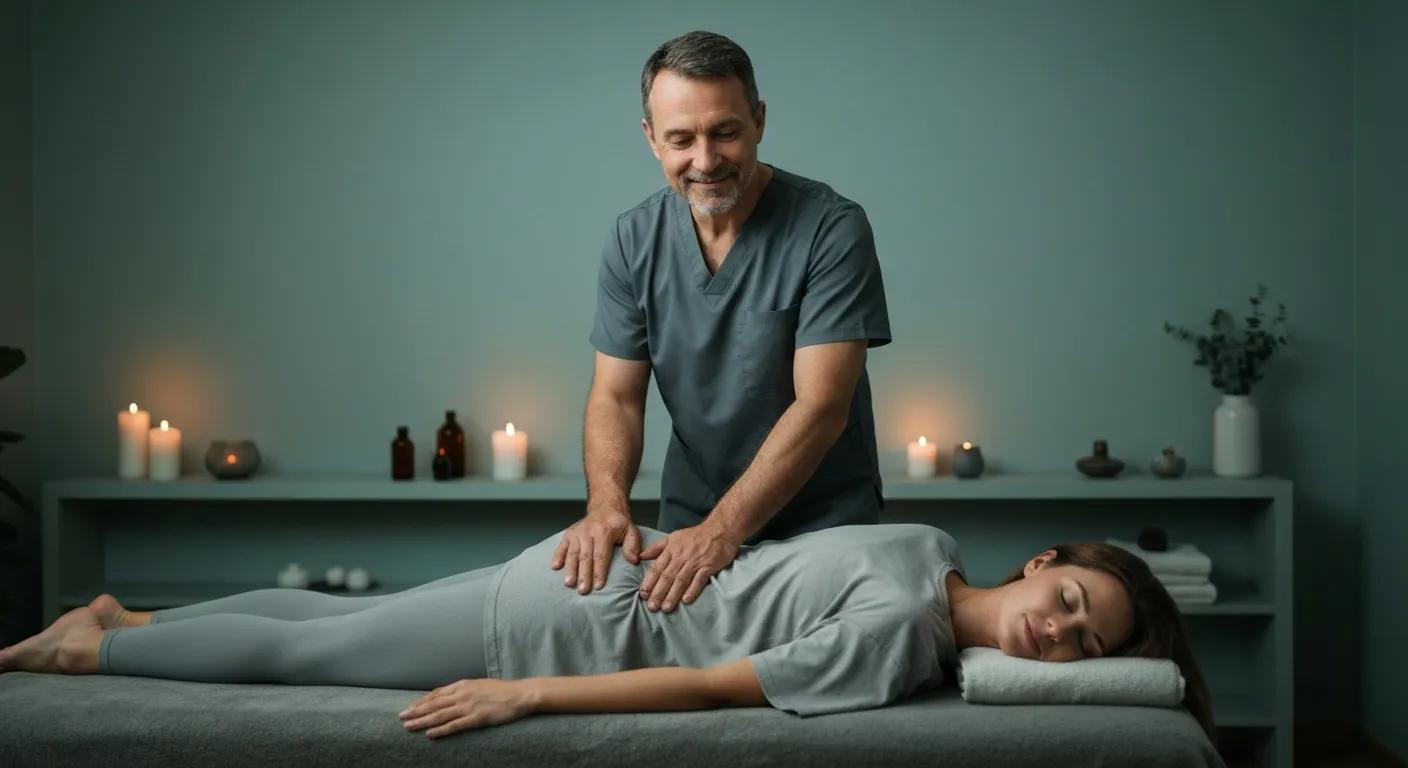
Deep tissue massage and "regular" massage, which usually means Swedish massage, look similar from the outside: a table, a quiet room, a licensed therapist. What happens under the therapist's hands is very different. One is built for relaxation and general tension. The other is built to reach the deeper layers of muscle and connective tissue where chronic pain and old injuries live.
Here's how the two compare, when each one is the right call, and what to expect afterward, from the licensed massage therapists at Get Well Chiropractic of Northville.
The short answer
Regular (Swedish) massage uses long, gliding strokes and light-to-moderate pressure to relax the body and improve circulation. Deep tissue massage uses slower strokes and firm, sustained pressure to reach deep muscle and fascia, release adhesions, and address specific pain. If you want to unwind, choose regular massage. If you have a stubborn knot, a nagging injury, or pain that stretching hasn't touched, deep tissue is usually the better fit.
Regular massage: what it is and when to choose it
Swedish massage is the classic style most people picture. The therapist uses long, flowing strokes, kneading, and gentle circular movements over the superficial muscle layers. The goals are relaxation, better blood flow, and relief from everyday tension: the stiff shoulders after a long week, the general "I need to reset" feeling.
Choose it when you're mainly after stress relief, you're new to massage and want a gentle introduction, or you have a condition that calls for lighter pressure.
Deep tissue massage: what it is and when to choose it
Deep tissue massage targets the deeper layers of muscle and the fascia around them. The therapist works slowly, using fingers, thumbs, knuckles, forearms, or elbows to apply firm, concentrated pressure along the grain of the muscle. The aim is to break up adhesions, the rigid bands of tissue that form after injury or long-term strain, and restore normal movement and blood flow.
Choose it for chronic neck, shoulder, or lower back pain; recovery from a sports injury or a car accident; limited range of motion; postural tension from desk work; or muscle recovery after hard training. It's also a natural partner to chiropractic care: releasing the muscles around the spine helps adjustments hold longer.
Side by side
| Feature | Regular (Swedish) massage | Deep tissue massage |
|---|---|---|
| Primary goal | Relaxation and stress relief | Pain relief and injury recovery |
| Pressure | Light to moderate | Firm to intense |
| Technique | Long, gliding strokes | Slow, concentrated strokes |
| Target | Superficial muscle layers | Deep muscle layers and fascia |
| Sensation | Generally soothing | Can be "comfortably uncomfortable" |
| Best for | Tension, stress, general wellness | Chronic pain, knots, injuries, mobility |
Does deep tissue massage hurt?
It shouldn't. Firm pressure on a tight muscle can feel intense, and many people describe it as a "good hurt," but sharp or unbearable pain is a signal to speak up, and a good therapist will ease off immediately. Communication is part of the treatment. Tell your therapist what you're feeling, and they'll adjust the pressure to your comfort.
What to expect afterward
Some soreness for a day or so after a deep tissue session is normal, much like the feeling after a good workout. Drinking water, gentle movement, and a warm bath can help. Regular massage rarely leaves any soreness at all.
Who should be cautious with deep pressure
Deep tissue massage isn't for everyone. If you have a history of blood clots or a clotting disorder, osteoporosis, an active cancer diagnosis, open wounds or a skin infection, or if you're pregnant, tell your therapist before the session. Gentler techniques may be the right choice, or you may need clearance from your physician first. Our therapists take a health history before your first visit for exactly this reason.
Which one is right for you?
Often the answer is a blend: a session that opens with lighter work to warm the tissue, then goes deeper where you need it. Our massage in Northville is therapeutic and clinically informed, so it works in concert with your chiropractic care rather than as a stand-alone spa visit. Every plan starts with an assessment. If you're an athlete, our guide to athletic deep tissue massage goes further.
Patients from Northville, Novi, Plymouth, and Livonia can call (248) 465-0000 to book with one of our licensed massage therapists.
Frequently asked questions
Is deep tissue massage better than regular massage?
Neither is "better"; they solve different problems. Regular massage is best for relaxation and everyday tension; deep tissue is best for chronic pain, adhesions, and injury recovery.
How often should I get a deep tissue massage?
It depends on your goals. For chronic tension or injury recovery, a regular cadence works best; we'll recommend a schedule during your visit.
Can I combine massage with chiropractic care?
Yes. Massage relaxes the muscles around the spine so adjustments hold longer and you recover faster. Many of our patients do both under one roof.
The information provided in this article is intended for educational purposes only and does not constitute medical advice, diagnosis, or a treatment plan. It is not intended to replace the guidance of a licensed healthcare professional. Individual results vary, and all care decisions should be made in consultation with a qualified provider who can evaluate your specific health history and needs.