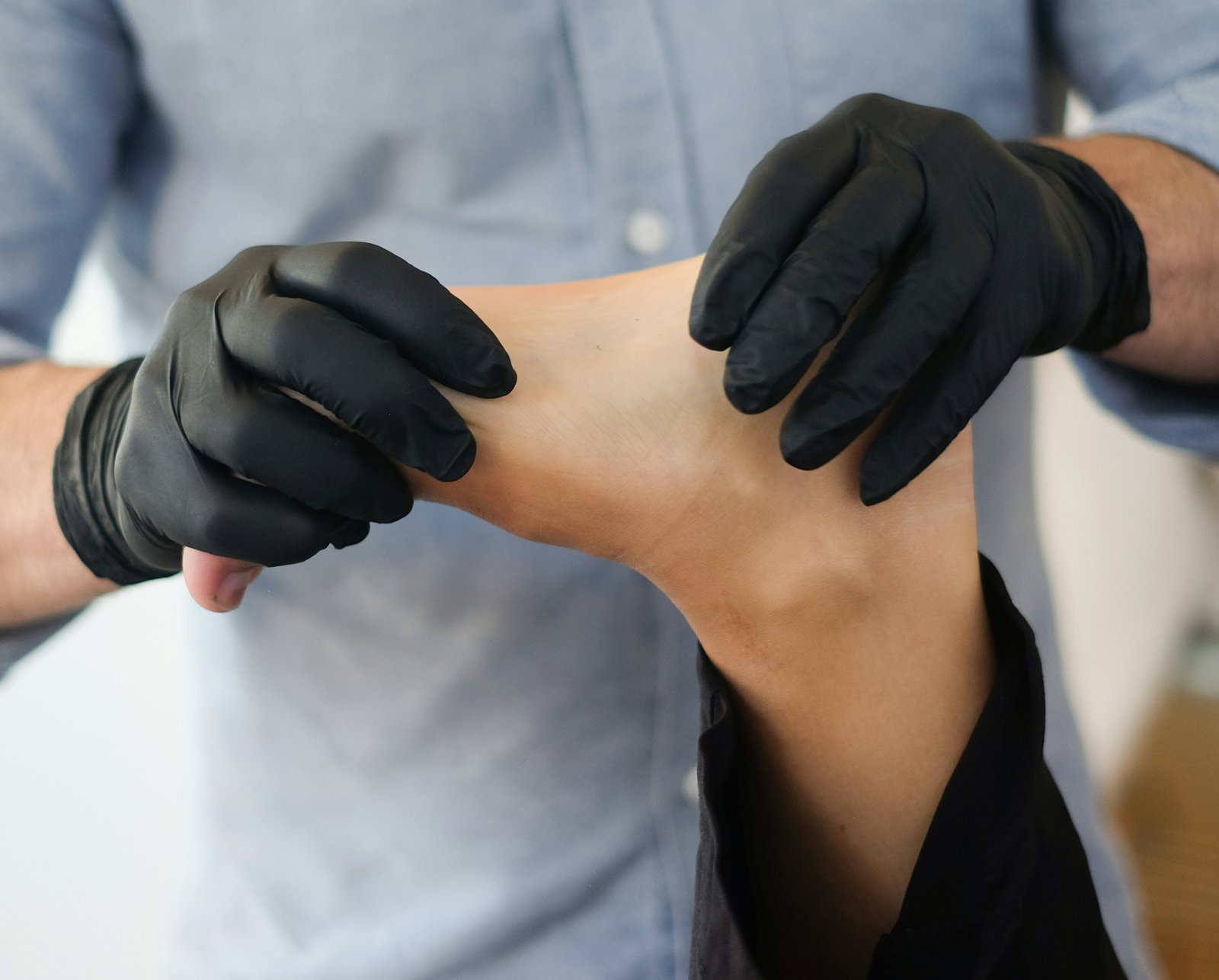
Shoulder Pain in Northville, MI: Drug-Free Treatment Options at Get Well Chiropractic
Shoulder pain is one of the most common reasons adults in Northville seek care — and one of the most undertreated. Dr. Stacie Ford of Get Well Chiropractic explains what's driving it and what drug-free options actually work.
If you've been waking up with a shoulder that aches before you even get out of bed, or finding that reaching overhead has become something you dread, you are in very good company. Shoulder pain is the third most common musculoskeletal complaint presenting in primary care offices in the United States, affecting an estimated 18 to 26 percent of adults at any given time, according to published epidemiological data in the National Library of Medicine. For many patients, the pain starts as a dull awareness after activity and quietly expands until it is present all day, disrupting sleep, limiting work, and making ordinary movements — putting on a coat, reaching into a cabinet, lifting grandchildren — feel like small ordeals.
What frustrates patients most is not the pain itself but the lack of a clear path out of it. The conventional playbook often goes: anti-inflammatories, a referral to physical therapy, possibly a cortisone injection, and then, if nothing works, a conversation about surgery. That progression overlooks something critical: a large proportion of shoulder conditions — rotator cuff tendinopathy, frozen shoulder, impingement syndrome, chronic muscle tension — respond very well to conservative, drug-free care when that care is precise, comprehensive, and addresses the underlying structural contributors rather than just the symptoms. That is exactly what Dr. Stacie Ford does every day at Get Well Chiropractic in Northville.
What's Actually Behind Shoulder Pain?
The shoulder is the most mobile joint in the human body, which is also why it is among the most injury-prone. A shallow ball-and-socket design — held in place by the rotator cuff muscles, the labrum, the acromioclavicular joint, and a complex web of ligaments — allows extraordinary range of motion while also leaving the structure vulnerable to imbalance, overuse, and postural strain.
The most common clinical presentations we see at Get Well Chiropractic include rotator cuff tendinopathy (degeneration or micro-tearing in one or more of the four rotator cuff muscles), subacromial impingement (where soft tissue catches between the humerus and acromion), frozen shoulder or adhesive capsulitis (progressive stiffness and pain from scar tissue forming in the joint capsule), and referred pain from the cervical or thoracic spine. That last category is critical: a significant portion of shoulder pain is not originating in the shoulder at all. Nerve irritation at the cervical spine, restricted thoracic vertebrae, and postural misalignment in the upper back can all create pain patterns that are felt entirely in the shoulder, making structural spinal evaluation an essential part of any honest assessment.
Why Conservative Care Succeeds Where Drugs and Surgery Fall Short
One of the most important decisions a shoulder pain patient can make is the order in which they try interventions. Research increasingly supports starting with conservative, non-invasive care rather than escalating to surgery first. The American Academy of Orthopaedic Surgeons notes that the majority of rotator cuff injuries can be managed successfully without surgery, particularly when conservative care addresses biomechanical contributors early.
Dr. Scott Rodeo, MD, orthopedic surgeon and head team physician for the New York Giants, has stated that "the most common mistake I see is patients jumping to surgical options before giving conservative care a real chance — most rotator cuff problems respond to targeted physical and manual therapy." That observation resonates with what we see clinically. Patients who come to Get Well Chiropractic often arrive having tried medication or injections but never having had a thorough structural assessment of how their spine, posture, and shoulder mechanics are interacting.
Steroid injections can mask pain effectively in the short term but do not address the underlying tendon degeneration or joint restriction causing the problem — and repeated injections carry documented risks to tissue integrity. Surgery, for conditions like impingement or frozen shoulder, carries recovery timelines measured in months and outcomes that are frequently no better than those achieved with well-executed conservative care. The drug-free model Dr. Ford practices at Get Well starts with understanding the cause and then deploying the right tools to address it directly.
Chiropractic Care for Shoulder Pain: The Structural Foundation
Principled chiropractic assessment of shoulder pain begins with the entire kinetic chain — not just the shoulder joint in isolation. In clinical practice, shoulder dysfunction nearly always has a cervical or thoracic component. Restriction in the cervicothoracic junction, forward head posture, and mid-back stiffness all alter the mechanical environment of the shoulder girdle, creating conditions where the rotator cuff muscles are chronically overloaded and the subacromial space is compromised.
Chiropractic adjustments to the cervical and thoracic spine restore joint mobility, relieve pressure on nerve roots that feed the shoulder, and improve the neuromuscular signaling that allows the rotator cuff to function correctly. Direct shoulder joint assessment and mobilization — working with the glenohumeral and acromioclavicular joints themselves — complements the spinal work. Many patients notice meaningful improvement in range of motion and pain levels within the first few sessions, not because chiropractic is a quick fix, but because restoring proper mechanics removes the ongoing mechanical stress driving the symptoms.
MYACT Acoustic Wave Therapy: Targeted Tissue Repair
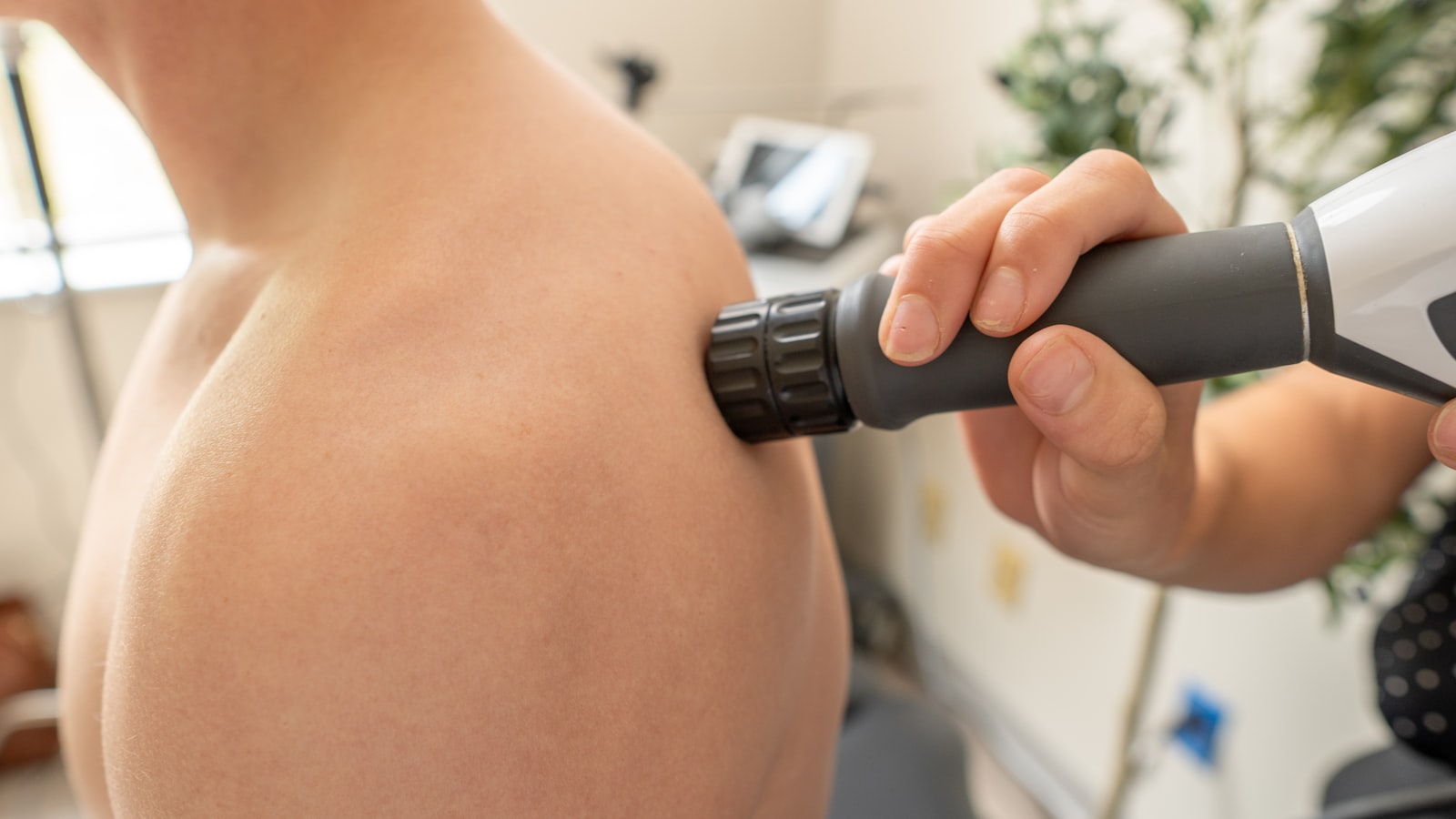
For rotator cuff tendinopathy, calcific deposits in the shoulder, and chronic soft-tissue restrictions that have not fully responded to manual care alone, MYACT — Myofascial Acoustic Compression Therapy — is one of the most effective tools available. MYACT uses high-frequency acoustic sound waves delivered directly to the affected tissue. The mechanical pressure stimulates fibroblast activity, breaks down calcific deposits, and promotes the formation of new blood vessels in chronically injured tissue, a process called neovascularization that brings the nutrient supply chronic tendons desperately need.
A Cochrane systematic review of shockwave therapy for rotator cuff tendinopathy found that acoustic wave treatment produced clinically meaningful reductions in pain and improvements in shoulder function compared to sham treatment, with the effect sustained at follow-up. For patients who have been told their calcific tendinitis or chronic rotator cuff irritation is not responding to standard care, MYACT often represents the missing piece — directly targeting the tissue pathology rather than simply managing the pain around it.
Cold Laser and Therapeutic Massage: Completing the Recovery Picture
Two additional therapies play important supporting roles in shoulder recovery at Get Well Chiropractic. Cold laser therapy delivers focused light energy to damaged cells, stimulating mitochondrial activity and accelerating tissue repair at a cellular level. For acute shoulder injuries or areas of active inflammation — bursitis, a recent rotator cuff strain, post-procedure recovery — cold laser reduces pain and swelling while supporting the biology of healing.
Therapeutic massage addresses the muscular component of shoulder pain that chiropractic and acoustic wave therapy do not fully reach. Chronic shoulder tension almost always involves the upper trapezius, levator scapulae, pectoralis minor, and infraspinatus — muscles that tighten protectively around a painful joint and then become pain generators in their own right. Targeted massage work on these structures releases the protective guarding pattern, restores blood flow to ischemic tissue, and creates a more favorable environment for joint correction and healing. When used in combination and sequenced appropriately, these modalities work synergistically — each one addressing a different dimension of the same problem.
What Getting Care at Get Well Chiropractic Actually Looks Like
New patients coming to Get Well Chiropractic for shoulder pain begin with a thorough intake that covers the full history of the shoulder complaint, a postural and spinal assessment, orthopedic shoulder testing, and, where indicated, range-of-motion and neurological evaluation. Dr. Ford takes the time to explain what she finds and why it matters — not just what therapy is recommended, but what the clinical reasoning is behind the plan.
A typical care plan for shoulder pain integrates two to three of the modalities described above, sequenced based on what is driving the problem most. Progress is measured objectively: range of motion, pain ratings, and functional capacity are tracked throughout the plan so both patient and doctor can see what's working. Most patients begin experiencing meaningful improvement within the first two to three weeks of consistent care. The goal is not just getting out of pain — it is restoring full shoulder function and addressing the structural contributors well enough that the problem does not return.
If shoulder pain is limiting what you can do in your daily life — whether that is work, sports, sleep, or simply keeping up with the demands of an active Northville summer — there is a real path forward that does not require medication to get through the day or surgery to look forward to. Dr. Stacie Ford and the team at Get Well Chiropractic are welcoming new patients and no referral is needed. Contact our office or call us at (248) 465-0000 to schedule your first appointment and start building a clear picture of what is driving your shoulder pain and what it will take to resolve it.
Frequently Asked Questions
Can a chiropractor treat shoulder pain, or is that only for the spine?
Chiropractors are trained to evaluate and treat the entire musculoskeletal system, including the shoulder joint itself and the spinal segments that feed into it. Many shoulder pain presentations — including impingement, rotator cuff tension, and frozen shoulder — have a cervical or thoracic spine component. A thorough chiropractic assessment addresses both the local shoulder structures and the spinal contributors, which is often why chiropractic care succeeds where isolated shoulder treatments have not.
Is MYACT acoustic wave therapy painful?
Most patients describe MYACT as a firm pressure sensation rather than pain. The intensity is adjusted based on the tissue being treated and patient tolerance. Some mild soreness in the treated area is common in the 24 to 48 hours following a session — similar to what you might feel after a deep tissue massage — and typically resolves quickly. The treatment itself generally takes 10 to 15 minutes per area.
How many treatments does it take to see results for shoulder pain?
That depends on how long the problem has been present, what's causing it, and how well the underlying contributors can be addressed. Many patients notice a meaningful change in pain levels and range of motion within the first three to five appointments. Chronic conditions that have been present for months or years typically require a longer course. Dr. Ford will give you an honest assessment of what to expect based on your specific findings.
Do you need an X-ray or MRI before starting chiropractic care for shoulder pain?
Not in most cases. Dr. Ford conducts a thorough orthopedic and neurological evaluation during your initial appointment. If imaging is indicated based on your clinical presentation — for example, if there is concern about a significant structural injury — she will let you know and can help coordinate that. Most shoulder pain presentations can be safely and effectively assessed clinically without imaging as a prerequisite.
Is Get Well Chiropractic accepting new patients?
Yes. New patient appointments are available and no referral is required. The clinic is located at 41740 W 6 Mile Rd, Suite 100, Northville, MI 48168. You can reach us at (248) 465-0000 or through our contact page.
The information provided in this article is intended for educational purposes only and does not constitute medical advice, diagnosis, or a treatment plan for any specific condition. Reading this content does not establish a doctor-patient relationship. Individual results vary, and all healthcare decisions should be made in consultation with a licensed healthcare provider who can evaluate your specific health history and needs. If you are experiencing severe or worsening symptoms, please seek appropriate medical attention promptly.