
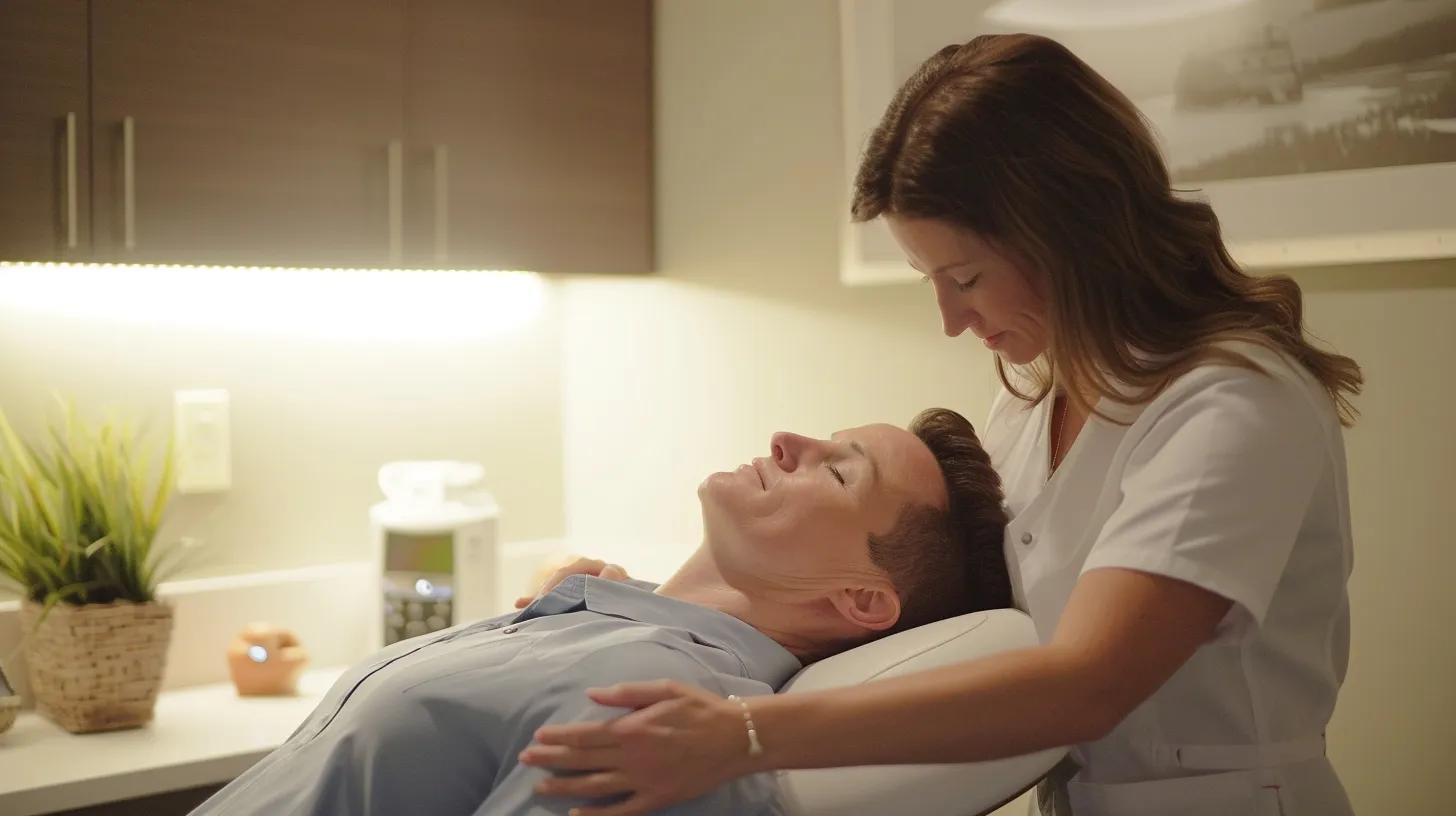
Neck decompression is a non-surgical therapy that gently stretches the cervical spine to take pressure off compressed discs and irritated nerves. If your neck feels tight, "squashed," or sore from long hours at a screen, or if a disc problem is sending pain or tingling into your shoulder or arm, decompression is one of the drug-free options worth understanding.
This guide covers the main neck decompression methods, what a clinical session actually feels like, who it can help, who should skip it, and how at-home traction compares to professional care. It's written from our office in Northville, Michigan, where we've provided DRX9000 spinal decompression for over a decade.
What neck decompression does
The vertebrae of your cervical spine are separated by discs that act as cushions. When those discs are compressed by posture, an injury, arthritis, or wear over time, they can bulge, press on nearby nerves, and lose the nutrient flow they need to stay healthy. Decompression creates gentle separation between the vertebrae. That space reduces pressure on pinched nerves and bulging discs and lets water, oxygen, and nutrients move back into the disc so it can heal.
The result many patients are looking for is simple: less pain, less numbness or tingling, and a neck that turns without protest.
The main neck decompression methods
Mechanical (table-based) decompression
This is the most precise method and the one we rely on for disc-related neck pain. You lie comfortably on a specialized table, a soft harness secures your head and neck, and a computer-controlled system applies a gentle, precisely measured pulling force in cycles. Along with lumbar decompression, our DRX9000 program treats cervical herniated discs and chronic neck pain without surgery. Most patients describe the sensation as a pleasant stretch, not pain.
Manual decompression
Here the chiropractor uses their hands to gently stretch and mobilize the neck. It's less intense than table-based decompression and is often combined with adjustments and soft-tissue work as part of a broader plan.
Guided stretches and home exercise
Simple, supervised stretches can help keep the neck mobile between visits and support your posture. They aren't a substitute for clinical decompression when a disc is the problem, but they're a useful part of most plans when taught correctly.
What a session feels like
You'll begin by lying on the decompression table while the harness is fitted. Once you're comfortable, the unit cycles through phases of gentle traction and relaxation. Most people feel a controlled, mild pulling sensation and nothing more; some find it relaxing enough to doze. A session takes about half an hour, and the chiropractor is present throughout, monitoring your comfort and adjusting the settings as needed. Afterward, we may add an adjustment, cold laser, or targeted exercises to support what the decompression started.
Because the effect is cumulative, decompression is delivered as a course of sessions over several weeks rather than a single visit. We outline the full plan after evaluating your spine, and we track your progress every step of the way.
Who neck decompression can help
Patients typically come to us for decompression with herniated or bulging cervical discs, pinched nerves, degenerative disc disease, chronic neck pain, and neck-related arm pain or tingling. It's also an option people explore specifically to avoid surgery or to reduce their reliance on pain medication. Whether it's right for you depends on your diagnosis, which is why every plan starts with an assessment rather than a template.
Who should avoid it
Decompression is gentle and non-invasive, but it isn't for everyone. Conditions that generally rule it out include severe osteoporosis, spinal instability, certain fractures, spinal tumors, and pregnancy. Some patients also feel mild, temporary soreness after their first few sessions as tight structures adapt, similar to starting a new exercise. We screen for all of this before recommending decompression, and we start gently and increase intensity only as your body adjusts.
At-home neck traction vs. clinical decompression
Inflatable collars, neck hammocks, and over-the-door traction units all promise a similar stretch. The difference is control. A clinical table measures and adjusts the force precisely; a home device depends entirely on how you set it up and how long you hold it. Applying too much force or holding a stretch too long can trigger headaches, dizziness, or increased pain. If you're considering any at-home decompression, including hanging to decompress your spine, talk to a chiropractor first so you know it's appropriate for your condition and how to do it safely.
Frequently asked questions about neck decompression
Does neck decompression hurt?
No. Most patients find the gentle stretching relaxing. If anything feels uncomfortable during a session, tell us and we'll adjust the settings immediately.
How long until I feel results?
It varies with your condition and how long you've had symptoms. Some patients notice relief after a few sessions; others take longer. Decompression builds on itself, so consistency through the full course matters.
Is cervical decompression the same as a chiropractic adjustment?
No. An adjustment restores motion to a joint; decompression relieves pressure on a disc. Many patients benefit from both, and we'll explain which one, or which combination, fits your case.
Do you offer neck decompression in Northville, MI?
Yes. Get Well Chiropractic of Northville has provided DRX9000 decompression for over a decade, treating both lumbar and cervical disc problems for patients from Northville, Novi, Plymouth, and Livonia. Call (248) 465-0000 to find out whether it's right for your neck.
The information provided in this article is intended for educational purposes only and does not constitute medical advice, diagnosis, or a treatment plan. It is not intended to replace the guidance of a licensed healthcare professional. Individual results vary, and all care decisions should be made in consultation with a qualified provider who can evaluate your specific health history and needs.