Why Massage for Athletes Matters for Recovery and Performance
Massage for athletes is more than a luxury—it's a proven recovery tool backed by science. Whether you're training for a marathon, playing weekend soccer, or managing the physical demands of an active lifestyle, sports massage addresses the unique stress your body experiences during athletic activity.
Quick Answer: Key Benefits of Sports Massage
- Reduces muscle soreness by approximately 13% after intense exercise
- Improves flexibility by about 7% through targeted soft tissue work
- Decreases perceived pain and fatigue significantly in endurance athletes
- Supports injury prevention by maintaining tissue health and balance
- Enhances psychological recovery by reducing tension and anxiety
Sports massage differs from relaxation massage in both purpose and technique. While Swedish massage focuses on general relaxation, sports massage targets specific muscle groups affected by athletic training. Licensed therapists use techniques like effleurage, petrissage, and trigger point therapy to address overused tissues, improve circulation, and support your body's natural healing process.
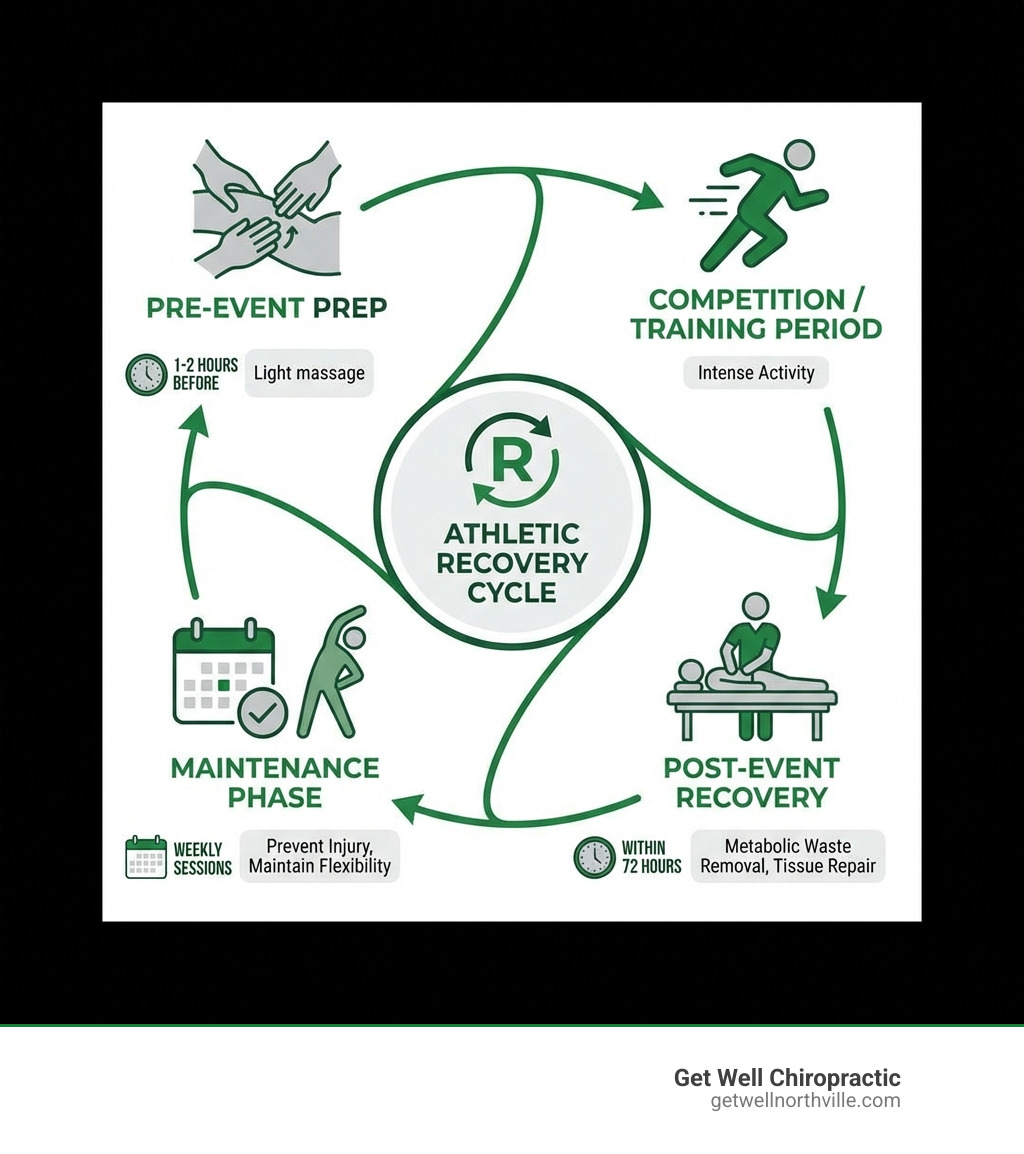
The timing matters too. Pre-event massage prepares your muscles for competition. Post-event massage helps clear metabolic waste and speeds recovery. Maintenance massage—scheduled weekly or biweekly during training—keeps tissues flexible and identifies problem areas before they become injuries.
Here's the reality: 78% of professional soccer teams use massage therapy as part of their recovery protocol. Up to 45% of sports physiotherapy time consists of massage treatments. These aren't arbitrary numbers—they reflect what works in real-world athletic performance.
Athletes from all levels benefit. Elite competitors use massage to maintain peak condition. Recreational runners use it to manage training volume. Even non-athletes with physically demanding lifestyles find relief through sports massage techniques.
At Get Well Chiropractic in Northville, Michigan, we understand that every athlete's body tells a different story. Whether you're recovering from competition, preventing injury, or simply seeking natural pain relief, massage therapy can be an essential part of your wellness routine.
Quick Massage for athletes terms:
Understanding Sports Massage for Athletes
When we talk about Massage for athletes, we are looking at a specialized branch of manual therapy designed to meet the rigorous demands of the human body under physical stress. Unlike a spa day meant for pampering, sports massage is a functional, goal-oriented practice. It focuses on the soft tissues—muscles, tendons, and ligaments—that work overtime when you’re on the field or the track.
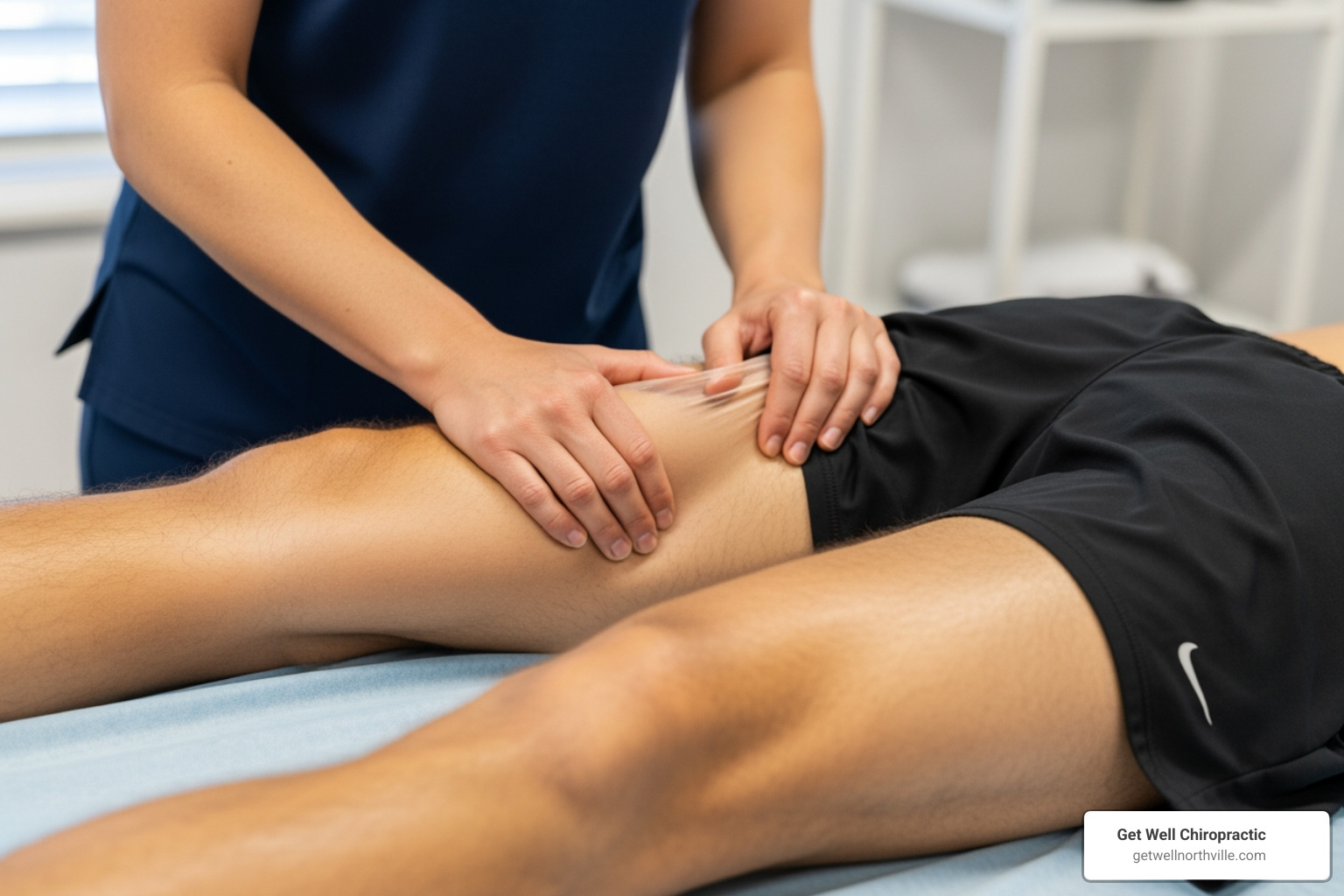
The primary goal is to optimize the circulatory system and the nervous system. By increasing blood flow to specific muscle groups, we ensure that oxygen and nutrients reach the tissues that need them most, while also facilitating the removal of metabolic byproducts like lactic acid. Furthermore, the manual manipulation of connective tissues helps break down adhesions (those pesky "knots") that can restrict your range of motion.
Defining the Therapeutic Scope
The scope of sports massage is broad, addressing everything from acute muscular tension to the long-term health of your ligaments and tendons. It is an essential adjunct to other therapies. For instance, how deep tissue massage enhances muscle recovery is a topic we frequently discuss with our patients because the two go hand-in-hand to restore tissue integrity.
If you are feeling restricted or dealing with persistent tightness, you can Request an appointment for massage therapy at Get Well Chiropractic to see how a targeted plan can help.
| Feature | Sports Massage | Swedish Massage |
|---|---|---|
| Primary Goal | Performance & Recovery | Relaxation & Stress Relief |
| Techniques | Trigger point, friction, stretching | Long, gliding strokes (effleurage) |
| Pressure | Varies (often deep and targeted) | Light to moderate |
| Timing | Pre-, post-, or during training | Anytime for wellness |
| Focus Area | Specific muscle groups used in sport | Full body |
The Role of the Licensed Massage Therapist
In Michigan, and specifically here in Northville, it is vital to work with a licensed massage therapist (LMT). These professionals have undergone rigorous training to understand human anatomy and the mechanics of sport-related injuries. Clinical manipulation of tissue isn't just about "rubbing a muscle"; it’s about understanding "firing patterns"—ensuring that your motor neurons are sending the right signals to your muscles to prevent compensations that lead to injury.
Proven Benefits: Recovery, Flexibility, and DOMS Relief
One of the most significant reasons athletes seek out our services is the management of Delayed Onset Muscle Soreness (DOMS). We’ve all been there—that second day after a heavy leg workout where walking down stairs feels like a feat of strength.
Research shows that post-workout Massage for athletes reduces DOMS by approximately 13%. This isn't just a subjective feeling; scientific studies indicate that massage can lower the levels of creatine kinase (a marker of muscle damage) and interfere with the inflammatory response that causes pain.
Physiological Impact on Performance Metrics
While many believe massage makes you "faster" or "stronger" instantly, the science is more nuanced. A major meta-analysis involving over 1,000 participants showed that while massage might not directly increase your 100m sprint time or your max squat in a single session, it significantly impacts the recovery of those metrics.
- Flexibility: Massage significantly increases flexibility scores by an average of 7%.
- Endurance: By reducing muscle fatigue, athletes can return to high-intensity training sooner.
- Vertical Jump: Studies have shown improved jump performance in bodybuilders and athletes when massage is used as a recovery tool between bouts of exercise.
For those looking for more detail, discover the astonishing benefits of deep tissue massage to understand how these physiological changes support your long-term goals.
Reducing Perceived Fatigue and Pain
The psychological aspect of recovery is just as important as the physical. In a study of Ironman athletes, a 7-minute post-event massage resulted in a statistically significant decrease in perceived pain (by 7 mm on the Visual Analogue Scale) and fatigue (by 15 mm). When you feel less fatigued, your mental focus improves, allowing for better performance in subsequent training sessions. This psychological restoration is a cornerstone of why why deep tissue massage is essential for athletes.
Essential Techniques in Massage for Athletes
We use a variety of techniques depending on where you are in your training cycle. Each stroke serves a specific physiological purpose.
- Effleurage: These are long, sweeping strokes used at the beginning of a session to warm up the tissue and at the end to flush the system.
- Petrissage: This involves kneading and squeezing the muscles. It’s excellent for deep tissue work and increasing local circulation.
- Tapotement: Brisk, rhythmic tapping or hacking. This is often used in pre-event massage to wake up the nervous system and stimulate blood flow.
- Friction: Deep, circular movements used to break up scar tissue and adhesions in tendons and ligaments.
Targeted Soft Tissue Mobilization
Beyond the standard strokes, we often incorporate targeted mobilization. This includes Trigger Point Therapy, where direct pressure is applied to a specific "knot" to relieve referred pain and restore blood flow. We also use Myofascial Release, which focuses on the fascia—the "saran wrap" that surrounds your muscles. When fascia becomes distorted or stuck, it limits your movement. Freeing these adhesions is a "breakthrough" for many of our patients. You can read more about these pain relief breakthrough massage therapy techniques explained on our blog.
Advanced Modalities for Recovery
To provide a comprehensive service, we often combine Massage for athletes with other modalities. This might include:
- Therapeutic Stretching: Assisted stretching to improve range of motion.
- Lymphatic Drainage: Light techniques to help the body move lymph fluid, reducing swelling after an injury or intense event.
- Acupuncture: Often used as an adjunct to help reset the nervous system and target deep-seated pain.
For a full list of what we offer, check out our massage therapy techniques for lasting pain relief.
Strategic Timing: When to Schedule Your Massage for Athletes
Timing is everything. Getting a deep tissue massage two hours before a marathon is usually a bad idea, as it can leave you feeling too relaxed or even slightly sore.
Pre-Event and Maintenance Phases
Pre-Event Massage should happen anywhere from two days to just an hour before your competition. If it's close to the start time, the massage should be short (10–15 minutes), , and invigorating. The goal is to stimulate blood flow and sharpen mental focus without causing muscle soreness.
Maintenance Massage is the "tune-up" for your body. We recommend this be integrated into your training schedule, perhaps once a week or every other week on a rest day. This helps us identify tightness before it turns into a strain. To see how this fits into your routine, you can Request a consultation at Get Well Chiropractic.
Post-Event and Rehabilitative Recovery
Post-Event Massage is most effective when performed within 72 hours of your competition. It helps normalize the tissues and reduces the "heaviness" felt in the limbs. Interestingly, research suggests that shorter massages (5 to 12 minutes) can sometimes show superior outcomes compared to very long sessions immediately following exercise, as the goal is recovery rather than deep tissue restructuring.
Rehabilitative Massage is used when you are already dealing with an injury, such as tendinitis or a muscle tear. In these cases, we work closely with our chiropractic team to ensure the massage supports the overall healing plan. This is where embrace deep tissue massage benefits for holistic health really comes into play.
Safety, Frequency, and Professional Standards
While Massage for athletes is generally safe, there are times when it should be avoided. These "contraindications" include:
- Acute Inflammation: If a joint is hot, red, and swollen, we wait for the initial inflammation to subside.
- Skin Infections: To prevent the spread of bacteria or viruses.
- Recent Surgery: Unless cleared by a doctor.
- Certain Blood Disorders: Such as low platelet counts.
Identifying Qualified Practitioners
When searching for a therapist in Northville, ensure they are Michigan-licensed and have experience with athletes. A clinical setting, like ours, ensures that your massage isn't just a stand-alone service but part of a larger wellness strategy. You can find a qualified therapist at Get Well Chiropractic who understands the specific needs of local runners, lifters, and team sports players.
Who Should Seek Sports Massage?
It’s a myth that you have to be a professional to benefit from Massage for athletes.
- Elite Athletes: For peak performance and longevity.
- Recreational Runners: To manage the repetitive stress of miles on the pavement.
- Youth Sports: To help developing bodies recover and learn proper maintenance.
- Non-Athletes: If you have a physically demanding job or experience postural stress from sitting at a desk all day, these techniques are incredibly effective.
Frequently Asked Questions about Athletic Massage
How often should an athlete get a massage?
This depends on your training volume. If you are in a peak training phase (like marathon prep), once a week is ideal. For general maintenance, once every 3–4 weeks works well for many. We always suggest a "trial and error" approach to see how your body responds.
Does sports massage help with injury prevention?
Absolutely. By maintaining tissue elasticity and muscle balance, we can catch "firing" issues or extreme tightness before they lead to a pull or a tear. It’s much easier to maintain a healthy muscle than it is to rehab a torn one.
Is sports massage painful?
It can involve some "therapeutic discomfort." Because we are targeting deep tissues and trigger points, you may feel some pressure. However, communication is key. We always adjust our pressure based on your feedback to ensure the session is productive, not traumatizing.
Conclusion
At Get Well Chiropractic, our mission is to provide comfortable, honest, and compassionate care that focuses on your body's natural ability to heal. Massage for athletes is a cornerstone of that mission. By combining expert manual therapy with our holistic approach to wellness, we help the Northville community move better and live longer.
Whether you're looking to shave seconds off your personal best or simply want to wake up without stiffness, we are here to help. Contact us to schedule your sports massage today and let's get you back in the game!
