What Is a Class 2 Cold Laser and Why Does It Matter?
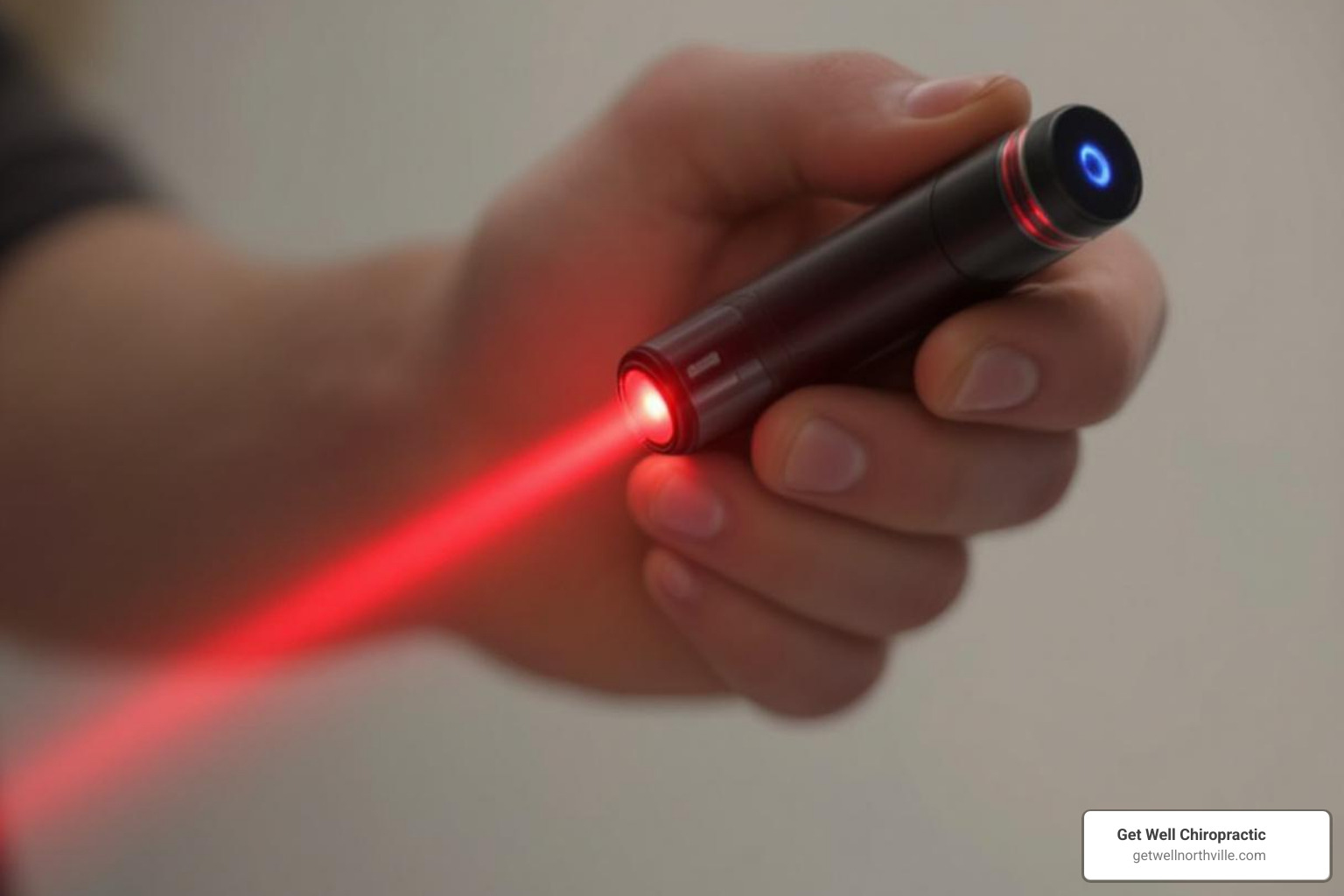
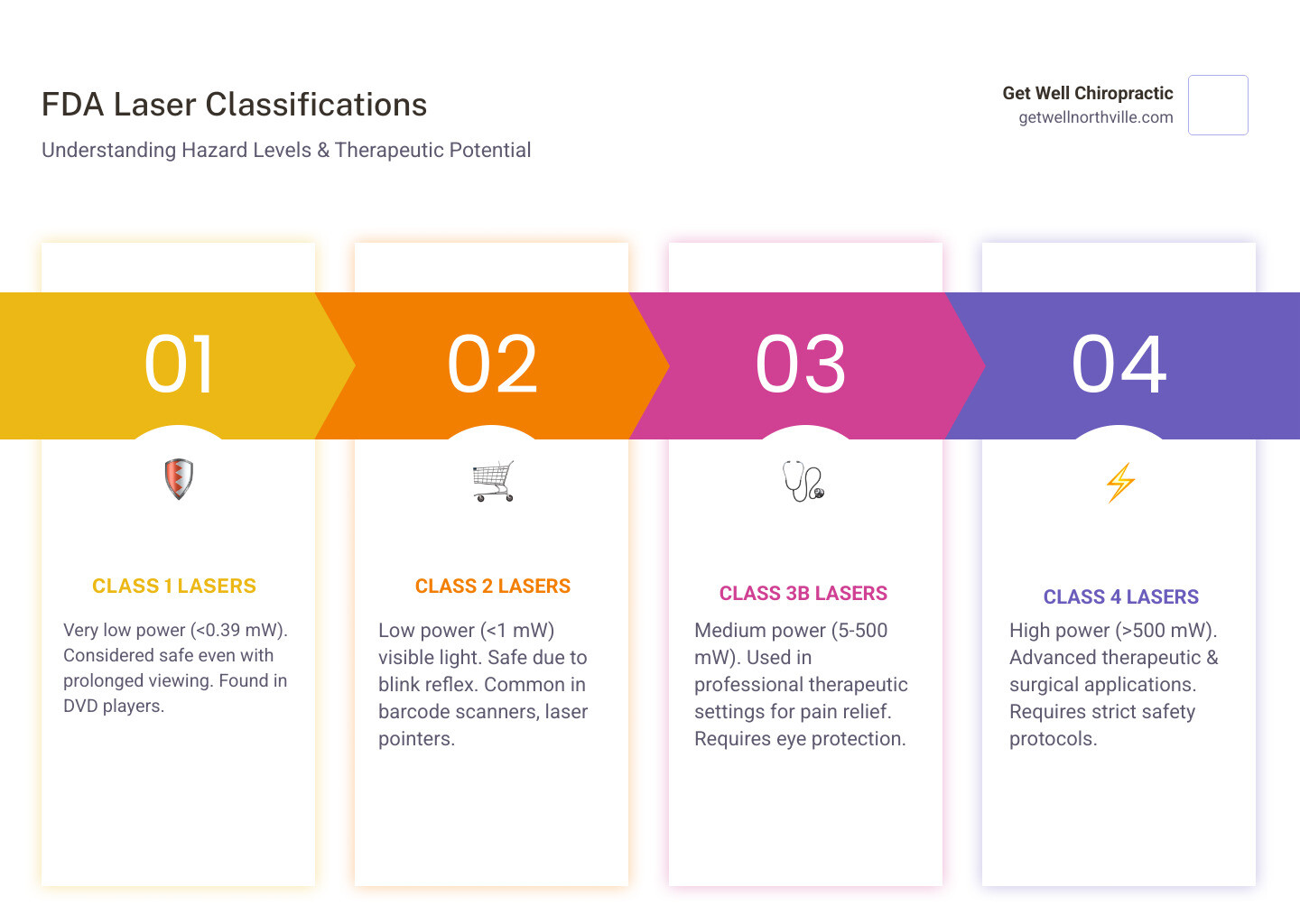
A class 2 cold laser is a low-power laser device that emits less than 1 milliwatt (mW) of visible light energy. These lasers are classified by the FDA as generally safe for the eyes due to the body’s natural blink reflex, and they are commonly found in everyday items like barcode scanners and basic laser pointers.
Quick Facts About Class 2 Cold Lasers:
- Power Output: Less than 1 mW
- Safety Level: Low risk; visible light that’s safe for short periods
- Common Uses: Barcode readers, grocery store scanners, some laser pointers
- Therapeutic Use: Generally insufficient for effective pain relief or tissue healing
- Treatment Challenge: Would require extremely frequent treatments (every 3-4 hours) to potentially deliver therapeutic benefits
If you’re exploring laser therapy for pain relief or healing, understanding laser classifications is crucial. Not all lasers are created equal, and the class of a laser directly impacts its therapeutic potential.
The FDA classifies lasers into four main hazard categories based on their power output and potential to cause harm. This classification system helps ensure safety while also indicating which devices have the power necessary for therapeutic applications. Class 2 lasers sit at the lower end of this spectrum—they’re safe and accessible, but their low power output creates significant limitations when it comes to treating chronic pain, inflammation, or deep tissue conditions.
Higher-class therapeutic lasers (Class 3B and Class 4) are what most professional clinics use for conditions like back pain, arthritis, and muscle injuries. These devices deliver significantly more energy in less time, penetrating deeper into tissues where healing is needed most.
Understanding these differences empowers you to make informed decisions about your care and helps explain why professional-grade laser therapy at a chiropractic clinic differs dramatically from a handheld device you might find online.
What Are Therapeutic Laser Classifications?
When we talk about laser therapy, it’s essential to understand that not all lasers are created equal. The U.S. Food and Drug Administration (FDA) has established a classification system for lasers based on their potential to cause harm, primarily to the eyes and skin. This system helps ensure that devices are used safely and appropriately, but it also gives us vital clues about their therapeutic potential.
The FDA’s Center for Devices and Radiological Health (CDRH) regulates laser products, ensuring manufacturers comply with federal standards for radiation safety. These classifications range from Class 1, which are generally considered safe even with prolonged viewing, to Class 4, which are the most powerful and potentially hazardous. The higher the class, the greater the average power output and the associated hazard risk. For a detailed look at these regulations, you can visit the FDA’s page on Laser Products and Instruments.
The Place of Class 2 Lasers in the Spectrum
Class 2 lasers are at the lower end of the hazard spectrum. These are visible light lasers with a power output of less than 1 milliwatt (mW). Because they emit visible light, our eyes have a natural defense mechanism: the blink reflex. If a class 2 cold laser beam hits our eye, we instinctively blink or look away, which usually provides enough protection for short, unintentional exposures. This is why they are generally considered safe for short periods on the eyes and for extended periods on the skin.
You encounter Class 2 lasers more often than you might think! Common examples include:
- Barcode scanners: Those red lines that read your groceries at the checkout.
- Laser pointers: The kind you might use for a presentation or to tease your cat.
- Some measuring devices: Used in construction or DIY projects.
While these devices are safe for everyday use, their low power output also means they deliver very little energy to tissue. This becomes a significant limitation when considering them for therapeutic applications, as we’ll explore further.
Higher Laser Classes: 3B and 4
For effective therapeutic applications, we typically look to higher laser classes: Class 3B and Class 4. These are the workhorses in professional therapeutic settings, including our clinic here in Northville, MI.
-
Class 3B lasers: These lasers have a power output ranging from 5 mW up to 500 mW. They are considered hazardous to the eye and require proper safety glasses to be worn by both the practitioner and the patient during treatment. Class 3B lasers are often referred to as “cold lasers” or “low-level lasers” (LLLT) and are widely used for photobiomodulation (PBM) because they can deliver a sufficient therapeutic dose without generating significant heat. They’re often the subject of extensive scientific research due to their efficacy in various conditions.
-
Class 4 lasers: These are the most powerful therapeutic lasers, with an output greater than 500 mW (or 0.5 watts). Class 4 lasers can increase tissue temperature, are hazardous to the eye, and can even pose a fire hazard if not handled properly. However, their higher power allows for deeper tissue penetration and faster treatment times, making them highly effective for severe or chronic conditions. They are also used in surgical applications. Class 4 lasers are excellent for delivering substantial energy to deeper tissues, which is often necessary for conditions like chronic back pain. You can learn more about how powerful lasers can help with persistent discomfort in our article on Effective Laser Therapy for Back Pain: An Expert Overview.
The distinction between these classes is not just about safety; it’s fundamentally about how much light energy can be delivered to the target tissue and, therefore, the potential for therapeutic benefit.
A Closer Look at the Class 2 Cold Laser
The term “cold laser” refers to a low-power laser that doesn’t produce a heating effect on tissue. While class 2 cold lasers fit this description, their extremely low power output means they are generally considered ineffective for significant therapeutic change. Photobiomodulation (PBM), the scientific term for therapeutic laser use, relies on light energy being absorbed by cells to stimulate various biological processes, such as increased cellular energy (ATP production), reduced inflammation, and accelerated tissue repair. For this to happen effectively, the laser needs to deliver a sufficient “dose” of energy.
This “dose” is determined by several factors: the laser’s wavelength (which affects how deep the light penetrates), its power (how much energy it emits per second), and the treatment time. A class 2 cold laser simply falls short on the power front for most therapeutic goals.
Primary Characteristics and Safety
Let’s reiterate the core characteristics of a class 2 cold laser:
- Visible Light Spectrum: It emits light that we can see, typically red.
- Low Power Output: Less than 1 mW. This is the defining characteristic for its classification.
- Eye Hazard (Limited): The visible nature triggers our natural blink reflex, which usually protects the eyes from damage during momentary exposure. However, prolonged direct staring could still be harmful.
- Skin Safety: It is safe for extended periods on the skin because its power is too low to cause any heating or damage.
- Non-Thermal Effect: As a “cold laser,” it does not heat the tissue.
- Lack of Sensation: You wouldn’t feel anything during a class 2 cold laser treatment, which, while comfortable, also signals its minimal interaction with deeper tissues.
These safety characteristics make class 2 cold lasers suitable for general consumer products, but they also highlight their limitations for medical therapy.
The Role of Power and Wavelength in Therapy
For a laser to have a therapeutic effect, it needs to deliver enough energy to the target cells. This concept is often explained by the Arndt-Schultz Law, which suggests that weak stimuli slightly accelerate life activity, moderate stimuli promote it, strong stimuli retard it, and very strong stimuli arrest it. In laser therapy, this translates to finding the “therapeutic window”—an optimal dose of energy that promotes healing without causing damage or being insufficient.
-
Wavelength and Penetration Depth: Wavelength is crucial because it determines how deeply the light can penetrate tissue. Different wavelengths are absorbed differently by various components of the body. For example, red wavelengths (around 600-700nm) are good for superficial conditions, while near-infrared wavelengths (800-1000nm) can penetrate several centimeters deep, reaching muscles, joints, and nerves. A class 2 cold laser typically operates in the visible red spectrum, which means its penetration is inherently limited to more superficial layers.
-
Power and Treatment Duration: Power (measured in watts or milliwatts) dictates how quickly a therapeutic dose can be delivered. The total energy delivered is calculated by power multiplied by time (Joules = Watts x Seconds). A higher power laser can deliver the necessary Joules of energy in a much shorter timeframe. With a class 2 cold laser (less than 1 mW), delivering a therapeutically significant dose (which can range from a few Joules/cm² for superficial conditions to tens or even hundreds of Joules for deeper tissues) would require an incredibly long treatment time, making it impractical for clinical use.
Limitations of a Class 2 Cold Laser for Healing
This brings us to the core challenge with class 2 cold lasers in a therapeutic context: they are generally not considered sufficient for effective treatment.
-
Insufficient Power and Shallow Penetration: The primary issue is their meager power output. To truly stimulate cellular healing and provide pain relief for musculoskeletal conditions, the light needs to reach the injured or inflamed tissues, which are often deep beneath the skin. A class 2 cold laser simply doesn’t have the power to penetrate deeply enough to affect these tissues meaningfully.
-
Ineffective Dose Delivery: Even for superficial conditions, delivering an “effective dose” (typically 2-4 Joules/cm² for biostimulation) with a device emitting less than 1 mW would be a monumental task. As one source noted, a class 2 cold laser would take “an extremely long time to deliver an effective dose of energy for healing if it can even get the dose delivered into the tissue deep enough.” Some estimates suggest it would require continuous treatment every 3-4 hours throughout the day for any noticeable effect. Who has time for that?
-
Limited Clinical Evidence: While there is extensive scientific evidence supporting the use of higher-class therapeutic lasers (Class 3B and 4) for a wide range of conditions like neck pain, osteoarthritis, and other musculoskeletal issues, robust scientific evidence specifically supporting the therapeutic efficacy of class 2 cold lasers is largely absent. Most research on low-level laser therapy (LLLT) is conducted using Class 3B devices. For example, comprehensive systematic reviews on conditions like neck pain often refer to studies using Class 3B lasers, not Class 2. You can review some of this research on LLLT for neck pain via this PubMed link.
While a class 2 cold laser is perfectly safe for scanning your groceries, it’s akin to trying to heat a swimming pool with a birthday candle if you’re looking for significant therapeutic outcomes.
Comparing Class 2 Lasers to Professional Therapeutic Lasers
The difference between a class 2 cold laser and the therapeutic lasers we use in our clinic is like comparing a bicycle to a high-performance car. Both can move, but their capabilities, speed, and effectiveness are worlds apart. When it comes to clinical effectiveness for pain relief, inflammation reduction, and tissue repair, professional-grade therapeutic lasers (Class 3B and Class 4) are designed to deliver results, whereas class 2 cold lasers are not.
Here’s a snapshot of how they compare:
| Feature | Class 2 Cold Laser (<1mW) | Professional Therapeutic Lasers (Class 3B/4) |
|---|---|---|
| Power Output (mW) | Less than 1 mW | Class 3B: 5 mW – 500 mW; Class 4: > 500 mW |
| Typical Penetration Depth | Very superficial (millimeters) | Class 3B: up to 2-3 cm; Class 4: up to 10 cm or more |
| Average Treatment Time | Impractically long (hours for a therapeutic dose) | Class 3B: minutes; Class 4: seconds to minutes (depending on area/dose) |
| Primary Applications | Barcode scanning, laser pointers, aesthetic superficial use | Pain relief, inflammation reduction, tissue repair, deep tissue treatment, chronic conditions, wound healing, nerve regeneration |
| Eye Hazard | Low (blink reflex protection) | Significant (requires protective eyewear for all) |
| Thermal Effect | None | Class 3B: None; Class 4: Minimal to moderate heating (can be thermal if misused) |
Power, Depth, and Treatment Efficiency
The stark differences in power output directly translate to variations in penetration depth and treatment efficiency.
-
Class 2 Power vs. Professional Therapeutic Lasers: A professional therapeutic laser, whether Class 3B or Class 4, delivers significantly more photons (light particles) per second than a class 2 cold laser. This higher photon count is crucial for reaching deeper tissues like joints, ligaments, tendons, and muscles, which are often the source of chronic pain and injuries. For instance, a Class 4 laser can deliver energy to a depth of 10 cm, while a class 2 cold laser struggles to penetrate beyond the most superficial skin layers.
-
Deep Tissue Treatment and Chronic Conditions: For conditions such as back pain, knee arthritis, shoulder tendinitis, or neuropathy, the affected tissues are typically deep within the body. A class 2 cold laser simply cannot provide enough energy to these depths to elicit a therapeutic response. This is why clinics, including ours at Get Well Chiropractic in Northville, MI, rely on higher-powered devices. These powerful lasers can effectively address deep-seated issues, providing significant pain relief and promoting healing for chronic conditions. Understanding this depth is key when considering The Role of Laser Therapy in Chronic Back Pain Treatment.
-
Time to Deliver Therapeutic Dose: Time is valuable, especially when you’re seeking relief. As we mentioned, a class 2 cold laser would need to be applied for hours to deliver a meaningful dose of energy, making it completely impractical for a clinical setting. In contrast, Class 3B and Class 4 lasers can deliver an effective therapeutic dose in mere seconds to minutes, making treatments efficient and effective. This efficiency allows us to provide targeted, impactful therapy in a reasonable timeframe during your visit.
Scientific Evidence and Therapeutic Potential
When we evaluate the effectiveness of any therapy, we turn to scientific evidence.
-
Lack of Robust Studies for Class 2: There is a notable absence of robust, peer-reviewed clinical studies supporting the use of class 2 cold lasers for significant therapeutic benefits. Their low power makes them unsuitable for most medical research because they simply don’t produce a measurable biological effect that differentiates them from a placebo.
-
Abundant Research on Professional-Grade Lasers: Conversely, there is a wealth of scientific literature, including systematic reviews and meta-analyses, demonstrating the efficacy of Class 3B and Class 4 therapeutic lasers for a wide array of musculoskeletal conditions. Studies have shown positive outcomes for:
- Osteoarthritis: Reducing pain and improving range of motion.
- Neck and back pain: Providing significant relief and improving function.
- Tendinopathies: Accelerating healing and reducing inflammation.
- Neuropathy: Helping with nerve pain and regeneration.
- Wound healing: Promoting faster closure and reducing scarring.
This extensive body of evidence is precisely why professional clinics choose higher-class lasers. We invest in technology that is scientifically proven to work and can deliver the necessary energy to help our patients heal. The goal is not just to apply light, but to apply enough effective light to stimulate genuine physiological change.
Frequently Asked Questions about Laser Classes
We understand that navigating laser therapy can be confusing. Here are some common questions we hear, especially concerning class 2 cold lasers.
Can a Class 2 laser be used for pain relief at home?
While you might find small, handheld devices marketed as “cold lasers” or “red light therapy” for home use, many of these devices, particularly those that fall into the class 2 cold laser category (less than 1 mW), are unlikely to provide significant pain relief or therapeutic benefits.
- Ineffective Power Levels: As discussed, their power output is simply too low to deliver an effective therapeutic dose to anything but the most superficial tissues, and even then, it would take an impractical amount of time.
- Impractical Treatment Frequency: To achieve even a minimal effect, you’d need to use them for hours, multiple times a day, which isn’t feasible for most people.
- Minimal Therapeutic Benefit: For chronic pain or deeper injuries, the energy simply won’t reach where it’s needed. Think of it as trying to water a garden with an eyedropper – you might get some droplets on the surface, but the roots won’t get enough to thrive.
For effective pain relief and healing, professional-grade equipment that can deliver adequate energy is essential.
Is a Class 2 laser the same as red light therapy?
This is a great question, as the terms can sometimes be used interchangeably, leading to confusion.
- Laser vs. LED: Not all “red light therapy” devices are lasers. Many use Light Emitting Diodes (LEDs). The key difference is that lasers (like a class 2 cold laser) produce a coherent, collimated, and monochromatic beam of light.
- Coherent: All light waves are in phase.
- Collimated: The light travels in a narrow, parallel beam that doesn’t spread out much.
- Monochromatic: It emits light of a single, specific wavelength.
- Red Light Therapy as a Broad Term: “Red light therapy” is a broader term that can include both LED devices and low-level lasers (like Class 3B). While LEDs can offer some therapeutic benefits, especially for superficial skin conditions, lasers generally deliver energy more efficiently and to greater depths due to their unique properties.
- Device Classification Matters: So, while a class 2 cold laser is a type of red light therapy, its classification (and thus its power) is the critical factor determining its therapeutic capability. Many effective red light therapy devices use more powerful LEDs or higher-class lasers to achieve clinical results.
Why is it important to know the class of a therapeutic laser?
Understanding laser classifications is vital for several reasons, both for safety and effectiveness:
- Safety Protocols: Each laser class has specific safety requirements. For class 2 cold lasers, the blink reflex is usually sufficient, but for Class 3B and Class 4 lasers, proper protective eyewear is mandatory to prevent eye damage. Knowing the class ensures everyone involved follows the correct safety precautions.
- Therapeutic Effectiveness: The class directly correlates with the laser’s power output and its ability to deliver a therapeutic dose of energy. If you’re seeking treatment for a specific condition, knowing the class helps you understand if the device being used has the potential to be effective. A class 2 cold laser, for example, simply won’t cut it for most chronic pain conditions.
- Ensuring Adequate Energy Delivery: We want to make sure you’re getting the most out of your treatment. By using higher-class lasers, we can ensure that the right amount of energy reaches the target tissues, maximizing the chances of a positive outcome.
- Making Informed Treatment Decisions: As a patient, being informed about laser classifications empowers you to ask the right questions and understand why certain types of lasers are chosen for your care. It helps you differentiate between devices that are truly therapeutic and those that are primarily for novelty or very superficial, temporary effects.
Conclusion: Choosing the Right Light for Your Health
We hope this deep dive into laser classifications, particularly the class 2 cold laser, has illuminated the crucial differences in therapeutic laser technology. While class 2 cold lasers are safe and ubiquitous in everyday items, their extremely low power output renders them largely ineffective for meaningful pain relief or deep tissue healing. Trying to treat a significant injury with a class 2 cold laser is like trying to put out a bonfire with a squirt gun – a valiant effort, but ultimately insufficient.
For true therapeutic outcomes, especially for conditions like chronic back pain, arthritis, nerve issues, or muscle injuries, the power and wavelength of the laser are paramount. This is why at Get Well Chiropractic in Northville, MI, we use professional-grade therapeutic lasers (Class 3B and Class 4). These devices deliver adequate energy to penetrate deeply, stimulate cellular healing, reduce inflammation, and accelerate tissue repair, all within a practical treatment timeframe.
We are committed to providing you with comfortable, honest, and compassionate service focused on natural healing and long-term wellness. Our expert team understands the nuances of laser therapy and will guide you toward the most effective treatment options for your specific needs.
To understand how clinically proven laser therapy can aid in your recovery, explore our Cold Laser services. We’re here to help you get well, naturally.