Understanding Chronic Fatigue Syndrome and the Role of Massage
Chronic fatigue massage offers hope for individuals experiencing persistent, unexplained exhaustion that rest doesn’t relieve. This specialized form of bodywork uses gentle techniques to address the complex symptoms of Chronic Fatigue Syndrome (CFS), helping to reduce muscle pain, improve circulation, support sleep quality, and calm the nervous system.
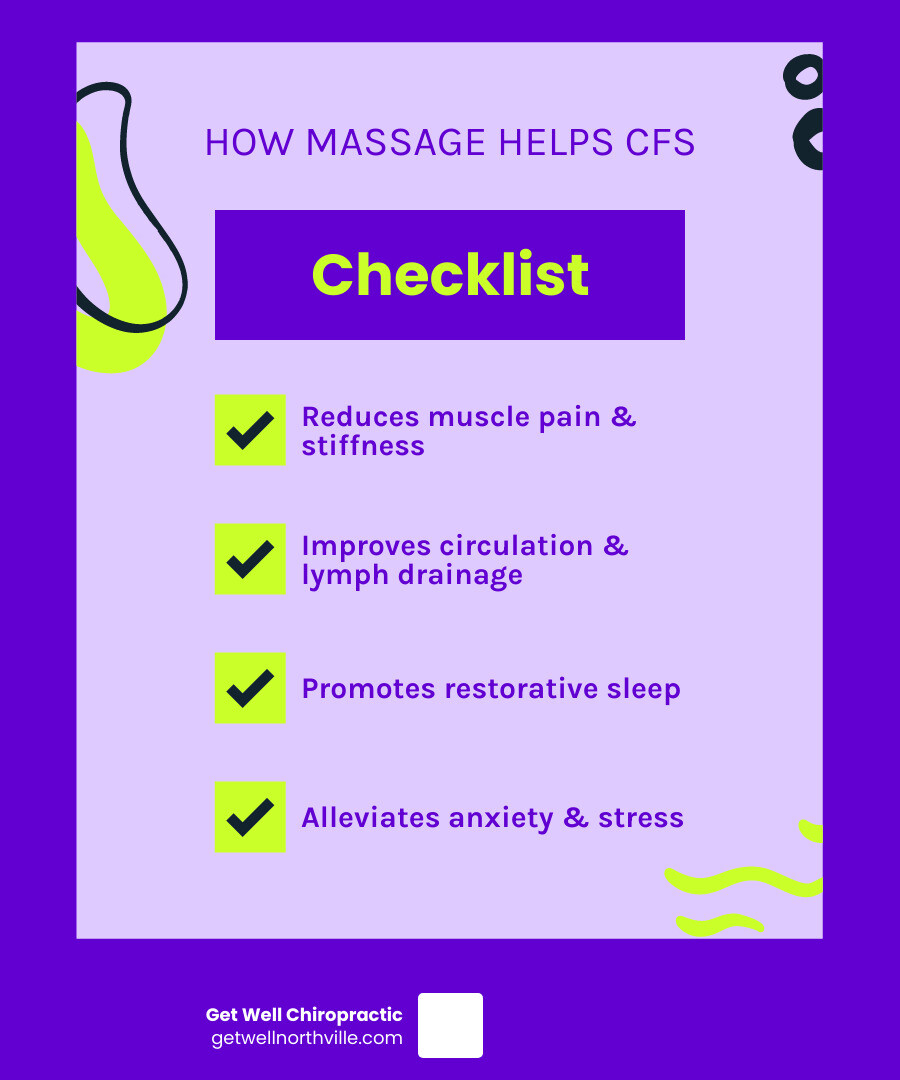
Key ways massage helps with chronic fatigue:
- Reduces muscle pain and stiffness through gentle myofascial release and light stretching
- Improves circulation and lymphatic drainage to remove metabolic waste and reduce inflammation
- Promotes better sleep by activating the parasympathetic nervous system and lowering stress hormones
- Alleviates anxiety and stress through the release of endorphins and oxytocin
- Supports immune function with specialized lymphatic drainage techniques
Chronic Fatigue Syndrome (CFS), also called Myalgic Encephalomyelitis (ME), is a debilitating condition that affects millions of people worldwide. Unlike normal tiredness, CFS involves extreme fatigue that doesn’t improve with rest and often worsens with physical or mental activity.
When Wendi White first experienced functional pain related to chronic fatigue, her sensitivity to touch was so intense that she feared she had cancer. Many people with CFS share similar experiences—struggling with widespread pain, cognitive difficulties, unrefreshing sleep, and a healthcare system that often dismisses their symptoms.
The hallmark of CFS is post-exertional malaise—a worsening of symptoms after even minor exertion. This can include physical exhaustion, brain fog, joint pain, swollen lymph nodes, and difficulty concentrating. These symptoms seriously impact quality of life, making everyday activities feel overwhelming.
Recent research shows that massage therapy has a significant therapeutic effect on CFS. A systematic review of 32 randomized controlled trials involving 2,594 CFS patients found that massage therapy reduced fatigue scores by 45-52%, with improvements in both physical and mental fatigue. The effective rate for massage was 23% better than other therapies, with minimal adverse reactions.
Unlike aggressive deep tissue work, massage for chronic fatigue focuses on gentle, supportive techniques that respect the body’s sensitivity. The goal isn’t to “fix” you with deep pressure—it’s to help your body find its own path to healing through relaxation, improved circulation, and nervous system support.
The Physiological Link: How Your Body’s Systems Relate to CFS
CFS is often a mystery, even to the medical community. It’s not just about feeling tired; it’s a complex interplay of various bodily systems going haywire. Imagine your body is a finely tuned orchestra, and with CFS, some sections are playing out of tune, while others are barely playing at all. This can lead to a vicious cycle of fatigue, pain, and cognitive issues.
One of the key players in this intricate dance is your lymphatic system, alongside your nervous system and hormonal responses. When these systems are under constant strain or aren’t functioning optimally, the symptoms of CFS can become overwhelming.

The Role of the Lymphatic System in Fatigue
Our lymphatic system is like the body’s unsung hero—a crucial part of our immune system and waste disposal unit. It’s a network of vessels and nodes that transports lymph, a fluid rich in white blood cells, throughout the body. Its main job? To remove waste products, toxins, and excess fluids from our tissues. Think of it as your body’s personal garbage collection and recycling service.
In CFS, there’s a growing theory that this system might not be pulling its weight. If the lymphatic system becomes sluggish or congested, toxins and metabolic waste can accumulate in the tissues. This accumulation can lead to increased inflammation and immune dysregulation, which are believed to play a significant role in CFS symptoms. Many individuals with CFS report experiencing symptoms like swollen lymph nodes and joint pain, which could be indicative of lymphatic congestion. Some researchers even believe that lymphatic dysfunction may be linked to CFS symptoms due to neuroinflammation and immune dysregulation. By supporting the efficient flow of lymph, we aim to alleviate some of these underlying physiological stressors. For more information on managing pain, including joint pain, you can explore More info about pain management.
Stress, Sleep, and the Nervous System Connection
The sympathetic nervous system, often dubbed our “fight or flight” response, can get stuck in overdrive with CFS. This constant state of alert can wreak havoc on our bodies, leading to chronic stress, liftd cortisol levels, and a host of physical symptoms. Conversely, the parasympathetic nervous system is our “rest and digest” mode, responsible for inducing calm and relaxation. For people with CFS, shifting into this relaxed state can be incredibly challenging.
Sleep disturbances are a hallmark of CFS, with many experiencing unrefreshing sleep despite spending adequate time in bed. This can be exacerbated by an overactive sympathetic nervous system and high levels of stress hormones. Massage therapy can help stimulate the parasympathetic nervous system, guiding the body toward a state of calm. This not only promotes relaxation but also encourages the release of natural feel-good hormones like endorphins (our body’s natural painkillers) and oxytocin, while lowering stress hormones like cortisol. This hormonal rebalance can be a game-changer for improving sleep quality and reducing the pervasive anxiety and muscle tension often associated with CFS.
How Massage Alleviates CFS Symptoms
Massage therapy isn’t a cure for Chronic Fatigue Syndrome, and we would never claim it to be. However, it offers a gentle, non-invasive, and deeply supportive pathway to managing the challenging symptoms of CFS, significantly improving daily comfort and overall well-being. Our approach at Get Well Chiropractic focuses on supporting your body’s natural healing processes and providing much-needed relief.

Easing Muscle and Joint Pain
Widespread muscle and joint pain are common, unwelcome companions for those with CFS. This pain can range from a dull ache to intense soreness, often concentrated in the shoulders, neck, and back. Our massage therapists understand that deep pressure might not always be appropriate for sensitive bodies dealing with CFS. Instead, we focus on techniques like gentle Swedish massage, myofascial release, and light stretching. These methods help relieve muscle tightness, increase blood flow to affected areas, and promote the release of endorphins, your body’s natural painkillers. The goal is to bring relief to muscles that often struggle to relax, which is a common issue in functional pain conditions. For a deeper dive into how massage addresses pain, explore How Massage Therapy Techniques Alleviate Pain.
Promoting Restorative Sleep and Reducing Stress
One of the most frustrating aspects of CFS is the unrefreshing sleep. Even after a full night in bed, many feel as though they haven’t rested at all. This cycle of poor sleep and chronic fatigue can be incredibly debilitating. Massage therapy is renowned for its ability to calm the nervous system. By stimulating the parasympathetic nervous system, we encourage a state of deep relaxation, which can lead to more restful and restorative sleep patterns.
Beyond sleep, massage is a powerful antidote to the emotional stress, frustration, anxiety, and depression that often accompany CFS. It helps reduce stress by lowering cortisol levels and promoting the release of oxytocin, known as the “feel-good” hormone. This calming effect not only improves mood but also positively influences energy levels, helping to break the cycle of stress-induced fatigue.
Boosting Circulation and Lymphatic Drainage
Imagine your body’s internal highways are a bit congested. For individuals with CFS, circulation can be sluggish, meaning essential nutrients and oxygen aren’t reaching cells as efficiently as they should, and metabolic waste products aren’t being removed quickly enough. This can contribute to the pervasive feeling of fatigue and general malaise.
Chronic fatigue massage, particularly techniques like Manual Lymphatic Drainage, can significantly improve this. Gentle strokes and targeted movements help blood flow more efficiently throughout the body, delivering vital oxygen and nutrients to every cell. Simultaneously, these techniques assist the lymphatic system in flushing out accumulated metabolic waste and toxins. This process helps reduce inflammation, which is thought to play a role in CFS symptoms, and can leave you feeling less sluggish and more energized. It’s like giving your body’s internal systems a much-needed tune-up!
Specialized Chronic Fatigue Massage Techniques
When it comes to chronic fatigue massage, one size certainly does not fit all. Our approach at Get Well Chiropractic is always custom to your unique needs, especially given the sensitivity often associated with CFS. We prioritize gentle, therapeutic techniques that support your body without overwhelming it.
Manual Lymphatic Drainage (MLD) for CFS
Manual Lymphatic Drainage (MLD) is a gentle, non-invasive technique that uses light, rhythmic strokes to stimulate the lymphatic system. It’s often described as a “light touch” massage, but don’t let the gentleness fool you—it’s incredibly powerful. The aim is to encourage the natural movement of lymph fluid, which helps reduce swelling, remove toxins, and support immune function. For individuals with CFS, where lymphatic congestion might contribute to symptoms like swollen lymph nodes and inflammation, MLD can be particularly beneficial. It helps to clear out the “junk” that might be making you feel even more fatigued and achy, strengthening your immune response and promoting overall wellness.
An Introduction to The Perrin Technique™
Developed by Dr. Raymond Perrin in 1989, The Perrin Technique™ is an osteopathic approach specifically designed for ME/CFS. This technique operates on the theory that stress factors (physical, emotional, chemical, or immunological) can cause excessive strain on the sympathetic nervous system, leading to a disturbed lymphatic pump mechanism. This disturbance can result in the backflow and accumulation of toxins in the lymphatic system, particularly in the chest and neck, and even in the cerebrospinal fluid.
The Perrin Technique™ involves specific manual therapy to gently drain these accumulated toxins from the cerebrospinal fluid into the lymphatic system. This is achieved through movement of the spine and careful massage of the soft tissues in the head, neck, back, and chest. The ultimate goal is to restore correct function to the hypothalamus and sympathetic nervous system, alleviating CFS symptoms. You can learn more about this specialized technique by watching The Perrin Technique™ a guide for the Health Care Practitioner. While we focus on a broader range of therapeutic massage at Get Well Chiropractic, understanding techniques like Perrin’s highlights the importance of lymphatic health in CFS management.
What is a Chronic Fatigue Massage Session Like?
A chronic fatigue massage session at Get Well Chiropractic in Northville, MI, is a highly personalized experience designed with your unique sensitivities and symptoms in mind. Here’s what you can generally expect:
- Initial Consultation: We’ll start with a thorough conversation about your symptoms, energy levels, pain points, and any areas of particular sensitivity. Your comfort is our top priority, so we’ll listen carefully to understand your needs.
- Customized Pressure: Unlike typical massages that might involve deep tissue work, our therapists will use very gentle, light pressure. We’ll check in with you frequently to ensure the pressure is comfortable and therapeutic, never overwhelming.
- Gentle Techniques: We’ll employ a combination of techniques such as Manual Lymphatic Drainage, gentle Swedish massage, and myofascial release. The focus will be on relaxation, improved circulation, and calming your nervous system.
- Focus on Relaxation: The ambiance will be designed for tranquility—soft lighting, quiet environment, and comfortable positioning. We want you to feel safe and supported, allowing your body to fully relax and your parasympathetic nervous system to engage.
- Post-Session Care: After your session, we’ll discuss any immediate effects and offer advice on how to continue supporting your well-being at home, such as staying hydrated or engaging in gentle movement.
Our goal is to provide a sanctuary where you can find relief and rejuvenation, custom specifically to the challenges of living with CFS.
The Science and Safety of Massage for CFS
Understanding the scientific basis and safety considerations is paramount when exploring any complementary therapy for Chronic Fatigue Syndrome. We believe in providing evidence-informed care and ensuring our clients are well-informed.
What the Research Says
The scientific community is increasingly recognizing the potential benefits of massage therapy for CFS. A recent systematic review and meta-analysis published in Medicine (Baltimore), titled The effect of massage on patients with chronic fatigue syndrome: A systematic review and meta-analysis, pooled data from 32 randomized controlled trials involving 2,594 CFS patients. The findings were quite compelling:
- Significant Therapeutic Effect: Massage therapy demonstrated a significant therapeutic effect on CFS.
- Improved Fatigue Scores: The total score on the Fatigue Scale (FS-14) in the massage group was significantly lower than in control groups (MD = −1.59, P < .00001). This includes both physical fatigue (MD = −1.30, P < .00001) and mental fatigue (MD = −0.84, P < .0001).
- Higher Effective Rate: The effective rate for massage therapy was significantly better than other therapies (RR = 1.23, P < .00001).
- Minimal Adverse Reactions: The review noted that massage therapy generally avoids adverse reactions. Only one study reported minor, temporary issues like local swelling, skin bruising, and nausea, which were not serious.
This robust analysis provides strong evidence that massage therapy is a safe and effective complementary treatment for alleviating fatigue symptoms in CFS patients. It offers a comfortable, non-invasive, and painless option that can significantly improve quality of life.
Risks and Important Considerations
While the research is promising, it’s crucial to approach chronic fatigue massage with careful consideration. Your well-being is our priority, and that includes minimizing any potential risks.
- Consult Your Healthcare Provider: Always, always, always consult with your primary healthcare provider or CFS specialist before starting any new treatment, including massage therapy. They can ensure it’s appropriate for your specific health situation.
- Finding a Qualified Therapist: This is not the time for just any massage. Seek out a massage therapist experienced in working with chronic illnesses, particularly CFS or fibromyalgia. They should understand the nuances of touch sensitivity and the importance of gentle techniques. Our team at Get Well Chiropractic in Northville, MI, is trained to handle such sensitivities with the utmost care and compassion.
- Avoiding Deep Pressure: For many with CFS, deep tissue massage can be counterproductive, potentially triggering pain or post-exertional malaise. The focus should be on gentle, soothing, and superficial techniques that promote relaxation and lymphatic flow, not muscle stripping.
- Listening to Your Body: Communication is key. During your session, tell your therapist immediately if anything feels uncomfortable or too intense. After the session, pay attention to how your body responds. Some individuals might experience a temporary increase in fatigue or mild soreness, especially in the initial sessions. This is why starting gently and gradually is essential.
- Potential for Flare-ups: While massage is generally safe, there’s always a slight risk of a symptom flare-up, especially if the pressure is too strong or the session is too long. A good therapist will work with you to find the optimal duration and intensity to minimize this risk.
TABLE: Potential Benefits vs. Risks of Massage for CFS
| Potential Benefits | Potential Risks (if not properly managed) |
|---|---|
| Significant reduction in overall fatigue | Temporary increase in fatigue |
| Improved physical and mental energy | Muscle soreness or discomfort |
| Reduced muscle and joint pain | Potential for symptom flare-up |
| Improved relaxation and stress reduction | Overstimulation if pressure is too deep |
| Better sleep quality | |
| Boosted circulation and lymphatic drainage | |
| Strengthened immune function |
Frequently Asked Questions about Chronic Fatigue Massage
We often hear similar questions from our clients in Northville, MI, who are considering chronic fatigue massage. Here are some answers to help you steer this path.
How often should I get a massage for CFS?
The ideal frequency for massage therapy for CFS is highly individualized. It depends on your current symptoms, energy levels, and how your body responds to the treatment. Many people find that starting with weekly or bi-weekly sessions helps establish a routine and allows them to gauge the benefits. As your symptoms improve, you might be able to space out sessions to every three or four weeks. Your therapist at Get Well Chiropractic will work closely with you to create a personalized plan that supports your well-being without causing over-exertion. The key is consistent, gentle support rather than intense, infrequent sessions.
Will massage therapy cure my Chronic Fatigue Syndrome?
It’s important to have realistic expectations. Massage therapy, including specialized chronic fatigue massage, is not a standalone cure for Chronic Fatigue Syndrome. CFS is a complex, chronic condition, and there is currently no definitive cure. However, as the scientific evidence suggests, massage can be an incredibly effective complementary therapy. It can significantly alleviate many of the debilitating symptoms, improve your quality of life, and help you manage the condition more effectively. Think of it as a powerful tool in your CFS management toolkit, working alongside other treatments and lifestyle adjustments to help you reclaim some energy and comfort.
How is massage for CFS different from a regular massage?
The primary difference lies in the approach, pressure, and specific techniques employed. A “regular” massage often implies a more vigorous, deeper pressure to address muscle knots or tension, which might be suitable for athletes or individuals without chronic pain conditions.
For CFS patients, the massage experience is fundamentally different:
- Gentle Pressure is Key: We avoid deep pressure that could overwhelm a sensitive nervous system or trigger pain. The touch is light, nurturing, and always within your comfort zone.
- Focus on the Nervous System: The primary goal is to calm the sympathetic nervous system and activate the parasympathetic “rest and digest” response, promoting deep relaxation.
- Specialized Techniques: Techniques like Manual Lymphatic Drainage are often incorporated to support detoxification and immune function, which are particularly relevant for CFS.
- Pacing and Communication: Sessions are carefully paced, and continuous communication between you and your therapist is paramount to ensure you don’t experience post-exertional malaise. We listen intently to your body’s signals.
- Holistic Integration: It’s seen as part of a broader holistic care plan, not an isolated treatment.
Essentially, a chronic fatigue massage is a highly empathetic and custom bodywork experience designed to support a body that is already working overtime to cope with chronic illness.
A Holistic Path to Managing CFS
Living with Chronic Fatigue Syndrome can feel like navigating a maze blindfolded. But here at Get Well Chiropractic, we believe in shedding light on the path to better energy and improved well-being. Massage therapy is a powerful component of a holistic approach to managing CFS, but it thrives when integrated with other supportive strategies.
Our expert team in Northville, MI, understands that true wellness involves addressing the whole person. Alongside chronic fatigue massage, we encourage our clients to explore other elements that can contribute to their healing journey:
- Pacing Strategies: Learning to manage your energy and avoid over-exertion is crucial for CFS. Massage can help you understand your body’s limits better, but pacing is an ongoing skill to develop.
- Nutrition: A balanced, anti-inflammatory diet can significantly impact energy levels and reduce systemic inflammation.
- Gentle Movement: While strenuous exercise can trigger post-exertional malaise, gentle activities like stretching, walking, or yoga can support circulation and mood.
- Chiropractic Care: As a chiropractic clinic, we recognize the profound connection between spinal health and overall nervous system function. Chiropractic adjustments can help optimize nerve flow, which is vital for a body struggling with CFS.
- Stress Management Techniques: Beyond massage, practices like mindfulness, meditation, or deep breathing can further support nervous system regulation.
We are committed to providing comfortable, honest, and compassionate service, focusing on natural healing and long-term wellness for our community in Northville, MI. If you’re ready to explore how specialized chronic fatigue massage and a holistic approach can bring more relief and vitality into your life, we invite you to connect with us.
Discover our massage therapy services and take the next step towards a soothing path to better energy.

