Is Core Muscle Pain Slowing You Down?
Core muscle pain affects millions of people worldwide, often manifesting as deep, chronic discomfort in your abdomen, lower back, or groin. Whether you’re an athlete dealing with a sports injury or someone experiencing everyday aches, understanding what’s happening in your body is the first step toward relief.
Quick Answer: What You Need to Know About Core Muscle Pain
- What it is: Pain from tears or strain in the muscles connecting your chest to mid-thigh, most commonly where abdominal and thigh muscles attach to the pubic bone
- Common symptoms: Deep groin or lower abdominal pain that worsens with activity, coughing, sneezing, or sudden movements
- Who gets it: Athletes in sports requiring kicking or quick direction changes (soccer, hockey, football), though anyone can experience it
- Key difference: Unlike a hernia, core muscle injuries don’t create a visible bulge
- Treatment options: Rest, physical therapy, chiropractic care, and in severe cases, advanced medical intervention
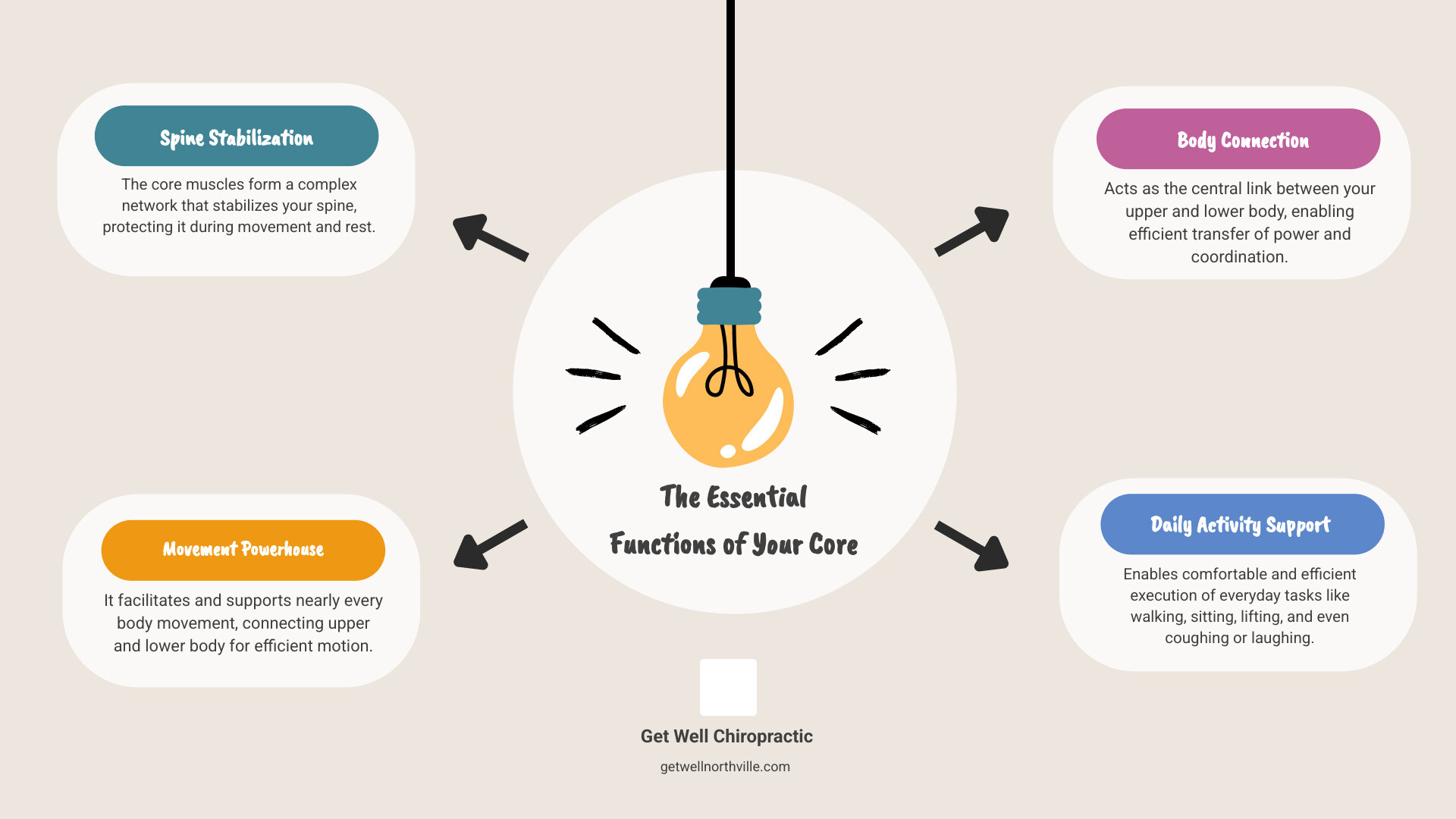
Your core isn’t just about having strong abs. These muscles form a complex network that stabilizes your spine, supports every movement you make, and connects your upper and lower body. When these muscles are injured or strained, the pain can be debilitating—turning simple activities like walking, sitting, or even laughing into uncomfortable experiences.
According to recent research, approximately 619 million people globally suffer from low back pain, with 80-90% of cases classified as non-specific—meaning there’s no clearly identifiable cause. Many of these cases involve core muscle dysfunction that goes undiagnosed or misunderstood.
The good news? With proper diagnosis and treatment, most people can recover from core muscle pain and return to their normal activities. This guide will help you understand what’s causing your discomfort and what steps you can take toward healing.
Understanding Your Core and What Goes Wrong
When we talk about the “core,” we’re not just referring to the six-pack muscles. Our core is a sophisticated system of muscles that extends from our chest down to our mid-thigh. It acts as the central powerhouse of our body, providing stability and facilitating movement. Think of it as the foundation of your entire physical structure.
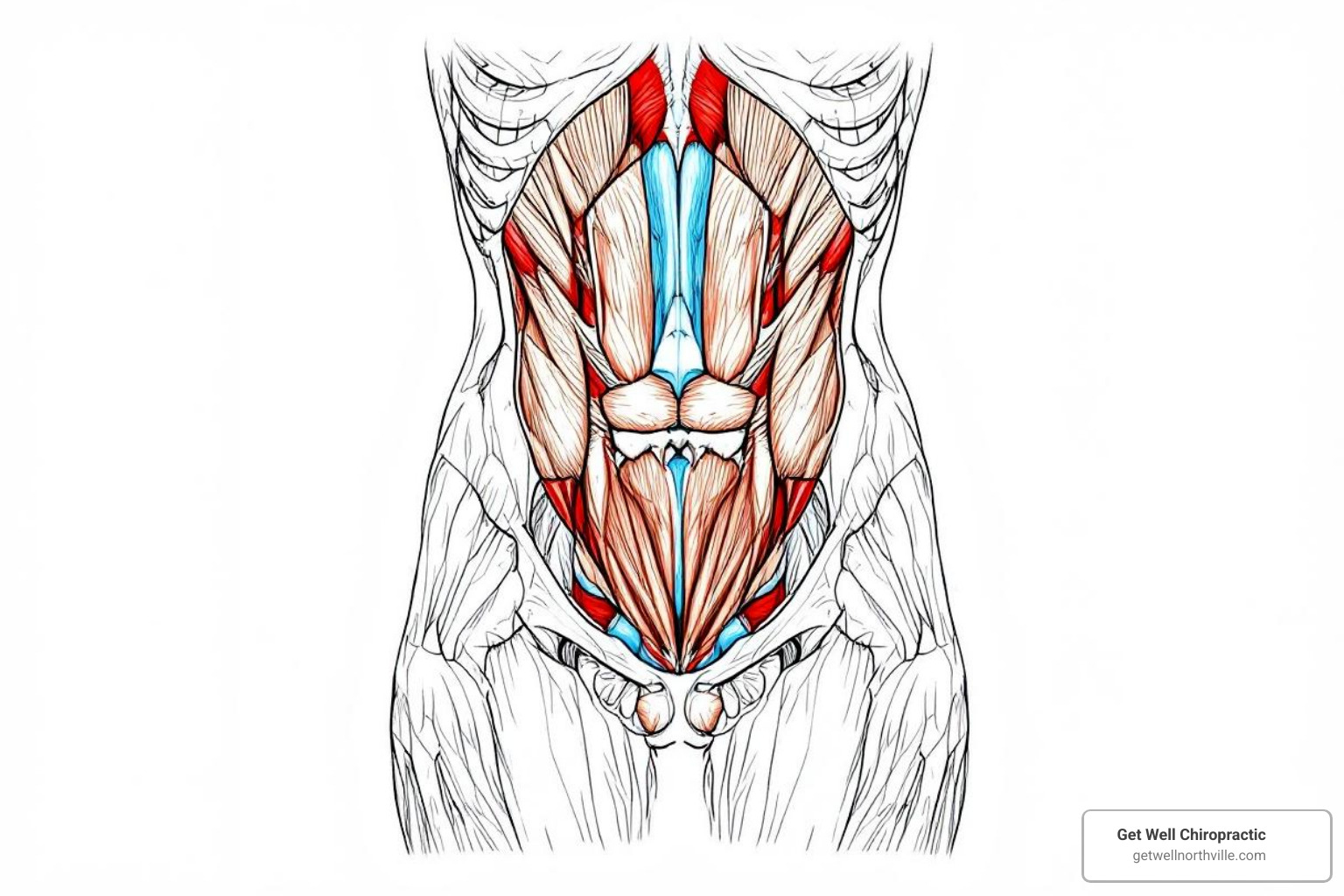
The core muscle group includes:
- Abdominals: These include the rectus abdominis (the “six-pack” muscles), the internal and external obliques (side muscles), and the transverse abdominis (a deep muscle that wraps around our front like a corset).
- Pelvic Floor: These muscles form a sling at the bottom of our pelvis, supporting our organs and contributing to core stability.
- Lower Back Muscles: The erector spinae and multifidi run along our spine, helping us maintain an upright posture and control spinal movement.
- Glutes: Our gluteal muscles (buttocks) play a crucial role in hip movement and overall lower body stability, which is intrinsically linked to our core.
- Hip Flexors: These muscles help lift our knees and bend at the waist.
- Diaphragm: Even our primary breathing muscle contributes to core stability by regulating intra-abdominal pressure.
These muscles work in harmony to stabilize our spine, facilitate movement, and transfer force between our upper and lower body. A strong core allows us to perform everyday movements—like bending, lifting, or twisting—with ease and without injury.
So, what happens when something goes wrong? This is where a core muscle injury (CMI) comes into play. A CMI is an injury to these vital muscles, often involving tears or a series of micro-tears. These injuries most commonly occur where the abdominal and thigh muscles attach to the pubic bone. You might have heard CMI referred to by other names, such as “sports hernia,” “athletic pubalgia,” or “Gilmore groin.” While often grouped with hernias due to similar symptoms, a CMI is distinct because it primarily involves muscle or tendon damage rather than a protrusion of tissue.
Whether it’s a sudden muscle strain from an awkward movement or a more gradual tendon injury due to repetitive stress, these injuries can severely impact our ability to move freely and without pain.
Causes and Symptoms of Core Muscle Pain
Understanding the root causes and recognizing the symptoms of core muscle pain is crucial for timely intervention and effective treatment. These injuries don’t just happen out of the blue; they often result from specific actions or cumulative stress on our core musculature.
Common causes of core muscle injuries include:
- Repetitive Movements: Activities that involve repeated twisting, turning, kicking, or swinging can gradually wear down core muscles and tendons. Think of athletes in sports like golf, soccer, or hockey.
- Sudden Twisting: An abrupt, forceful twist of the torso, especially when unprepared, can lead to immediate muscle strain or tears.
- Improper Lifting: Lifting heavy objects without engaging our core muscles, or using incorrect form, places undue stress on our back and abdominal muscles. This is a classic recipe for injury!
- Poor Posture: Chronic slouching or maintaining awkward positions can weaken core muscles over time, making them more susceptible to injury. Our abs support our back and spine, so a weak core means our back has to work harder, leading to pain.
- Weak Muscles: If our core muscles aren’t strong enough to handle the demands placed upon them, other structures like ligaments and spinal discs may take on too much load, leading to pain.
- Vigorous Coughing, Sneezing, or Laughing: Any activity that dramatically increases intra-abdominal pressure can, in rare cases, cause or worsen an abdominal strain.
- Overstretching: Pushing our abdominal or inner thigh muscles beyond their capacity can result in tears.
Certain risk factors also increase our susceptibility to CMIs. Athletes, particularly those involved in sports with a lot of kicking or frequent speed changes, such as soccer, football, and hockey, are commonly affected. Statistics show that men and boys are more likely to get a core muscle injury, with females making up about 5-15% of cases. Younger individuals, in their youth, teens, and 20s, are also more prone due to the high-impact nature of their athletic activities.
When a core muscle injury occurs, the symptoms can range from annoying to debilitating. Here’s what you might experience:
- Deep Groin or Lower Abdominal Pain: This is the most common symptom. The pain often resolves when resting but flares up when exercising, especially with explosive movements or sudden changes in direction.
- Sharp Pain: You might feel a distinct, acute pain, particularly during specific movements.
- Dull Ache: A persistent, throbbing discomfort in the affected area.
- Pain with Exertion: Activities that engage the core, like sit-ups, running, or even getting out of bed, can significantly increase pain.
- Pain with Coughing or Sneezing: The sudden increase in abdominal pressure can make these actions quite painful.
- Chest or Rib Pain: Depending on the specific muscles affected, pain can sometimes extend into the chest or rib area.
- Pain Radiating to the Thigh: The discomfort might travel from your abdomen or groin down into your inner thigh.
- Tenderness: The injured area might be sensitive to touch.
- Stiffness: You might feel stiff, especially when getting off the couch or out of bed, indicating weakened core muscles struggling to support your posture.
- Reduced Range of Motion: Difficulty performing movements that involve the core, hips, or lower back.
- Sciatica-like Symptoms: Back pain that travels down your leg can also be a sign of a weak core, as insufficient abdominal support can put increased pressure on the spine.
Here’s a list of sports and activities with a high risk for core muscle injuries:
- Soccer
- Football
- Hockey
- Track and Field (especially sprinting and problems)
- Tennis and other racket sports
- Basketball
- Golf
- Rugby
- Weightlifting (especially with improper form)
- Gymnastics
- Dance
Getting a Diagnosis: Is It a Strain or a Hernia?
When you experience pain in your abdominal or groin region, one of the first questions that often arises is, “Is this a muscle strain or a hernia?” While both can cause similar symptoms, they are distinct conditions requiring different approaches to diagnosis and treatment. It’s like comparing a bruised apple to a rotten one – both are problematic, but the underlying issue is different.
Our diagnostic process typically begins with a thorough physical examination and a detailed review of your patient history. We’ll ask about the onset of your pain, specific activities that trigger or worsen it, and any other associated symptoms. During the physical exam, we’ll assess your range of motion, pinpoint areas of tenderness, and perform specific tests to evaluate muscle integrity and rule out other conditions. For instance, pain localized proximal to the inguinal ligament, especially with tenderness at the rectus abdominis insertion, is highly suggestive of a core muscle injury. We might also check for the presence of a bulge, which is a key differentiator for hernias.
To confirm a diagnosis and rule out other potential issues, we may use various diagnostic tools:
- MRI (Magnetic Resonance Imaging): This is often the preferred imaging method for core muscle injuries due to its sensitivity and specificity in visualizing soft tissues like muscles, tendons, and ligaments. It can reveal tears or micro-tears that might be missed by other methods.
- Ultrasound: Dynamic ultrasonography is increasingly used, especially in athletes, as it can show muscle and tendon movement in real-time, helping to identify areas of instability or tearing.
- X-ray: While X-rays primarily visualize bones, they can be used to rule out bone-related issues, fractures, or other skeletal abnormalities that might be contributing to your pain.
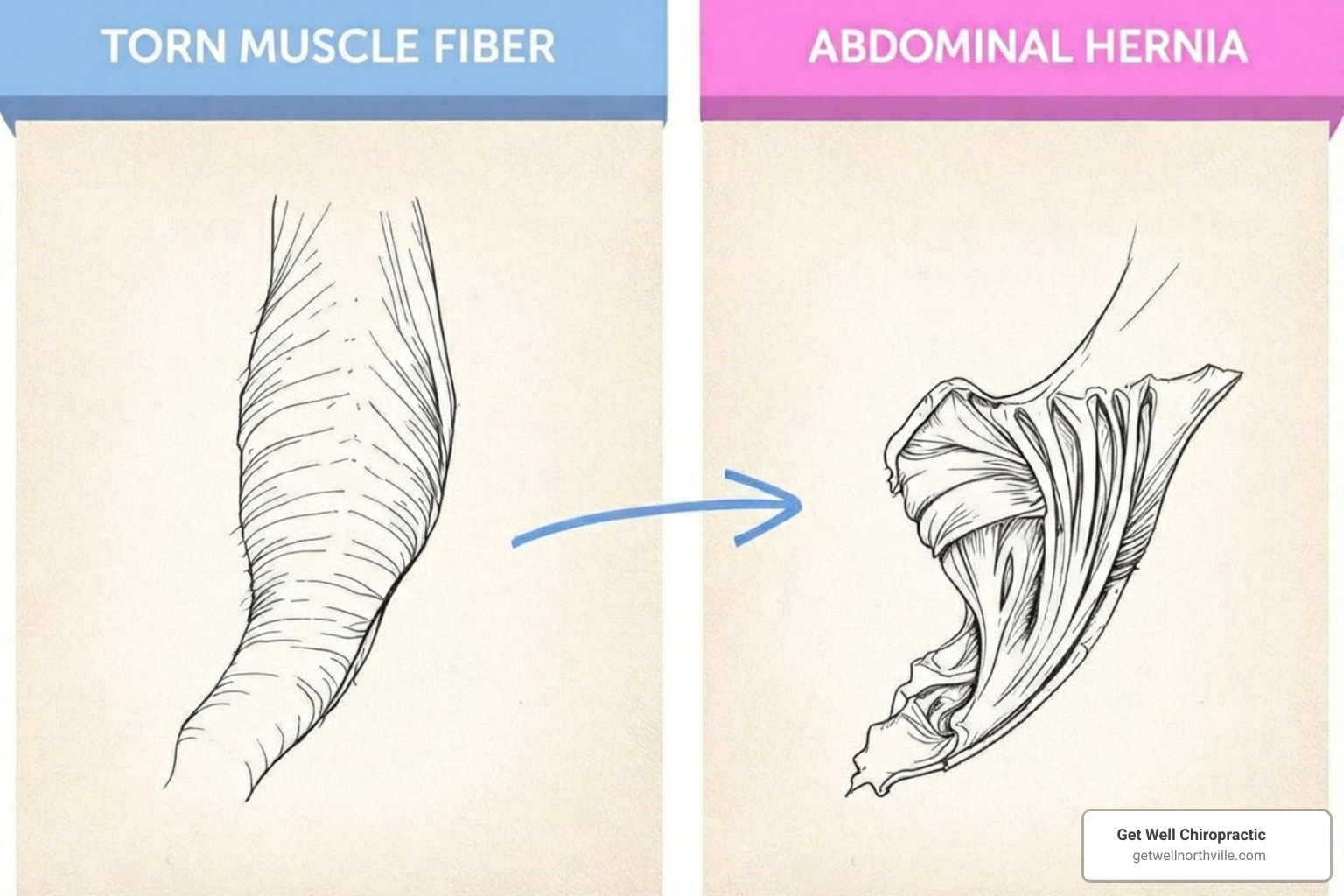
The crucial distinction lies between a hernia vs. CMI. A core muscle injury (CMI) involves damage (tears or micro-tears) to the muscles and tendons themselves, particularly where they attach to the pubic bone. It’s primarily a soft tissue injury. A hernia, on the other hand, occurs when an internal organ or tissue (like a part of the intestine) pushes through a weak spot or opening in the muscle or tissue wall that normally contains it. While a CMI might weaken the abdominal wall, it doesn’t necessarily involve the protrusion of an organ.
Here’s a table comparing Core Muscle Injury and Inguinal Hernia:
| Feature | Core Muscle Injury (CMI) | Inguinal Hernia |
|---|---|---|
| Definition | Tears or micro-tears in abdominal/thigh muscles/tendons, often near the pubic bone. | Protrusion of an organ (e.g., intestine) through a weak spot in the abdominal wall. |
| Presence of Bulge | Typically no visible or palpable bulge. | Often presents with a visible or palpable bulge, especially when straining. |
| Cause | Overuse, repetitive stress, sudden forceful movements (e.g., kicking, twisting), muscle imbalance. | Weakness in the abdominal wall, increased intra-abdominal pressure (e.g., heavy lifting, chronic coughing, straining). |
| Symptoms | Deep groin/lower abdominal pain, pain with exertion, coughing, sneezing, movement; may radiate to thigh. No bulge. | Groin pain, discomfort, or pressure, often worsening with activity. May have a visible bulge that reduces when lying down. |
| Treatment | Rest, PT, anti-inflammatories, injections, in severe cases, surgical repair of torn muscles/tendons. | Often requires surgery to repair the weak spot and push the protruding tissue back into place. |
| Progression | Can become chronic if untreated, but typically doesn’t involve organ protrusion. | Does not resolve on its own; can lead to complications like bowel obstruction if untreated. |
It’s worth noting that hernias are quite common; as much as 10% of the population will experience one in their life, and surgeons perform over a million hernia repair procedures yearly in the U.S. The most common type is an inguinal hernia, making up 75-80% of all cases. For a deeper understanding of abdominal wall pain, including distinguishing between different causes, you can refer to An overview of abdominal wall pain.
The key takeaway here is that an accurate diagnosis is paramount. We emphasize a comprehensive evaluation to ensure we’re treating the right problem with the most effective approach.
Your Path to Recovery: Treating Core Muscle Injuries
Once we’ve identified the source of your core muscle pain, our focus shifts to developing a personalized treatment plan aimed at alleviating your discomfort, restoring function, and preventing future injuries. Our approach often begins with conservative, non-surgical methods.
Conservative and Non-Surgical Treatments for Core Muscle Pain
For many individuals, especially with mild to moderate core muscle injuries, conservative treatments can be highly effective. These methods aim to reduce inflammation, promote healing, and strengthen the affected muscles without invasive procedures.
- Rest and Activity Modification: Giving the injured muscles time to heal is fundamental. This means temporarily avoiding activities that aggravate your pain. We’ll guide you on how to modify your daily movements to protect the healing tissues.
- Ice and Heat Therapy: Initially, applying cold packs to the affected area can help minimize swelling and reduce pain. Once the acute inflammation subsides, applying heat can increase blood flow and speed up the healing process.
- Anti-inflammatory Approaches: Over-the-counter anti-inflammatory medications can help manage pain and reduce inflammation. In some cases, therapeutic injections may be considered for targeted pain relief.
- Physical Therapy: This is a cornerstone of recovery for core muscle injuries. Our physical therapists are experts in musculoskeletal health and can design a custom program focusing on core stability. This includes exercises to strengthen the deep core muscles, improve flexibility, and correct movement patterns. Research consistently shows the benefits of physical therapy; for example, specific core exercises can significantly improve pain and functional status in patients with chronic low back pain. You can learn more about The role of core training for back pain.
- Chiropractic Care: As specialists in spinal health, we understand the intricate connection between your spine and core muscles. Our Chiropractic Care can address underlying spinal misalignments that might be contributing to muscle imbalances and pain. Through gentle adjustments and other therapies, we aim to restore proper nerve function, reduce inflammation, and improve your body’s natural healing capabilities.
- Deep Tissue Massage: This therapeutic technique can be incredibly beneficial for releasing tension, breaking down scar tissue, and improving blood flow to injured core muscles. It helps to alleviate muscle spasms and stiffness, promoting faster recovery. Explore the many Deep tissue massage benefits.
- Cold Laser Therapy: Also known as low-level laser therapy, this non-invasive treatment uses specific wavelengths of light to stimulate cellular function, reduce pain, and accelerate tissue repair. It’s a fantastic option for promoting natural healing in injured muscles and tendons. Find out more about Cold Laser therapy.
When is Advanced Care Necessary?
While conservative treatments are highly effective for many, there are instances where more advanced interventions, including surgery, may be necessary. This is typically considered if nonoperative treatment fails to provide significant relief after an adequate period, often around 12 weeks, or in cases of severe tears.
- Severe Tears: If diagnostic imaging reveals extensive tears in the muscles or tendons that are unlikely to heal sufficiently with conservative methods, surgery might be recommended.
- Failed Conservative Treatment: For athletes or individuals whose symptoms persist and significantly impact their quality of life despite diligent adherence to a conservative treatment plan, surgical evaluation becomes a viable next step.
-
Advanced Care Options: Surgical interventions for core muscle injuries can include:
- Suturing Muscle Attachments: Reattaching torn muscles or tendons to the bone to restore stability.
- Rectus Abdominis Reattachment: Specifically reattaching the rectus abdominis muscle to the pubic bone if it has been detached or significantly damaged.
- Adductor Compartmental Decompression/Repair: For injuries involving the adductor muscles of the inner thigh, procedures may involve releasing tension or repairing tears. Some innovative techniques, like the adductor longus tenotomy, release the tendinous portion of the attachment while preserving most of the muscle, reducing tension between abdominal and thigh muscles.
- Mesh Implants: In certain cases, especially if there’s significant weakness in the abdominal wall, a mesh may be used to reinforce the area, similar to some hernia repair procedures.
-
Collaborative Care with Healthcare Providers: For complex cases requiring surgical intervention, we believe in a collaborative approach. We work closely with surgeons and other medical specialists to ensure you receive comprehensive care that integrates surgical expertise with robust pre- and post-operative rehabilitation.
- Post-care Prognosis: The recovery timeline after surgery varies depending on the severity of the injury and the type of procedure. Athletes, for instance, might return to play around 4 weeks after an isolated sports hernia repair, but it could extend to 12 weeks if an adductor release is also performed, followed by a dedicated physical therapy program. We always strive for a full return to activity, emphasizing proper rehabilitation to regain strength and prevent recurrence. You can dig deeper into the evaluation and treatment of these injuries, especially in athletes, by reading Evaluation and Treatment in the Athlete.
Prevention and Long-Term Wellness
Preventing core muscle pain and ensuring long-term wellness is a journey, not a destination. By incorporating smart practices into our daily routines and exercise regimens, we can significantly reduce the risk of injury and maintain a strong, resilient core.
Preventing Future Core Muscle Pain and Injury
Prevention is always better than cure, and this holds especially true for our core. Here’s how we can proactively protect our core muscles:
- Proper Warm-up and Stretching: Before any physical activity, a dynamic warm-up prepares our muscles for action. Regular stretching, especially of the core, hip flexors, and hamstrings, improves flexibility and range of motion, reducing the likelihood of strains.
-
Core-Strengthening Exercises: Consistent core work is paramount. Exercises like planks, bridges, and bird dogs engage multiple core muscles, building strength and stability.
- Planks: These foundational exercises strengthen the entire core, including the deep transverse abdominis. Remember to keep your body in a straight line from head to heels, engaging your abs and glutes.
- Bridges: Excellent for strengthening the glutes and lower back, which are integral parts of the core.
- Bird Dog: This exercise improves balance and coordination while strengthening the core and back muscles.
-
Correct Lifting Form: Always lift with your legs, not your back. Engage your core by pulling your naval towards your spine before lifting, and keep the object close to your body. This simple technique can prevent many back and core injuries.
- Gradual Training Progression: Whether you’re starting a new exercise routine or increasing intensity, do so gradually. Overexertion and sudden increases in load are common culprits for muscle strains. Give your abdominal muscles adequate rest each week.
- Maintain Good Posture: Be mindful of your posture throughout the day, especially if you have a sedentary job. Good posture helps distribute weight evenly and minimizes strain on your core and spine. Ergonomic setups for workstations can also make a significant difference.
- Nutritional Support: Our diet plays a vital role in muscle health and recovery. Adequate protein, vitamins, and minerals support muscle repair and overall well-being. We offer Nutritional counseling for recovery to help you optimize your diet for healing and strength.
Long-Term Effects and Prognosis
The long-term outlook for core muscle pain largely depends on the severity of the initial injury, the timeliness and appropriateness of treatment, and adherence to rehabilitation and preventive measures.
- Recovery Outlook: With proper diagnosis and treatment, most individuals can achieve a full recovery and return to their desired activities, including high-level sports. The body is remarkably resilient, and muscles and tendons have a great capacity for healing.
- Chronic Pain Risk: If left untreated or improperly managed, core muscle injuries can lead to chronic pain. This can significantly impact your quality of life, leading to persistent discomfort, reduced mobility, and even psychological distress. Chronic low back pain, for instance, affects a staggering 619 million people globally, with many cases linked to core muscle dysfunction.
- Importance of Rehabilitation: A comprehensive rehabilitation program, often involving physical therapy and chiropractic care, is crucial not only for initial healing but also for long-term prevention. It helps restore strength, flexibility, and proper biomechanics, ensuring the core can adequately support the body.
- Connection to Low Back Pain: A strong core is your best defense against back pain. Weak core muscles force your back to work harder, making it vulnerable to injury and chronic discomfort. Strengthening your core can significantly reduce the incidence and severity of low back pain. Cleveland Clinic highlights Why a Strong Core Can Help Reduce Low Back Pain, emphasizing that while some studies show general exercise can be as effective, focused core work offers additional benefits.
We believe in empowering you with the knowledge and tools to not only recover from current pain but also to build a resilient body that can withstand the demands of daily life and athletic pursuits. Our goal is to help you achieve lasting wellness and enjoy a pain-free, active life.
Conclusion
Understanding and addressing core muscle pain is essential for anyone seeking to live a healthy, active life. From the intricate network of muscles that form our core to the various causes, symptoms, and treatment options, we’ve explored how these injuries can impact our well-being. We’ve seen that whether it’s a minor strain or a more significant tear, accurate diagnosis and a custom treatment plan are crucial for recovery.
At Get Well Chiropractic in Northville, MI, we emphasize a holistic approach to healing. We combine expert chiropractic care with complementary therapies like deep tissue massage, cold laser therapy, and nutritional counseling to support your body’s natural healing processes. Our focus is on identifying the root cause of your pain, not just masking the symptoms, and guiding you toward long-term wellness.
Don’t let core muscle pain dictate your life. We are here to help you regain your strength, restore your mobility, and return to the activities you love. Ready to address your core pain and restore your mobility? Explore our therapeutic massage services to start your healing journey.

