Why Back Muscle Relaxation Matters for Your Health
Back muscle relaxation is essential for relieving pain, improving mobility, and preventing future injury. If you’re experiencing back tension or spasms, here are the most effective methods:
Quick Relief Methods:
- Heat therapy – Apply heat for 20 minutes to increase blood flow and relax tight muscles
- Gentle stretching – Hold stretches like Knees to Chest for 20-30 seconds
- Light movement – Walk or do gentle activities to prevent stiffness
- Self-massage – Apply firm pressure to tender spots for 30-60 seconds
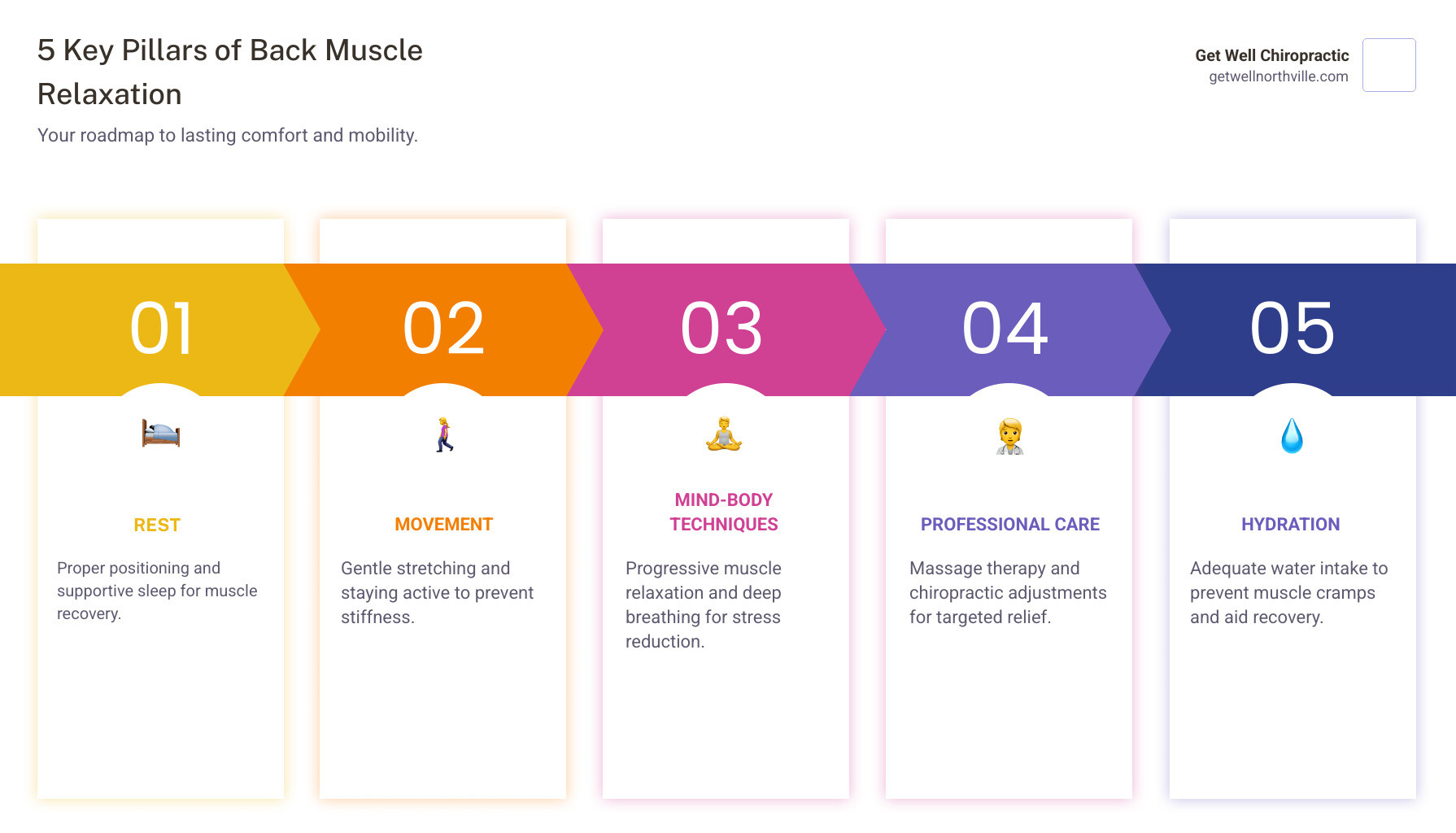
- Mind-body techniques – Practice progressive muscle relaxation or deep breathing
- Stay hydrated – Drink water to prevent muscle cramps and spasms
Back pain is incredibly common. Around 80% of people will experience some form of back pain in their lives. In fact, more than 25% of American adults are dealing with it right now.
The causes are varied. Daily stress, poor posture, improper lifting, and physical exertion all contribute to tight, painful back muscles. Sometimes the pain starts suddenly – a sharp spasm that locks you up. Other times it builds gradually from sitting too long or carrying tension throughout your day.
The good news? Most back muscle tension responds well to simple, natural approaches. You don’t always need medications or invasive treatments to find relief.
In this guide, we’ll walk you through proven methods to relax your back muscles – from immediate relief strategies you can use right now to long-term techniques that address the root causes of tension. Whether you’re dealing with an acute spasm or chronic tightness, you’ll find practical steps to ease your discomfort and get back to living your life.
Understanding Back Muscle Tension and Spasms
To achieve back muscle relaxation, it’s helpful to understand why muscles tighten or spasm. A spasm is an involuntary, sudden tightening of a muscle. The pain can range from a mild twitch to an agonizing lock-up, with lower back spasms being particularly common. Any muscle in your back can be affected.
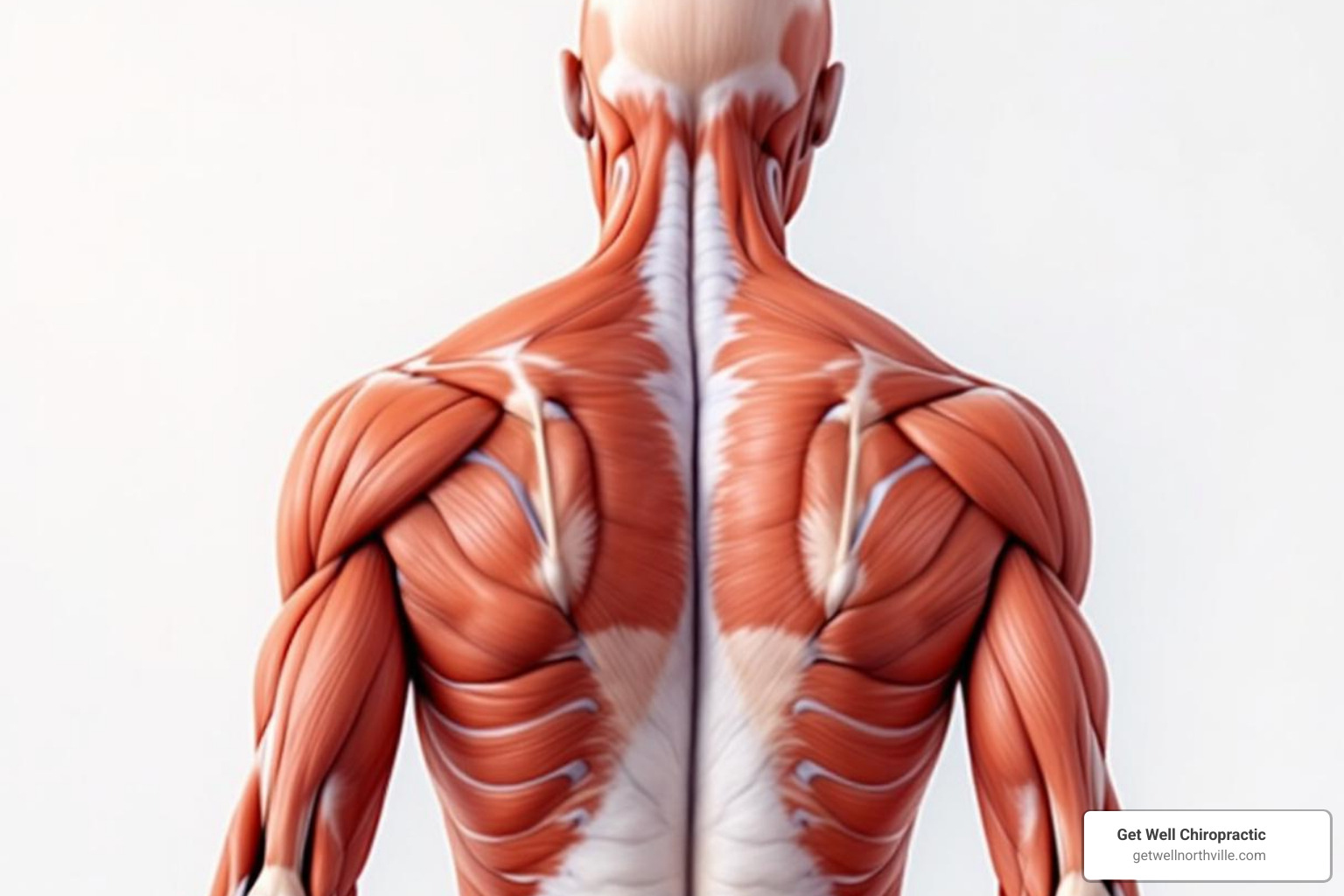
The muscles in your back are quite complex, divided into three main types:
- Superficial muscles: These are closer to the surface and primarily help with movement of your shoulders and arms.
- Intermediate muscles: These muscles assist with breathing and connect to your ribs.
- Deep/Intrinsic muscles: These are the muscles closest to your spine, responsible for supporting and moving your spine itself.
Back spasms are, unfortunately, common, affecting a vast majority of people at some point in their lives. They can begin without warning or build up from a mild twitch.
What Causes Back Muscles to Tighten?
Back muscles constantly support our posture and movements. When they become tense or spasm, it’s often a signal that something is amiss. Common culprits include:
- Overexertion: Pushing your physical limits during exercise or activities can lead to muscle fatigue and spasms.
- Improper Lifting: Lifting heavy objects incorrectly or twisting awkwardly can strain muscles and ligaments, triggering a painful spasm.
- Sedentary Lifestyle: A sedentary lifestyle with prolonged sitting leads to stiffness and reduced range of motion, contributing significantly to lower back pain.
- Poor Posture: Slouching or maintaining awkward positions puts undue stress on your back muscles, causing them to tighten as they try to compensate.
- Emotional Stress: Emotional stress is a major factor. When stressed, our bodies tense up, including back muscles. This can create a vicious cycle where pain causes more stress, which in turn causes more pain.
- Dehydration and Electrolyte Imbalance: Dehydration can increase the risk of muscle cramps and spasms. Our muscles need adequate hydration and electrolytes to function properly. Maintaining sufficient water intake and replenishing electrolytes can help prevent these issues.
Understanding these triggers is the first step toward effective back muscle relaxation and prevention.
Are Back Spasms a Sign of a Serious Condition?
While most back spasms are due to muscle strain or overuse and resolve with conservative care, it’s natural to wonder if they could indicate something more serious. Sometimes, pain from a back spasm can “radiate,” meaning it starts in your back but moves to other parts of your body like your legs or hips. This radiating pain can sometimes be a sign of nerve involvement.
Back spasms are generally not a direct sign of conditions like multiple sclerosis. However, they can be a symptom of other serious diseases, such as gallstones or ankylosing spondylitis, though these are less common associations.
More frequently, persistent spasms can be linked to spinal issues like disc bulges or herniations, where disc material puts pressure on nearby nerves, leading to pain, numbness, or weakness.
When should you be concerned and seek professional medical advice? We recommend seeing a doctor if your pain is acute and persists for more than a few days, or if you experience:
- Severe, burning pain that shoots down only one leg.
- Numbness or weakness in your legs or feet.
- Foot drop (difficulty lifting the front part of your foot).
- Unexplained severe pain-free weakness.
- Any changes in bowel or bladder function.
These symptoms could indicate a more serious underlying issue that requires prompt medical attention. For a more detailed understanding of back spasms, you can consult sources like the Cleveland Clinic on Back Spasms.
Immediate Relief for Acute Back Spasms
When a back spasm strikes, the pain can be intense, making it difficult to work or even relax. Our immediate goal is to soothe the affected muscles and provide comfort.
For acute back spasms, we often recommend a combination of at-home remedies. While complete rest used to be the go-to advice, we now know that prolonged inactivity can actually prolong recovery. Instead, gentle movement is key.
Heat and Ice Therapy
Both heat and ice are excellent tools for immediate back muscle relaxation and pain relief. They work in different ways to alleviate discomfort:
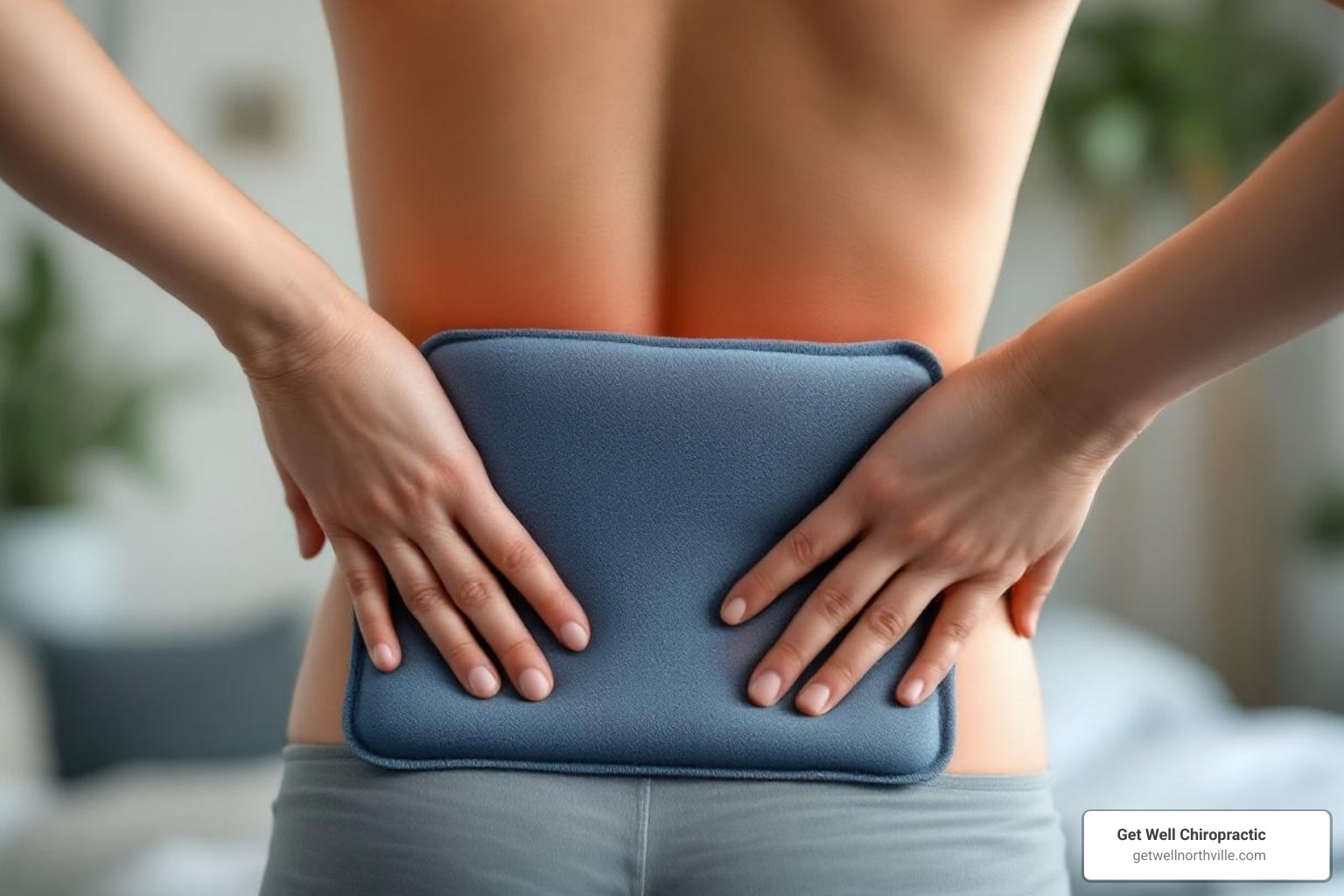
- How Heat Helps: Applying heat to your back can increase blood flow to the affected area, which helps relax tight muscles and ease tension. This increased circulation also brings essential nutrients to the muscles, aiding in recovery.
- How Ice Helps: Ice, on the other hand, works to reduce inflammation and provides a numbing effect that can significantly lessen pain. It’s particularly useful in the first 24-48 hours after an acute injury or spasm to control swelling.
- Alternating Therapy: We’ve found that alternating hot and cold packs can be particularly helpful. This combination leverages the benefits of both, promoting circulation while managing inflammation.
Application Guidelines:
When using heat or ice, remember to apply them for about 20 minutes at a time, with a 20-minute break in between. Always wrap hot or cold packs in a towel or cloth to protect your skin from direct exposure. For more on using heat and ice for muscular pain, check out this resource: Using heat and ice for muscular pain.
At-Home Comfort Measures
Beyond temperature therapy, there are several simple steps you can take to find immediate comfort during a back spasm:
- Gentle Self-Massage: Applying firm pressure to the affected muscle can help reduce pain, tension, and even stop spasms. Press on the painful area for 30 to 60 seconds, then gently rub the surrounding area in a circular motion. This can encourage the muscle to release its grip.
- Relaxation Positions: Finding a comfortable position can make a world of difference. Many people find relief by lying on their back with their knees bent and feet flat on the floor, or with a pillow under their knees to slightly lift them. This helps take pressure off the lower back.
- Use of Supportive Pillows: Strategic placement of pillows can support the natural curves of your spine, reducing strain. A small pillow under your lower back when sitting, or between your knees when sleeping on your side, can provide significant relief.
- Light Stretching as Tolerated: While a severe spasm might limit movement, very gentle stretching, if tolerated, can prevent further stiffness and encourage blood flow. Listen to your body and only move within a pain-free range. For more on how massage can aid in pain relief, consider exploring our insights on Massage therapy for pain relief.
Gentle Movement and Stretching for Back Muscle Relaxation
Once acute pain subsides, or for chronic tightness, gentle movement and stretching are key for back muscle relaxation. Staying active is crucial for managing back pain and offers numerous benefits:
- Improved Blood Flow: Movement helps circulate blood, delivering oxygen and nutrients to your muscles and carrying away waste products.
- Reduced Stiffness: Regular, gentle movement prevents muscles from becoming overly stiff and tight.
- Strengthening Muscles and Tendons: Consistent exercise helps build strength in the muscles and tendons supporting your back, making them more resilient to strain and injury.
Guidelines for Movement:
The key is to start slow and progress gradually. Avoid intense workouts if your back is vulnerable. It’s often better to do small amounts of exercise throughout the day rather than one long session. Slowly add repetitions or increase duration as you feel more comfortable.
Effective Stretches for Lower Back Pain
Stretching is a cornerstone of back muscle relaxation. It elongates muscles, relieves stiffness, and improves your range of motion. We encourage focusing on key muscle groups that directly impact lower back health:
- Hamstrings: Tight hamstrings can pull on your pelvis, contributing to lower back pain.
- Gluteals: Strong, flexible glutes help stabilize the pelvis and support the lower back.
- Hip Flexors: These muscles can become tight from prolonged sitting, pulling your pelvis forward and increasing the arch in your lower back.
Here are some effective stretches we recommend for lower back pain, as highlighted by experts:
- Knees to Chest: Lie on your back and gently pull one knee toward your chest, keeping your spine pressed to the floor. Hold for at least 30 seconds, then switch legs. You can also do both knees at once.
- Neural Glide (Nerve Flossing): This stretch, also known as nerve flossing, helps improve the mobility of nerves that run through your legs. While lying on your back, seated, or standing, gently stretch the hamstring by pulling the knee towards the body and then straightening the leg, holding for about 5 seconds.
- Figure Four Stretch (or Thread the Needle): Lie on your back, cross one ankle over the opposite knee. Gently pull your legs toward your chest until you feel a stretch in your glutes. Hold for 5 seconds and repeat.
- Hip Twist: Lie on your back with your knees bent and feet flat. Cross one leg over the other, then let your knees gently drop to one side, keeping your shoulders flat on the ground. Hold for 10 seconds and repeat on the other side.
- Lower Back Twist: Lie on your back with knees bent and feet on the floor, arms out to your sides. Keeping your knees together and shoulders on the ground, gently lower your knees to one side. Hold for up to 30 seconds, return to center, and repeat on the other side for three to five sets.
- Chair Stretch: Sit securely at the front of a sturdy chair with your feet shoulder-width apart. Bend forward, keeping your back and neck straight. Reach your hands toward your shins, stopping when you feel the stretch. Hold for 10 to 30 seconds, then slowly sit up. Repeat three to five times.
- Kneeling Extension (Cat-Cow): Get on your hands and knees with your shoulders over your hands. Rock forward and round your shoulders as your lower back drops toward the floor in a “cat” stretch. Hold for five seconds. Then rock backward and sit on your heels, stretching your arms in front of you with palms flat on the floor for the “cow” portion.
- Childs Pose: From a kneeling position, sit your hips back towards your heels and extend your arms forward on the floor, resting your forehead down. Hold for 30-60 seconds.
For more detailed guidance on effective stretches, you can refer to resources like The Best Stretches for Lower Back Pain.
How to Stretch for Effective Back Muscle Relaxation
To get the most out of your stretching routine for back muscle relaxation, follow these guidelines:
- Hold Duration: We recommend holding each stretch for 20 to 30 seconds. This allows the muscle to lengthen effectively.
- Repetitions and Sets: Aim for 2 to 3 sets of each stretch, performing them 2 to 3 times a day. Consistency is key!
- Breathing During Stretches: Breathe normally and deeply throughout each stretch. Holding your breath can increase tension.
- Avoid Pain: Stretching should feel like a gentle pull, not pain. If you feel sharp or intense pain, ease up or stop. Never push past the point of discomfort. Gentle tension is what we’re aiming for.
- Warm Up: Make sure your muscles are warmed up from a low-impact exercise such as walking before you begin stretching.
Adding exercises into your routine should be gradual. Listen to your body and only increase repetitions or hold times if you feel comfortable.
Advanced Relaxation and Strengthening Techniques
Beyond immediate relief, a holistic approach to back muscle relaxation involves addressing the mind-body connection and building long-term prevention strategies. We know that stress and psychological distress can significantly worsen back pain, making it crucial to incorporate techniques that calm both your body and mind. Nonpharmacologic therapies for low back pain are gaining recognition for their effectiveness, as detailed in systematic reviews like the one found here: Nonpharmacologic Therapies for Low Back Pain.
Core Strengthening for Back Support
Your core muscles are the unsung heroes of your back health. They provide essential support to your lower back, acting like a natural corset that stabilizes your spine. When these muscles are weak, your back takes on more strain, increasing the risk of pain and injury. Strengthening your core can make a significant difference in managing and preventing lower back pain.
Here are some effective exercises for strengthening your core:
- Abdominal Bracing: This exercise teaches you to engage your deep core muscles. Whether lying on your back, seated, or standing, imagine you’re about to receive a gentle punch to your stomach, or that you’re trying to flatten your belly button towards your spine. You should feel your abdominal muscles tighten without holding your breath or moving your spine. Hold for 10 seconds, then relax. Repeat 5-10 times.
- Planks: Planks are fantastic for overall core strength. Start on your hands and knees, then either rest on your forearms and knees (modified plank) or forearms and toes (full plank). Ensure your body forms a straight line from head to heels, engaging your core to prevent your hips from sagging or arching too high. Hold for 10-30 seconds, and repeat 2-5 times.
- Side Planks: Side planks target the oblique muscles, which are crucial for lateral stability. Rest on one elbow on your side, with your forearm on the ground. You can start with your bottom knee bent and the top leg straight, or for a more advanced version, stack both feet. Lift your hips to create a straight line from head to feet. Hold for 10-30 seconds, and repeat 2-5 times on each side.
When starting new strengthening exercises, we recommend beginning with 2-3 repetitions. As this gets easier, add 1 or 2 repetitions every few days. You could do 8 repetitions, rest for a minute, and repeat for 2-3 sets per day. Over time, aim for a maximum of 2 sets of 15 repetitions.
Mind-Body Techniques for Back Muscle Relaxation
The connection between our mind and body is undeniable, especially when it comes to pain. Stress and psychological distress can significantly worsen back pain, making relaxation techniques vital.
- Progressive Muscle Relaxation (PMR): PMR is a simple, yet powerful technique developed by Dr. Edmund Jacobson. It involves systematically tensing and then relaxing different muscle groups throughout your body. The process helps you become more aware of what tension feels like and, more importantly, what deep relaxation feels like. You focus on a specific group of muscles, tense them for about five seconds while breathing in, and then fully relax them while breathing out, noticing the release. This helps reduce muscle tension caused by stress and improves overall back muscle relaxation. For a detailed guide, you can explore resources on Relaxation techniques for back pain.
- Mindfulness Training: Mindfulness involves paying more attention to your thoughts, feelings, and surroundings without judgment. It helps you become more aware of your body’s sensations, including pain, and develop a more accepting and less reactive relationship with them. Exercises can include focusing on your breath, observing everyday sensory experiences, or simply pausing before reacting to situations. Mindfulness can help reduce your stress response, which in turn can ease muscle tension in your back.
- Deep Breathing: Simple deep breathing exercises can calm your nervous system and promote muscle relaxation. Breathe in slowly through your nose, letting your lungs and stomach expand. Hold your breath for 2 to 3 seconds. Breathe out slowly through your mouth until your lungs feel empty. Repeat 3 to 4 times.
- Guided Imagery: This technique involves visualizing a peaceful and relaxing place, engaging all five senses to create a deeper sense of calm. Sit or lie down comfortably, close your eyes, and imagine a serene scene, focusing on what you see, hear, smell, taste, and feel.
These techniques can be incredibly effective for promoting holistic health and back muscle relaxation. We often integrate such approaches to support overall well-being, similar to the benefits found in Deep Tissue Massage for Holistic Health.
Tools for Self-Massage
For those moments when you need targeted relief, certain tools can assist in self-massage and myofascial release.
- Foam Rollers: Many people use foam rollers to loosen muscle tension or tightness, especially after exercise. They can be particularly helpful for relieving muscle spasms in the back by applying pressure to tight spots. When using a foam roller for your back, proceed with caution. Roll slowly and gently, allowing the roller to apply pressure to tender areas.
- Myofascial Release: This technique, whether performed with a foam roller or by a professional, aims to release tightness in the fascia, the connective tissue that surrounds muscles. By applying sustained pressure, it helps to lengthen and relax tense muscles.
- Cautions and When to Avoid: While foam rollers can be beneficial, misusing them, especially on your lower back, could potentially cause injury. Avoid rolling directly on your spine. If you have severe back pain, a disc injury, or any underlying medical conditions, it’s always best to consult with a doctor or physical therapist before using a foam roller.
When to Seek Professional Help for Back Pain
While many simple strategies can provide significant back muscle relaxation and pain relief, there are times when at-home care isn’t enough. It’s important to know when to seek professional help from experts who can diagnose the root cause and provide targeted treatments.
We recommend consulting a professional if:
- Your pain lasts more than a few days: If your back pain persists despite trying home remedies, it’s time for an assessment.
- You experience severe, acute pain: Intense pain that significantly limits your movement warrants professional attention.
- Your pain is accompanied by weakness or numbness: These symptoms, especially radiating down a leg, could indicate nerve involvement.
- You have chronic back pain: If back pain has become a long-term struggle, impacting your work, sleep, or quality of life, professional guidance is essential for lasting relief.
Massage Therapy for Deep Relaxation
Massage therapy is a powerful tool for back muscle relaxation and pain relief. It goes beyond surface-level comfort to address deeper muscular issues.
- How Massage Helps: Skilled massage therapists can effectively relieve muscle tension, improve circulation, and reduce spasms. By applying various techniques, they can break down knots, release trigger points, and encourage the muscle fibers to lengthen and relax.
- Deep Tissue Massage: This specialized technique targets the deeper layers of muscle and connective tissue. It’s particularly effective for chronic muscle tension and can help release stubborn knots that contribute to back pain.
- Myofascial Release: This technique focuses on the fascia, a web of connective tissue that surrounds muscles, bones, and organs. Releasing tension in the fascia can have a profound impact on muscle relaxation and overall body alignment.
At Get Well Chiropractic in Northville, MI, our massage therapists are experts in techniques designed to alleviate pain and improve recovery. To learn more about how massage can benefit you, explore our resources on Discover Effective Massage Techniques for Pain Relief Today and How Deep Tissue Massage Enhances Muscle Recovery.
Chiropractic Care and Advanced Treatments
For many, chiropractic care offers a comprehensive solution to back pain, addressing the root cause rather than just the symptoms. As experts in spinal health, we focus on restoring proper function and mobility.
- Chiropractic Adjustments: Our chiropractors use spinal manipulation or adjustment to gently realign vertebrae, improve joint motion, and relieve pressure on nerves. This can significantly reduce pain and promote natural back muscle relaxation.
- Subluxation: We often treat conditions like subluxations, which occur when a joint loses its normal range of motion due to injury or other factors. This impaired spinal function can lead to muscle strain, pressure on joints and the nervous system, and eventually chronic low back pain. Chiropractic adjustments are highly effective in correcting subluxations.
- Spinal Decompression Therapy: This non-invasive treatment uses a special motorized table to gently stretch the spine, relieving pressure on discs and nerves. This process creates negative pressure within the discs, which can help retract herniated or bulging discs and promote the movement of nutrient-rich fluids into the spinal discs, encouraging healing. Spinal decompression therapy can effectively treat conditions such as herniated discs, bulging discs, degenerative disc disease, sciatica, and spinal stenosis.
We believe in a personalized approach, ensuring that your treatment plan is custom to your unique needs. For insights into how chiropractic care compares with other therapies, you might find our article on Deep Tissue Massage vs. Chiropractic Care helpful.
Conclusion
Finding relief from back pain and achieving lasting back muscle relaxation doesn’t have to be a mystery. By understanding the common causes of tension and implementing a holistic approach, you can significantly improve your comfort and quality of life.
Remember the key strategies we’ve discussed:
- Movement: Staying active, even with gentle exercises, is far better than prolonged rest.
- Stretching: Incorporate effective stretches for your hamstrings, glutes, and hip flexors to improve flexibility and reduce stiffness.
- Mind-Body Techniques: Practices like Progressive Muscle Relaxation and mindfulness can calm your nervous system and reduce stress-induced muscle tension.
- Hydration: Don’t underestimate the power of water and electrolytes in preventing muscle cramps and spasms.
Always listen to your body, and don’t hesitate to start slow and gradually build up your routine.
If you’re struggling with persistent back pain or muscle tension, or if at-home care isn’t providing the lasting relief you need, professional care can make a profound difference. At Get Well Chiropractic in Northville, MI, we offer personalized care, including expert massage therapy and chiropractic adjustments, to address the root cause of your discomfort and help you achieve long-term wellness. We are committed to comfortable, honest, and compassionate service, focused on natural healing.
Find natural, lasting relief with our expert massage therapy services

