Why Muscle Recovery Massage Matters for Your Performance and Pain Relief
Muscle recovery massage is a proven method to reduce soreness, improve circulation, and speed up healing after physical activity. Whether you're dealing with delayed onset muscle soreness (DOMS) from a tough workout or chronic muscle tension from repetitive movements, massage therapy offers both immediate relief and long-term recovery benefits backed by scientific research.
Quick Answer: Key Benefits of Muscle Recovery Massage
- Reduces muscle soreness by 20-40% when applied after exercise
- Speeds healing by doubling muscle regeneration rates and reducing tissue scarring
- Improves flexibility in targeted areas like the lumbar spine, knees, and shoulders
- Enhances circulation to flush out inflammatory compounds and deliver nutrients
- Decreases inflammation markers like creatine kinase (CK) by up to 36%
- Works in as little as 10-15 minutes for post-workout recovery support
Picture this: you've just finished an intense training session or spent hours doing physical work. Your muscles feel tight, your movements are stiff, and you know tomorrow will bring even more soreness. This is where muscle recovery massage becomes your most valuable tool.
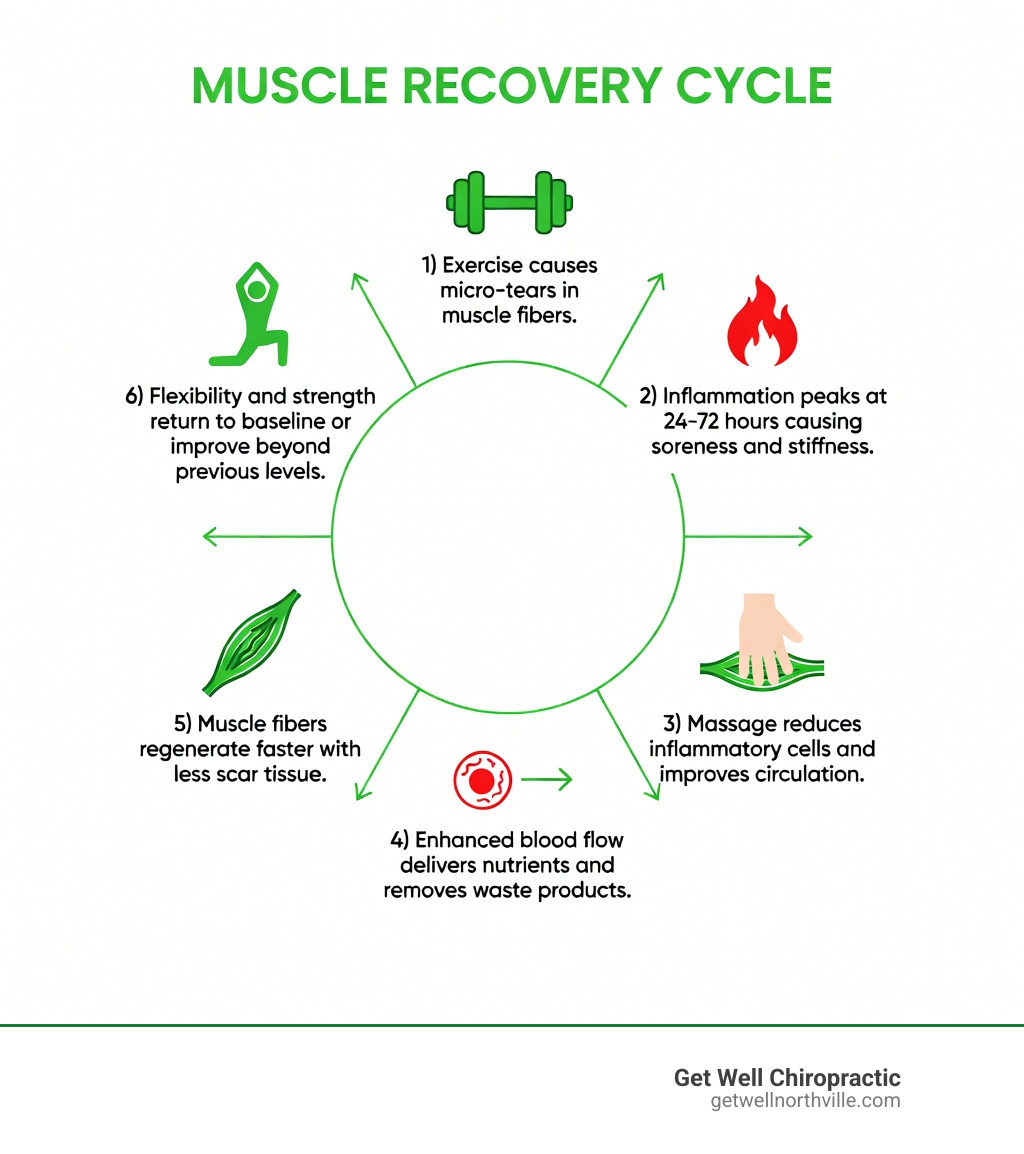
Recent research from institutions like Harvard's Wyss Institute reveals that massage doesn't just feel good—it triggers real biological changes in your muscles. Studies show that mechanical pressure from massage physically squeezes inflammatory cells out of injured tissue, allowing your muscle fibers to regenerate faster and stronger.
The science is clear: massage therapy can double the rate of muscle regeneration while reducing scar tissue formation. Clinical trials with athletes demonstrate that bi-weekly deep tissue massage sessions lead to measurable improvements in strength, flexibility, and performance—especially for those in team sports and strength training.
But here's what matters most: you don't need to be a professional athlete to benefit. Whether you're recovering from a workout, managing chronic tension, or seeking natural pain relief, understanding how and when to use massage therapy can transform your recovery routine.
The Proven Science of Muscle Recovery Massage
When we talk about muscle recovery massage, we aren't just talking about a luxury "spa day." We are talking about mechanotherapy—the use of physical force to repair tissue. At Get Well Chiropractic in Northville, MI, we see how these physical forces translate into better health for our neighbors.
The science behind massage is multi-faceted, involving biomechanical, neurological, physiological, and psychological mechanisms.
- Biomechanical: Massage increases "muscle compliance." By physically stretching the tissue and breaking down adhesions (knots), it reduces the internal friction that makes you feel stiff.
- Neurological: It stimulates the nervous system to reduce "neural excitability." This essentially tells your brain to stop sending "pain" signals and allows the muscle to relax out of a protective spasm.
- Physiological: Research shows that massage can decrease serum creatine kinase (CK) levels. CK is a marker of muscle damage; in one study, massage reduced peak CK activity by 36%. Furthermore, it helps "evict" neutrophils—immune cells that are helpful initially but can cause excessive inflammation if they stay in the muscle too long.
- Psychological: Never underestimate the "feel-good" factor. Massage reduces cortisol (the stress hormone) and increases dopamine and serotonin, which improves your perception of recovery.
Recent breakthroughs, such as those from the Harvard Wyss Institute, found that mechanical loading actually squeezes inflammatory cytokines out of the muscle. This process was shown to double the rate of muscle regeneration in animal models, leading to stronger, more functional muscle fibers compared to those left to heal on their own.
Deep Tissue: The Gold Standard for Muscle Recovery Massage
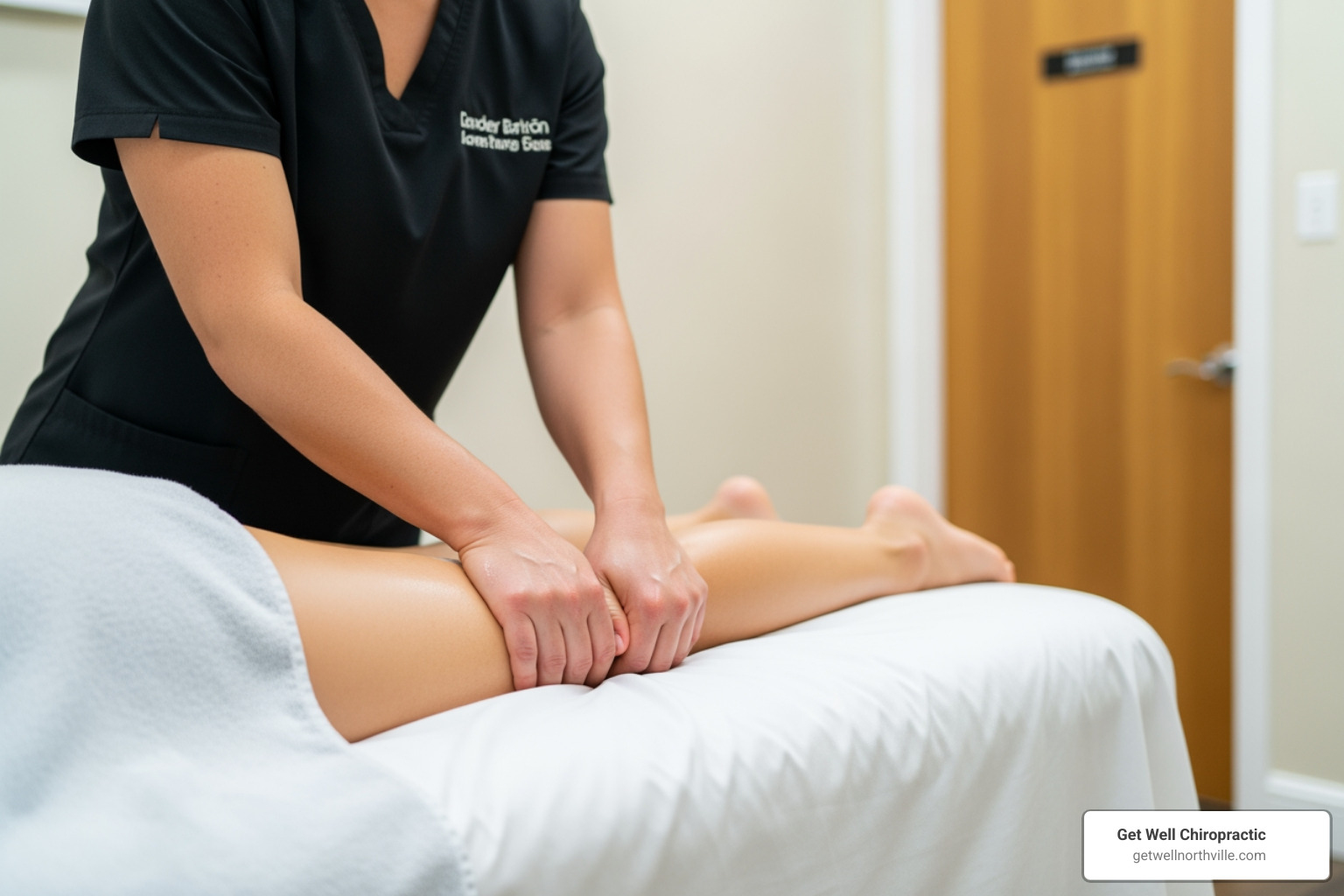
If you are looking for a deep dive into relief, deep tissue massage is often the most recommended technique for athletes. Unlike a gentle relaxation massage, deep tissue uses slow, firm strokes to reach the deeper layers of muscle and the connective tissue (fascia) surrounding them.
This technique is particularly effective at enhancing pain recovery because it targets chronic tension and "knots" that restrict movement. Statistics show that deep tissue work can significantly improve lumbar strength and flexibility. In fact, one study noted that after deep tissue sessions, 134 participants showed increased lumbar strength, and over 140 improved their lumbar flexibility.
For our Northville community, this is a game-changer. Whether you’re a weekend warrior playing at Maybury State Park or a dedicated strength trainer, deep tissue massage is essential for maintaining the integrity of your muscle fibers.
Myofascial Release and Sports Massage
While deep tissue focuses on the muscle, myofascial release focuses on the fascia—the web-like "wrapping" that holds your muscles in place. When fascia becomes tight or stuck, it doesn't matter how strong your muscles are; you will feel restricted. Myofascial release uses sustained pressure to "melt" these restrictions, restoring a full range of motion.
Sports massage, on the other hand, is a versatile approach that combines various massage therapy techniques. It is custom specifically to your sport. A runner might need focused work on the hip flexors and calves, while a swimmer might need attention to the lats and shoulders.
The primary goal here is lymphatic drainage and injury prevention. By moving fluid through the body, sports massage helps resolve muscle tightness and pain before they turn into a full-blown strain or tear. It’s about transforming your wellbeing by staying ahead of the injury curve.
Optimal Timing and Frequency for Athletes
Timing is everything. Should you get a massage before you hit the gym or after? The answer depends on your goal.
- Pre-Exercise: A short, brisk massage can increase blood flow and "wake up" the muscles. However, research suggests that long, deep massages immediately before a performance might actually decrease muscle power temporarily.
- Post-Exercise: This is the sweet spot for muscle recovery massage. Applying massage within 2 hours of exercise has been shown to be highly effective in reducing the severity of DOMS.
- Between Events: For athletes in tournaments, a quick 10–15 minute session can support recovery and keep the muscles supple for the next round.
| Timing | Primary Benefit | Best Technique |
|---|---|---|
| Pre-Workout | Increased circulation & mental prep | Light effleurage / brisk strokes |
| Post-Workout | Reduced inflammation & DOMS relief | Deep tissue / Myofascial release |
| Rest Days | Injury prevention & flexibility | Sports massage / Trigger point |
How Often Should You Get a Muscle Recovery Massage?
We often get asked, "Is once a month enough?" While any massage is better than none, the data suggests that consistency is key.
Research indicates that bi-weekly (every two weeks) massage sessions show significantly better recovery outcomes compared to weekly or monthly sessions (χ² = 9.41, p = 0.0243). For team and strength athletes, this frequency showed the greatest performance improvement.
If you are training for a specific goal—like a marathon or a heavy lifting cycle—you might even benefit from weekly sessions. For general maintenance and long-term wellness, a bi-weekly schedule helps ensure that small "niggles" don't become chronic issues.
Professional Therapy vs. Self-Care Between Sessions
We are big believers in the power of professional touch. While at-home tools like massage guns are popular, they don't quite compare to the hands of a trained professional. As physical therapist Josh Fuhriman notes, a massage gun is a great "feel-good" treatment, but it won't replace a therapist who can feel the specific texture of your muscle and adjust their pressure in real-time.
Professional massage allows for a level of precision that you simply can't achieve on your own. A therapist can identify spinal misalignments that might be causing your leg pain or shoulder tension—something we specialize in at Get Well Chiropractic by combining massage with chiropractic care.
Best Practices for At-Home Muscle Recovery
That said, what you do between professional sessions matters. You can maintain your gains by incorporating self-massage into your daily routine. Here are some best practices:
- Listen to your body: Pain does not always mean gain. If a self-massage technique causes you to hold your breath or wince, back off.
- Target the "Belly" of the muscle: Avoid bony prominences, the front of the neck, and the groin. Focus on the thickest part of the muscle.
- Stay hydrated: Massage moves fluid around. Drink water to help your kidneys process the metabolic waste that's been "flushed" from your tissues.
- Use tools wisely: If you use a massage gun, keep it on a light setting post-workout. Spend no more than 2-3 minutes on any single muscle group.
- Combine with stretching: Gentle stretching after a self-massage can help "reset" the muscle length.
Maximizing Your Results with Post-Massage Care
To get the most out of your muscle recovery massage, your work isn't done when you get off the table.
- Hydrate: This is the golden rule. Water helps flush out the toxins released during the session.
- Gentle Movement: Don't go straight from a deep tissue massage to a heavy squat rack. Go for a light walk or do some gentle stretching to keep the blood flowing.
- Heat: A warm bath can help prolong the relaxation effects of the massage.
- Rest: Your body does its best repair work while you sleep. Aim for 7-9 hours of quality shut-eye after a deep session.
By following these steps, you help your body speed up recovery and reduce the likelihood of feeling "beat up" the next day.
Frequently Asked Questions about Muscle Recovery Massage
Does massage prevent sports injuries?
While no treatment can guarantee 100% injury prevention, massage significantly reduces the risk. By improving flexibility and reducing muscle tightness, it ensures that your body can handle the "load" of exercise without snapping or straining. It also helps identify tight spots before they become painful injuries.
Can a 10-minute massage actually help?
Yes! Research shows that even a 10–15 minute post-workout massage can be supportive of recovery and decrease the severity of DOMS. You don't always need a full hour to see biological benefits like improved circulation and reduced inflammation.
Is deep tissue massage better than Swedish for recovery?
For muscle recovery specifically, deep tissue is generally superior. Swedish massage is wonderful for general relaxation and stress reduction, but it lacks the depth required to break up the adhesions and chronic tension found in athletes. If you want to discover the astonishing benefits for performance, deep tissue is the way to go.
Conclusion
At Get Well Chiropractic, we believe in a holistic approach to health. We know that the residents of Northville, MI, are active and hardworking, and we are here to support that lifestyle. Muscle recovery massage is not just a treat; it is a vital part of a natural healing journey that promotes long-term wellness and keeps you moving at your best.
Whether you are looking to discover effective massage techniques for a specific injury or simply want to embrace the benefits of regular maintenance, our team is ready to provide personalized, compassionate care.
Ready to take your recovery to the next level? Learn more about our massage services and let us help you open up your fastest gains yet.
