Understanding What You'll Pay for Deep Tissue Massage
Deep tissue massage cost typically ranges from $80 to $130 for a 60-minute session in the United States, with prices varying based on your location, the therapist's experience, and the type of facility you visit.
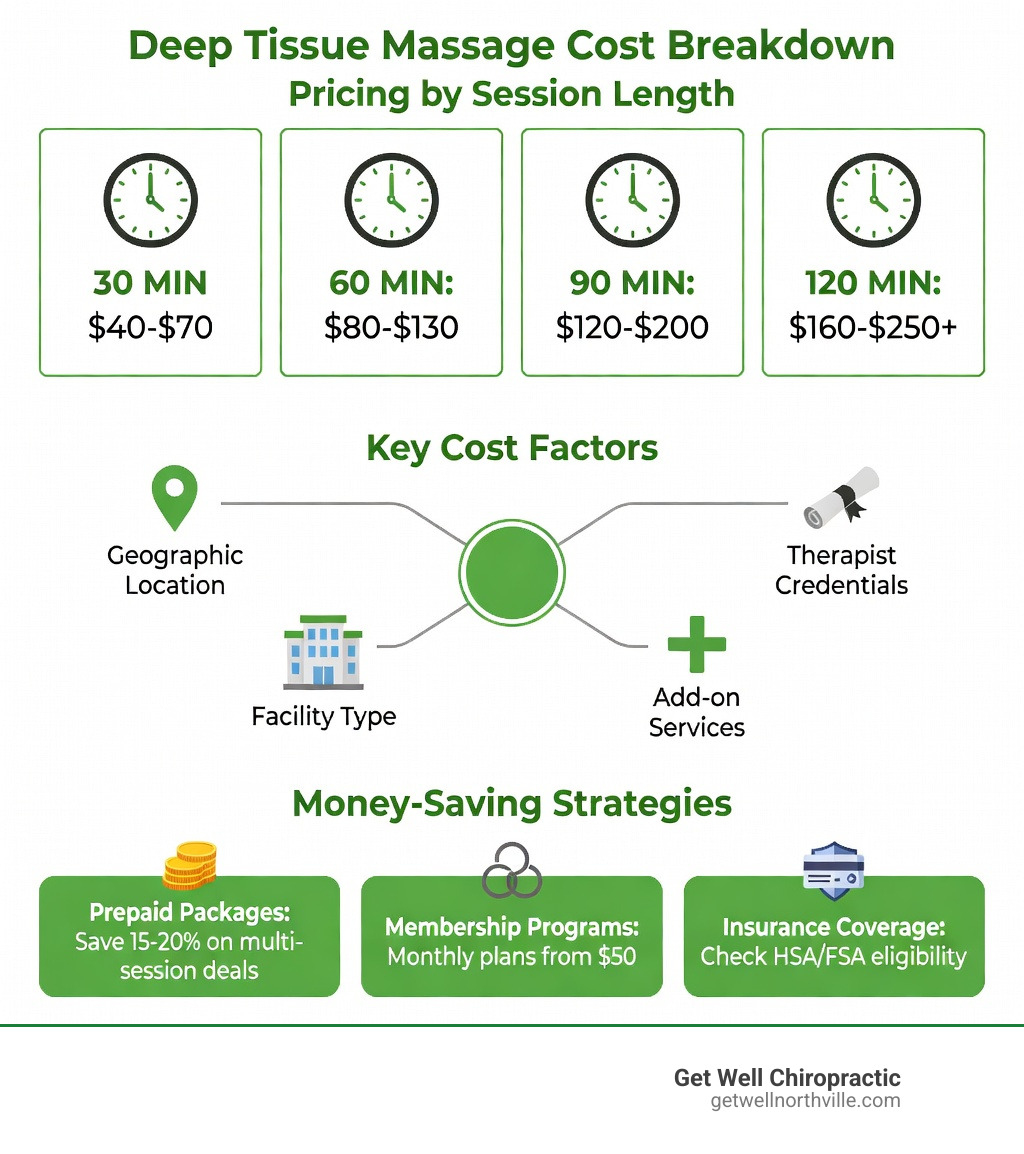
Quick Cost Overview:
- 30-minute session: $40 to $70
- 60-minute session: $80 to $130
- 90-minute session: $120 to $200
- 120-minute session: $160 to $250+
Add-ons like hot stones or aromatherapy typically cost an additional $15 to $25 per session.
If you're living with chronic back pain, muscle tension, or recovering from an injury, understanding massage pricing helps you budget for the care you need. Deep tissue massage uses slow, forceful strokes to reach the deeper layers of muscle and connective tissue—targeting the root causes of pain rather than just providing temporary relaxation.
Many factors influence what you'll actually pay. A session at a wellness clinic or chiropractic office often costs less than luxury spas, while therapists with advanced certifications in neuromuscular therapy or sports rehabilitation may charge premium rates. Your geographic location matters too—urban areas typically cost 20% to 50% more than rural communities.
The good news? There are legitimate ways to reduce costs without sacrificing quality care. Prepaid packages, membership programs, and health spending accounts can significantly lower your per-session expense. Some insurance plans even cover therapeutic massage when prescribed by a physician for chronic pain conditions.
This guide breaks down exactly what drives massage pricing, how to compare your options, and practical strategies to make regular bodywork affordable as part of your long-term wellness plan.
Basic deep tissue massage cost glossary:
Average Deep Tissue Massage Cost in the US
When you start looking for a therapist, the first thing you’ll notice is that pricing isn't one-size-fits-all. The deep tissue massage cost is generally higher than a standard Swedish massage because the technique requires more physical effort and specialized knowledge of anatomy from the therapist. In our experience, providing these services in a clinical setting like Northville, MI, we see that patients value the therapeutic results that come from this deeper work.
The following table provides a breakdown of what you can expect to pay based on the duration of your session:
| Session Length | Typical Price Range | National Average |
|---|---|---|
| 30 Minutes | $40 – $75 | $55 |
| 60 Minutes | $80 – $130 | $105 |
| 90 Minutes | $120 – $200 | $160 |
| 120 Minutes | $160 – $280 | $220 |
It is important to understand the deep tissue massage vs regular massage key differences when looking at these rates. A "regular" or Swedish massage focuses on the superficial layers of muscle to promote relaxation. Because deep tissue work realigns deeper layers of muscle and connective tissue to treat chronic pain, it often commands a premium.
While the price per minute usually decreases as the session gets longer, a 60-minute session is the baseline for most providers. If you have multiple problem areas—say, chronic lower back pain and stiff shoulders—a 90-minute session is often more cost-effective because it allows the therapist enough time to address the structural issues without rushing.
Factors That Influence Your Session Price

Why does one office charge $90 while another charges $150? It usually comes down to three main drivers: expertise, overhead, and geography.
Therapist Experience and Advanced Certifications
A therapist fresh out of school may charge lower rates, but someone with 10+ years of experience or advanced certifications in neuromuscular therapy will likely charge more. At Get Well Chiropractic, we believe that the skill of the provider is the most significant factor in the quality of your recovery. Specialized training allows a therapist to identify the exact "knots" or adhesions causing your discomfort, which can actually save you money in the long run by requiring fewer sessions to see results.
Geographic and Venue Influence
You might wonder how deep tissue massage costs vary in different regions. If you are in a major metro area like Detroit or Ann Arbor, you can expect to pay 20% to 50% more than in a rural Michigan town. This is largely due to the cost of living and commercial rent prices.
Furthermore, the type of facility matters:
- Chiropractic Clinics: Often offer competitive, transparent pricing focused on clinical outcomes.
- Independent Therapists: May have lower overhead and offer more flexible rates.
- Luxury Spas: Prices here are usually the highest ($150–$200+) because you are paying for amenities like saunas, robes, and high-end lounge areas.
Comparing Deep Tissue Massage Cost to Other Therapeutic Techniques
Deep tissue is often compared to Swedish massage or myofascial release. While Swedish massage is great for a "spa day" feel, it may not fix the underlying tension that athletes or office workers deal with daily. This is why deep tissue massage is essential for athletes and those with physically demanding jobs; the intensity level is higher, and the techniques are more specialized to break down scar tissue.
In a chiropractic setting, we often integrate these massages with adjustments. This holistic approach ensures that the muscles are relaxed enough to allow the skeletal system to hold its alignment longer, providing better value for every dollar you spend on your health.
The Impact of Add-ons and Service Enhancements
When you book your appointment, you might be offered "upgrades." These enhancements can add $5 to $45 to your total bill. Common add-ons include:
- Hot Stone Therapy ($15–$25): Uses heated stones to warm up the muscles, allowing the therapist to reach deeper layers more quickly.
- Aromatherapy ($10–$15): Uses essential oils like lavender or eucalyptus to enhance relaxation or reduce inflammation.
- Specialized Topicals ($5–$20): This might include high-quality oils or CBD topicals (where available and compliant with Michigan regulations) to help target localized pain.
While these extras feel like a luxury, some—like hot stones—actually serve a clinical purpose by making the deep tissue work more effective and less uncomfortable.
How to Save Money on Therapeutic Bodywork
We know that consistent care is the key to long-term wellness, but the deep tissue massage cost can add up. Here are the most effective ways to manage your budget:
- Membership Programs: Many clinics offer a monthly rate that is $10 to $40 cheaper than the standard "walk-in" price. This is perfect if you plan on coming in at least once a month.
- Prepaid Packages: Buying a bundle of 5 or 10 sessions upfront can often save you 10% to 30%.
- First-Time Client Specials: Many providers offer a discounted rate for your very first visit. For example, we often see "New Patient Specials" that include a consultation and initial treatment for a flat, reduced fee.
- Off-Peak Booking: Some facilities offer lower rates for appointments scheduled during "slow" hours, such as Tuesday mornings or early afternoons.
By utilizing these strategies, you can focus on how deep tissue massage benefits enhance pain recovery without constantly worrying about the price tag.
Understanding Insurance and Deep Tissue Massage Cost
One of the most common questions we hear is: "Does my insurance cover this?" In Michigan, the answer is often "it depends."
If your massage is deemed a "medical necessity," it may be covered. This usually requires a physician's prescription or a referral from a chiropractor. When massage is used to treat a specific diagnosis—like sciatica, chronic neck pain, or injury recovery—it may be billed using specific CPT (Current Procedural Terminology) codes.
When looking at deep tissue massage vs chiropractic care reviews, you’ll find that many patients prefer the integrated approach because it’s easier to document for insurance purposes. Even if your insurance doesn't offer direct reimbursement, you can almost always use your Health Savings Account (HSA) or Flexible Spending Account (FSA) to pay for massage therapy, provided you have a Letter of Medical Necessity from your doctor. This allows you to use pre-tax dollars, effectively saving you 20% to 30% depending on your tax bracket.
Frequently Asked Questions about Massage Pricing
How much should I tip for a deep tissue massage?
The standard gratuity for a massage is 15% to 20% of the full service price. If you received a discounted "introductory" rate, it is customary to tip based on the original price of the session. In a clinical or chiropractic setting, tipping etiquette can vary; some private practices include the tip in their professional fee, so it’s always okay to ask the front desk about their policy. If you are thrilled with the relief you feel, a cash tip is always appreciated by the therapist.
How often should I get a deep tissue massage to manage costs?
To balance your health and your wallet, a frequency of every 2 to 4 weeks is ideal for most people. If you are dealing with an acute injury, you might need weekly sessions for a short period. However, once you move into a "maintenance" phase, transform your wellbeing with deep tissue massage by scheduling a monthly visit. This prevents "knots" from becoming chronic, which often requires more expensive, intensive treatment down the road.
What should I expect regarding cost transparency?
You should never be surprised by your bill. A professional clinic will provide upfront pricing and clearly state their cancellation policy (most require 24 hours' notice to avoid a fee). Be sure to ask if the "60-minute" session includes the time for intake and undressing—usually, you get about 50 minutes of hands-on time. At Get Well Chiropractic, we pride ourselves on honest communication so you can focus entirely on your healing.
Conclusion
Investing in a deep tissue massage is an investment in your quality of life. While the deep tissue massage cost might seem like a luxury at first glance, the long-term benefits of reduced pain, improved posture, and better mobility are priceless. By choosing a clinical setting like Get Well Chiropractic in Northville, MI, you ensure that your care is overseen by professionals who understand the intricate relationship between your muscles and your spine.
We are dedicated to providing compassionate, natural wellness solutions tailored to your specific needs. Whether you’re looking for a one-time relief session or a long-term care plan, we’re here to help you get back to living your best life.
Curious about other wellness costs? Check out our guide on understanding average chiropractic adjustment costs in your area to help plan your total health budget.
