Why Athletes Are Turning to Deep Tissue Massage for Recovery
Deep tissue athletic massage is a specialized therapy targeting deep muscle tissue and fascia to relieve chronic tension, break down adhesions, and boost athletic performance. Unlike relaxation massages, it uses slow, forceful strokes and concentrated pressure to release tightness and improve mobility in areas stressed by physical activity.
What Deep Tissue Athletic Massage Does:
- Targets deeper muscle layers using sustained pressure and specific techniques
- Breaks down scar tissue and adhesions that restrict movement
- Improves blood flow and oxygenation to speed recovery
- Reduces inflammation and delayed onset muscle soreness (DOMS)
- Improves flexibility and range of motion for better performance
- Prevents injuries by addressing muscle imbalances before they become problems
If you’re an athlete or someone with persistent muscle pain, you know the stubborn tightness that stretching can’t fix—in your hamstrings after a run, shoulders from swimming, or lower back from lifting. This is where deep tissue athletic massage comes in.
Chronic pain affects millions, and for athletes, muscle tension is even more common. Research shows deep tissue massage reduces chronic pain more effectively than general therapeutic massage, with significant improvements noted for conditions like chronic low back pain.
The technique focuses on the muscles, tendons, and connective tissue (fascia) that take the most stress during your sport or activity. Through specific methods like cross-fiber friction, trigger point therapy, and myofascial release, a trained therapist works to restore normal muscle function and reduce stiffness.
Whether you’re training for competition, recovering from intense workouts, or dealing with overuse injuries, understanding how this massage works can help you make smarter decisions about your body’s care.
Understanding Deep Tissue Athletic Massage
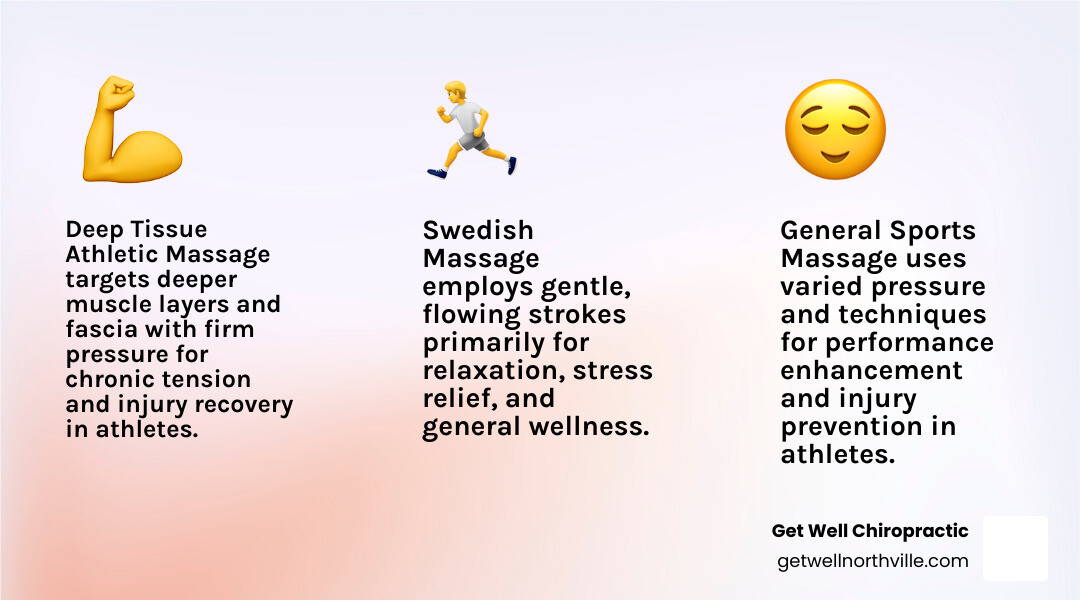
Deep tissue athletic massage is a therapeutic approach designed to target the deepest layers of muscle and connective tissue. We use slow, deliberate strokes and intense pressure to reach below superficial muscles, addressing chronic muscle tension and breaking down adhesions (also known as “knots”). These adhesions can restrict movement, cause pain, and hinder performance. By releasing them, we help to realign muscle fibers and restore normal function.
The focus is on creating a physiological change in the muscle, not just relaxation. This intensive therapy is effective for athletes as it addresses the wear and tear from high-level activity, managing pain by releasing tension and increasing circulation. A 2014 study found deep tissue massage as effective as NSAIDs for chronic low back pain. For more insights, explore our resources on More info about therapeutic massage.
Deep Tissue vs. Traditional Deep Tissue Massage
While all deep tissue massage focuses on deeper muscle layers, the “athletic” distinction adds a crucial layer of purpose and application. Traditional deep tissue massage typically addresses general chronic pain, stiffness, or postural issues for anyone seeking relief. It’s often focused on breaking down scar tissue, restoring mobility, and improving flexibility for overall well-being.
However, deep tissue athletic massage is customized to an athlete’s body. Our Northville, MI, therapists understand the unique stress points of various sports. We consider your training schedule and goals, using the massage for pre-event readiness or post-event recovery. It’s a proactive and reactive approach to keeping athletes at their best by addressing sport-specific stress areas.
Deep Tissue Athletic Massage vs. Sports Massage: What’s the Difference?
It’s common for people to use the terms “deep tissue” and “sports massage” interchangeably, and while there’s significant overlap, there are distinct differences, especially when we add the “athletic” focus to deep tissue. Sports massage is a broader category, encompassing various techniques applied to athletes. Deep tissue athletic massage is a type of sports massage, but with a specific emphasis on deeper structural work.
Here’s a comparison to clarify:
| Feature | Deep Tissue Athletic Massage | General Sports Massage |
|---|---|---|
| Primary Goals | Address chronic muscle tension, break adhesions, improve specific performance limitations, aid injury recovery. | Improve athletic performance, prevent injuries, aid recovery (pre/post/maintenance), target sport-specific muscles. |
| Pressure | Consistently firm, sustained, and deep, targeting specific problem areas and deeper muscle layers. | Varies from light to firm, depending on the phase (pre-event is often lighter and stimulating, post-event can be deeper). |
| Techniques | Cross-fiber friction, stripping, trigger point therapy, myofascial release, Active Release Technique (ART), Muscle Energy Technique (MET). | May include deep tissue techniques, but also effleurage, petrissage, compression, stretching, and tapotement. |
| Ideal Use Cases | Athletes with persistent muscle tightness, chronic pain, scar tissue, limited range of motion in specific areas, or recovering from specific injuries. | Athletes and active individuals seeking general muscle preparation, post-exercise recovery, or ongoing maintenance. |
| Focus on Intensity | Generally more intense and focused on releasing deep-seated restrictions. | Intensity can vary greatly; less about maximum depth, more about functional application. |
| Use of Stretching | Often integrated as part of the deeper release work, or in conjunction with ART/MET. | Frequently includes dynamic or static stretching to improve flexibility and range of motion. |
| Event Timing | Can be used pre-event (well in advance for structural changes), post-event (for deeper recovery), or as maintenance. | Explicitly categorized as pre-event (stimulating), post-event (calming/flushing), or maintenance. |
While all deep tissue athletic massage can be considered a form of sports massage, not all sports massage is deep tissue. Our approach at Get Well Chiropractic focuses on the deep tissue aspect to provide the most targeted and effective relief for athletes in Michigan.
The Core Benefits of Deep Tissue Athletic Massage for Peak Performance
For athletes, maintaining peak physical condition is paramount. Deep tissue athletic massage isn’t just a luxury; it’s a vital component of a comprehensive training regimen. We’ve seen how it helps our clients in Northville, MI, open up their full potential and recover faster.
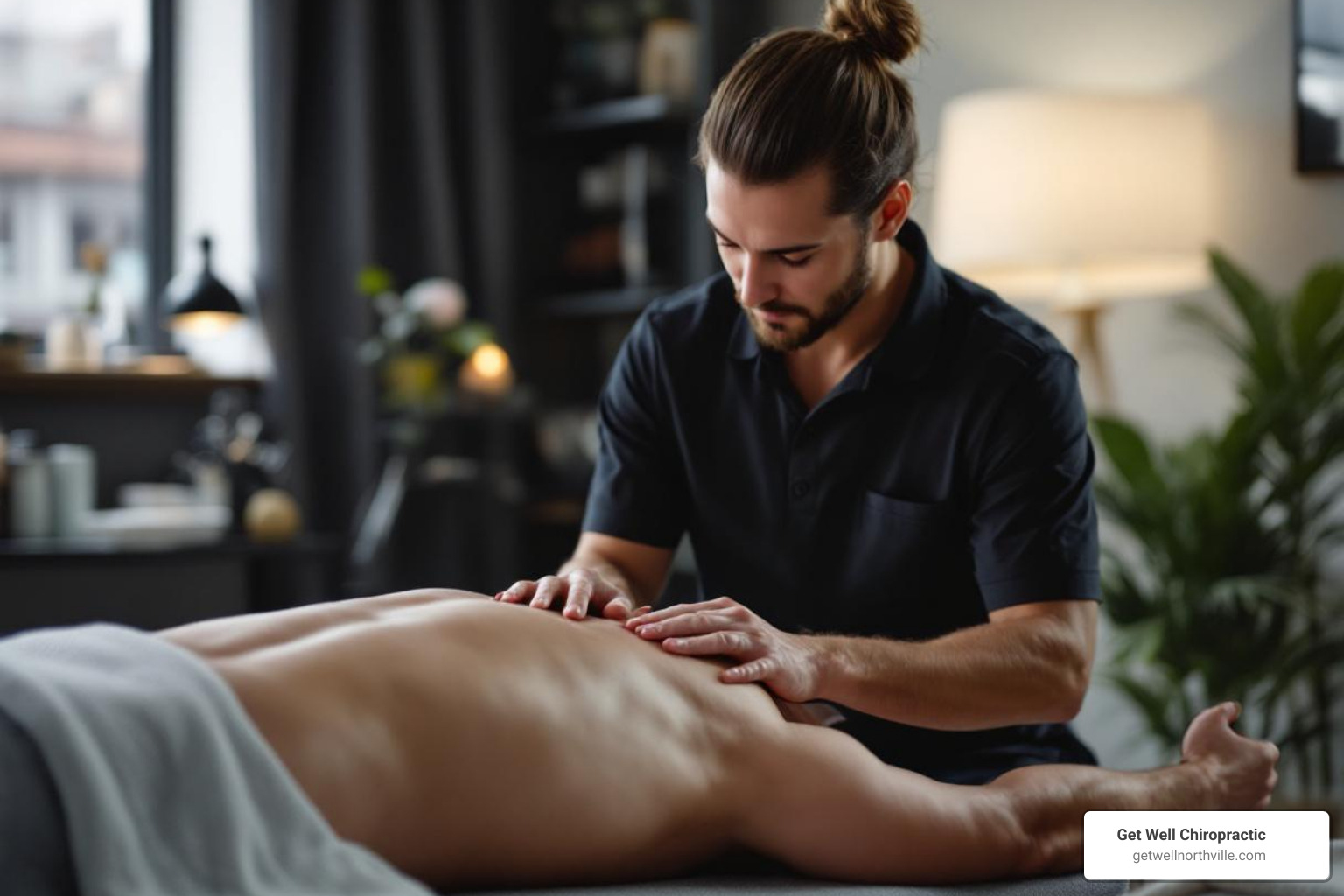
The primary benefits include:
- Improved muscle recovery: By increasing circulation and reducing inflammation, muscles heal faster.
- Improved flexibility: Releasing tight fascia and muscle fibers allows for greater range of motion.
- Increased range of motion: Directly impacts performance and reduces injury risk.
- Reduced muscle soreness: Alleviates delayed onset muscle soreness (DOMS) after intense workouts.
For a deeper dive into why this is so crucial, check out our article on Why Deep Tissue Massage is Essential for Athletes.
Accelerating Post-Exercise Recovery
A primary benefit of deep tissue athletic massage is its impact on post-exercise recovery. After intense activity, muscles are often stiff, sore, and inflamed. We mitigate these effects by:
- Reduced inflammation: Deep tissue massage helps attenuate inflammatory signaling after exercise-induced muscle damage. This means we’re actively helping your body calm down the inflammatory response, which can otherwise prolong recovery.
- Increased blood flow and oxygenation: By breaking down adhesions and releasing tension, we improve circulation. This increased blood flow delivers vital nutrients and oxygen to tired muscles while helping to flush out metabolic waste products. This process promotes faster muscle recovery.
- Alleviating Delayed Onset Muscle Soreness (DOMS): Many athletes report that deep tissue massage reduces the intensity of soreness, especially 48 hours post-exercise. While studies show mixed results on physiological markers, the subjective feeling of recovery often improves, helping you feel ready to train sooner. Our article How Deep Tissue Massage Enhances Muscle Recovery provides more detail.
The Role of Deep Tissue Athletic Massage in Injury Prevention
Preventing injuries is often more effective than treating them. Deep tissue athletic massage plays a critical role in proactive injury management for athletes. We help identify and address potential problem areas before they escalate into full-blown injuries. This is achieved by:
- Addressing muscle imbalances: Repetitive movements in sports can lead to certain muscles becoming overused and tight, while others weaken. We work to release the overused muscles, allowing weaker muscles to function more effectively, thus restoring balance.
- Improving flexibility: Tight muscles and restricted fascia limit range of motion, making an athlete more susceptible to strains and tears. Our techniques lengthen and loosen these tissues, significantly improving flexibility and reducing injury risk.
- Releasing trigger points: These are hyper-irritable spots in muscles that can cause pain both locally and in referred areas. Releasing them can alleviate chronic pain patterns and prevent them from causing further dysfunction.
- Breaking down scar tissue: Following minor injuries or even repeated micro-traumas, scar tissue can form, making muscles stiff and less elastic. Deep tissue massage helps to break down this scar tissue, restoring the muscle’s original structure and function.
- Enhancing proprioception: This is your body’s awareness of its position in space. By restoring normal muscle tone and reducing tension, deep tissue massage can improve proprioceptive feedback, leading to better coordination and reduced risk of awkward movements that cause injury.
Addressing Common Athletic Injuries and Conditions
Athletes frequently encounter specific injuries and conditions due to the high demands placed on their bodies. We often use deep tissue athletic massage to effectively address these issues for our Michigan athletes:
- Muscle strains: From minor pulls to more significant tears, deep tissue massage aids in recovery by improving blood flow to the injured area and breaking down scar tissue that can impede healing.
- Tendinopathies (e.g., tennis elbow, Achilles tendinopathy): These overuse injuries involve inflammation and degeneration of tendons. Deep friction massage, a specific deep tissue technique, can stimulate healing and break up adhesions in affected tendons. Studies have shown its effectiveness in treating conditions like tennis elbow and chronic Achilles tendinopathy.
- Plantar fasciitis: For this common cause of heel pain, deep tissue massage on the calf and foot can release tension and reduce pain. Research in Manual Therapy supports combining deep tissue massage of the calf with stretching to reduce pain from plantar fasciitis.
- Shin splints: Often caused by overuse and muscle imbalances in the lower leg, deep tissue work can release tight calf muscles and address inflammation in the surrounding tissues.
- IT band syndrome: The iliotibial band can become tight and cause pain, especially in runners and cyclists. Deep tissue techniques focus on lengthening and releasing tension in the IT band and associated muscles like the glutes and TFL.
- Chronic low back pain: This is a prevalent issue among athletes and the general population. Deep tissue massage can help relieve and refresh the spine by addressing muscle tightness, trigger points, and improving mobility in the lumbar region. A 2014 study confirmed deep tissue massage’s positive effect on reducing pain in patients with chronic low back pain.
For more information on how deep tissue massage can help with pain recovery, please refer to our guide on How Deep Tissue Massage Benefits Enhance Pain Recovery.
Inside a Session: Techniques and Expectations
A deep tissue athletic massage at Get Well Chiropractic in Northville, MI, is a custom experience for your unique needs. We prioritize clear communication and your comfort throughout the session.
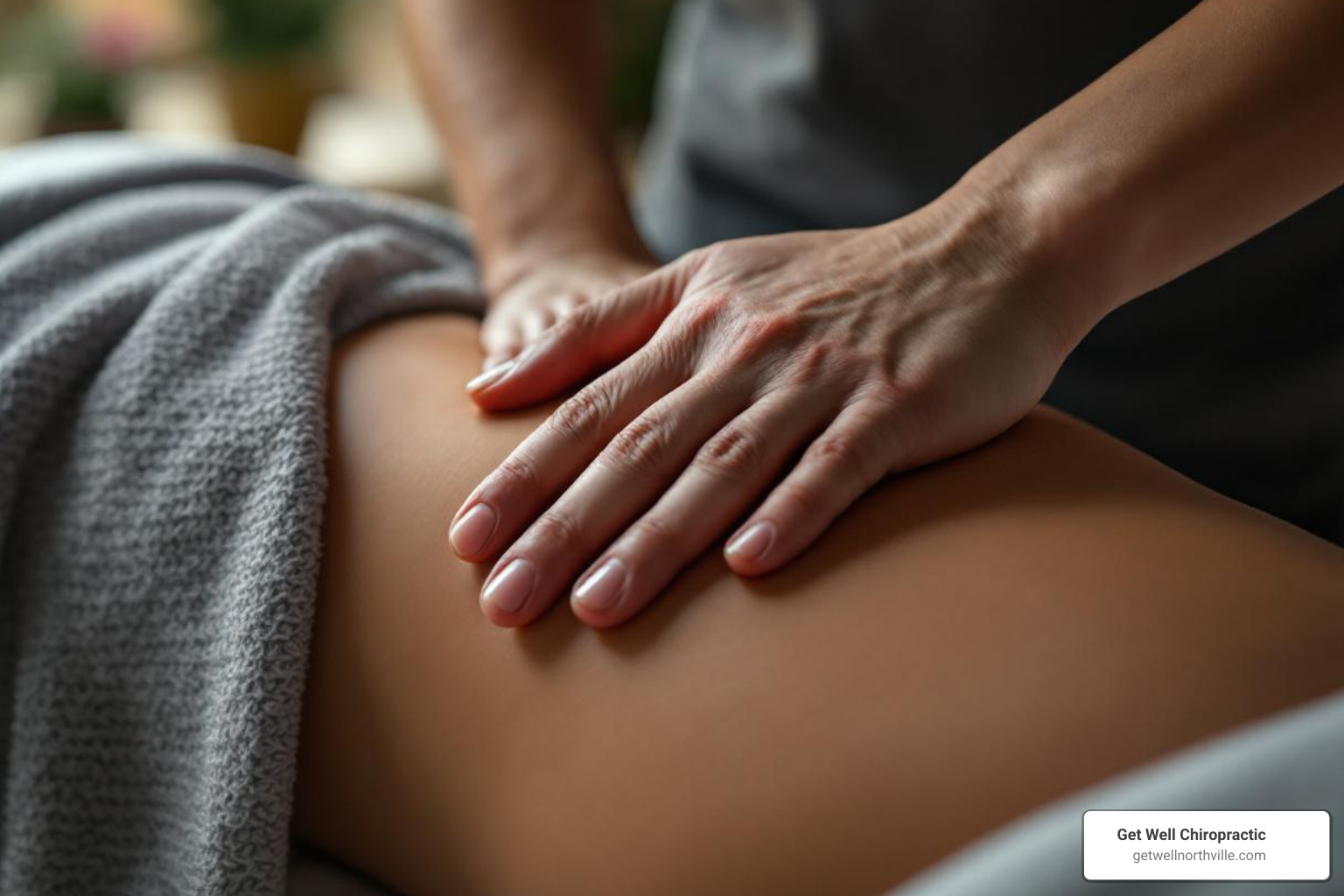
Specific Techniques Used in Deep Tissue Athletic Massage
Our skilled therapists employ a variety of advanced techniques to reach and release deep-seated tension. These go beyond general strokes to provide targeted therapeutic effects:
- Cross-fiber friction: This technique involves applying deep pressure across the grain of muscle fibers or tendons. It helps to break down adhesions and scar tissue, promoting the realignment of collagen fibers and improving tissue flexibility. It’s particularly useful for tendinopathies.
- Stripping: A long, deep, gliding stroke applied along the length of a muscle fiber. This technique aims to lengthen tight muscles, release fascial restrictions, and flush out metabolic waste.
- Trigger point therapy: We locate and apply sustained pressure to specific hyper-irritable spots (trigger points) within muscle tissue. These points can cause referred pain to other areas of the body. Releasing them can alleviate widespread discomfort.
- Myofascial release: This technique focuses on the fascia, the connective tissue that surrounds muscles, bones, and organs. We apply sustained pressure and gentle stretching to release fascial restrictions, which can significantly improve flexibility and reduce pain.
- Active Release Technique (ART): Involves applying pressure to a muscle while the client actively moves the muscle through its range of motion. This helps to break up adhesions and restore normal tissue texture and function.
- Muscle Energy Technique (MET): Uses the client’s own muscle contractions to relax and lengthen tight muscles and improve joint mobility. The client performs a gentle contraction against the therapist’s resistance, followed by a stretch.
For a deeper dive into various pain relief techniques, explore our article on Discover Effective Massage Techniques for Pain Relief Today.
What to Expect: Duration, Frequency, and Feel
Your deep tissue athletic massage session at Get Well Chiropractic begins with an initial consultation. We’ll discuss your athletic activities, any specific pain points, recent injuries, and your recovery goals. This ensures a personalized approach.
The massage itself typically starts with warm-up strokes using lighter pressure to prepare the muscles. As the tissue warms and relaxes, we’ll gradually increase the pressure, focusing on the deeper layers and specific problem areas identified during your consultation. You should always communicate with your therapist about the pressure level. It’s important to differentiate between “good pain” (therapeutic discomfort as knots release) and sharp, unbearable pain. We encourage you to speak up if anything feels too intense.
Typical session durations range from 60 to 90 minutes, allowing ample time for comprehensive and targeted work. The recommended frequency of sessions can vary:
- During intense training periods or injury recovery: Weekly or bi-weekly sessions might be beneficial to manage muscle fatigue, aid recovery, and prevent further injury. Research suggests bi-weekly massage sessions can show better recovery outcomes.
- For maintenance and general well-being: Every 3-4 weeks for stress relief or maintaining flexibility. For athletes, this might be adjusted based on competition schedules.
- For long-term flexibility improvements: Consistent, long-term deep tissue massage (e.g., over 1-2 years) has shown greater rates of improved flexibility.
It’s common to feel some soreness the day after a deep tissue session, similar to post-workout muscle ache. This indicates the deeper tissues were addressed. We’ll provide post-massage care tips, like hydration and gentle stretching, to minimize discomfort and maximize benefits.
Is It Always the Right Choice? Risks and Considerations
Deep tissue athletic massage offers many benefits, but it isn’t always the right choice. As part of our honest and compassionate service, we inform you of potential risks and contraindications to ensure your safety and well-being.
Contraindications
Certain conditions warrant caution or make deep tissue massage inappropriate:
- Acute injuries: If you have a fresh muscle tear, fracture, or severe sprain, deep tissue massage could worsen the injury. It’s best to wait until the acute inflammatory phase has passed.
- Inflammation: While deep tissue massage can reduce chronic inflammation, acute inflammation (like from recent trauma) requires a gentler approach.
- Blood clots: Individuals at risk for blood clots (e.g., deep vein thrombosis) should avoid deep tissue massage as it could dislodge a clot.
- Skin conditions: Open wounds, infections, rashes, or severe bruising are contraindications for direct massage on the affected area.
- Heart conditions: Individuals with severe heart conditions, uncontrolled high blood pressure, or a history of heart failure should consult their doctor before receiving deep tissue massage.
- Pregnancy: While some massage is safe during pregnancy, deep tissue massage, especially in certain areas, may not be recommended. Always consult a healthcare provider.
- Blood thinners: If you’re on blood-thinning medication, you may bruise easily, and deep tissue massage could cause excessive bruising or internal bleeding.
- Osteoporosis or high risk of bone fractures: The intense pressure could be dangerous for those with fragile bones.
- Cancer: Individuals undergoing cancer treatment should consult their oncologist.
- Diabetes and seizures: Consultation with a doctor is advised.
It’s crucial to have an open discussion with your healthcare provider and your massage therapist about any health conditions or concerns you may have. For a broader overview of deep tissue massage considerations, WebMD offers a helpful resource: Is Deep Tissue Massage Good for You?. For other approaches to pain management, check out our article on Unique Massage Therapy Approaches for Pain Management.
How to Know if Deep Tissue Athletic Massage is Right for You
Deciding if deep tissue athletic massage is right for you involves assessing your needs and goals. At Get Well Chiropractic, we can help you make an informed decision to ensure you receive the most appropriate care.
Consider the following:
- Assessing your goals: Are you looking for general relaxation, or do you have specific performance improvements, injury recovery, or chronic pain relief in mind? If your goal is targeted relief from muscle tightness or to improve athletic function, deep tissue athletic massage is likely a good fit.
- Chronic vs. acute pain: If you’re experiencing chronic, persistent muscle pain or stiffness that has developed over time, deep tissue can be highly effective. For acute, sudden injuries, other modalities or a period of rest might be more suitable initially.
- Activity level: As the name suggests, this massage is particularly beneficial for athletes and active individuals who regularly stress their muscles. If you lead a sedentary lifestyle, a less intense massage might be a better starting point.
- Tolerance for pressure: Deep tissue athletic massage involves significant pressure. While we always work within your comfort levels, a certain tolerance for therapeutic discomfort is necessary for the techniques to be effective. If you prefer very light touch, other massage types may be more suitable.
- Consulting a professional: The best way to determine if this modality is right for you is to consult with a licensed massage therapist or a chiropractor like those at Get Well Chiropractic. We can assess your condition, discuss your history, and recommend the most effective treatment plan, which may include a combination of therapies.
We encourage you to discuss any concerns with us. Our team is committed to natural healing and long-term wellness, and we’ll guide you to the best options for your unique journey.
Frequently Asked Questions about Athletic Deep Tissue Massage
We understand you might have questions about deep tissue athletic massage, especially if you’re considering it for performance or recovery. Here are some common inquiries we address for our clients in Northville, MI:
Does deep tissue athletic massage hurt?
This is a common question. The short answer is that it can involve therapeutic discomfort but shouldn’t be excruciating. We call it “good pain”—an intense sensation indicating that tight, restricted tissues are being released. You might feel a deep ache as adhesions break down.
The key is communication. We rely on you to tell us if the pressure is too much or if you’re experiencing sharp, unbearable pain. Our therapists are skilled at adjusting their pressure to work effectively within your comfort threshold. Significant bruising or lasting sharp pain after a session is not normal and indicates improper technique. The goal is relief and improved function, not agony!
How soon before or after an event should I get a massage?
The timing of your deep tissue athletic massage sessions depends largely on your goals relative to your athletic events:
- Pre-event timing: If you’re looking for deep structural work to improve range of motion or address chronic tightness before a competition, we generally recommend scheduling your session 2-3 days before the event. This allows your body sufficient time to recover from any therapeutic soreness and integrate the changes, ensuring your muscles are loose and ready without being fatigued on event day. For immediate pre-event preparation (e.g., hours before), a lighter, more stimulating sports massage would be more appropriate.
- Post-event timing: For recovery, a deep tissue athletic massage is most beneficial within 24-48 hours after an intense event or training session. This helps to reduce inflammation, flush metabolic waste, and address any acute muscle tightness or potential strains before they become chronic.
- Maintenance sessions: For ongoing injury prevention, flexibility, and overall muscle health, regular maintenance sessions (e.g., every 2-4 weeks, depending on your training volume) are highly recommended. This proactive approach keeps your body in optimal condition between events and throughout your training cycles.
Can this massage improve my athletic performance?
Absolutely! Deep tissue athletic massage is a powerful tool for enhancing athletic performance. Its mechanisms contribute directly to several aspects crucial for optimal function:
- Increased range of motion (ROM): By releasing tight muscles and fascia, deep tissue massage allows joints to move through their full, natural range. This directly translates to more efficient movement patterns, greater power output, and reduced risk of injury. For example, improved hip flexibility can improve a runner’s stride, or increased shoulder ROM can benefit a swimmer’s stroke. A 2025 study by Denis Arsovski on Deep Tissue Massage Therapy: Effects on Muscle Recovery and Performance in Athletes concluded that regular and continuous massage sessions improve flexibility and recovery among athletes.
- Reduced muscle fatigue: Improved circulation and oxygenation to muscles, along with the removal of metabolic byproducts, help delay the onset of fatigue during exercise and speed recovery between efforts.
- Psychological benefits: Beyond the physical, the mental aspects are significant. Reduced pain and stiffness mean less distraction during performance. The relaxation response triggered by massage can also improve focus, reduce pre-competition anxiety, and improve overall mental readiness.
Research supports these benefits. A study by Arsovski found that deep tissue massage improves performance and recovery, with bi-weekly sessions showing better outcomes for athletes. This allows you to train harder, recover faster, and perform better.
Conclusion: Integrate Deep Tissue Massage into Your Regimen
Deep tissue athletic massage is more than an indulgence; it’s a strategic investment in your athletic longevity and performance. Its benefits—from pain relief and injury prevention to faster recovery—are profound and scientifically supported.
At Get Well Chiropractic in Northville, MI, we are dedicated to helping you achieve your health and performance goals through expert, personalized care. We believe in comfortable, honest, and compassionate service, focusing on natural healing and long-term wellness. Our team understands the unique demands placed on athletes and active individuals, and we tailor our deep tissue athletic massage sessions to meet your specific needs.
Don’t let muscle stiffness, pain, or limited mobility hold you back from your full potential. Integrate deep tissue athletic massage into your regimen as a proactive step towards optimal performance and sustained health. We’re here to provide expert guidance and support on your journey to feeling your best.
Ready to experience the difference? Book your expert massage therapy session today and take the next step towards a stronger, more resilient you.
