Why Carpal Tunnel Massage Can Be Your Path to Relief
Carpal tunnel massage is a proven, non-invasive technique that can significantly reduce pain, numbness, and tingling in your hands and wrists by targeting the root causes of nerve compression.
Quick Relief Guide:
- Reduces pressure on the median nerve by breaking down adhesions in forearm tendons
- Improves circulation to promote healing and reduce inflammation
- Drains excess fluid from the wrist joint that compresses nerves
- Provides 30-60% symptom reduction when performed consistently (2-3 times weekly for 4-6 weeks)
- Works best when combined with stretching exercises and ergonomic adjustments
If you’re dealing with the familiar numbness in your thumb, index, and middle fingers, you’re not alone. Many people find relief from carpal tunnel syndrome through targeted massage therapy, avoiding surgery or medication.
The science is compelling. A 2020 study found that manual therapy, including massage, significantly reduced carpal tunnel pain and improved wrist function. Another study showed patients receiving deep tissue massage experienced a 38% reduction in symptoms.
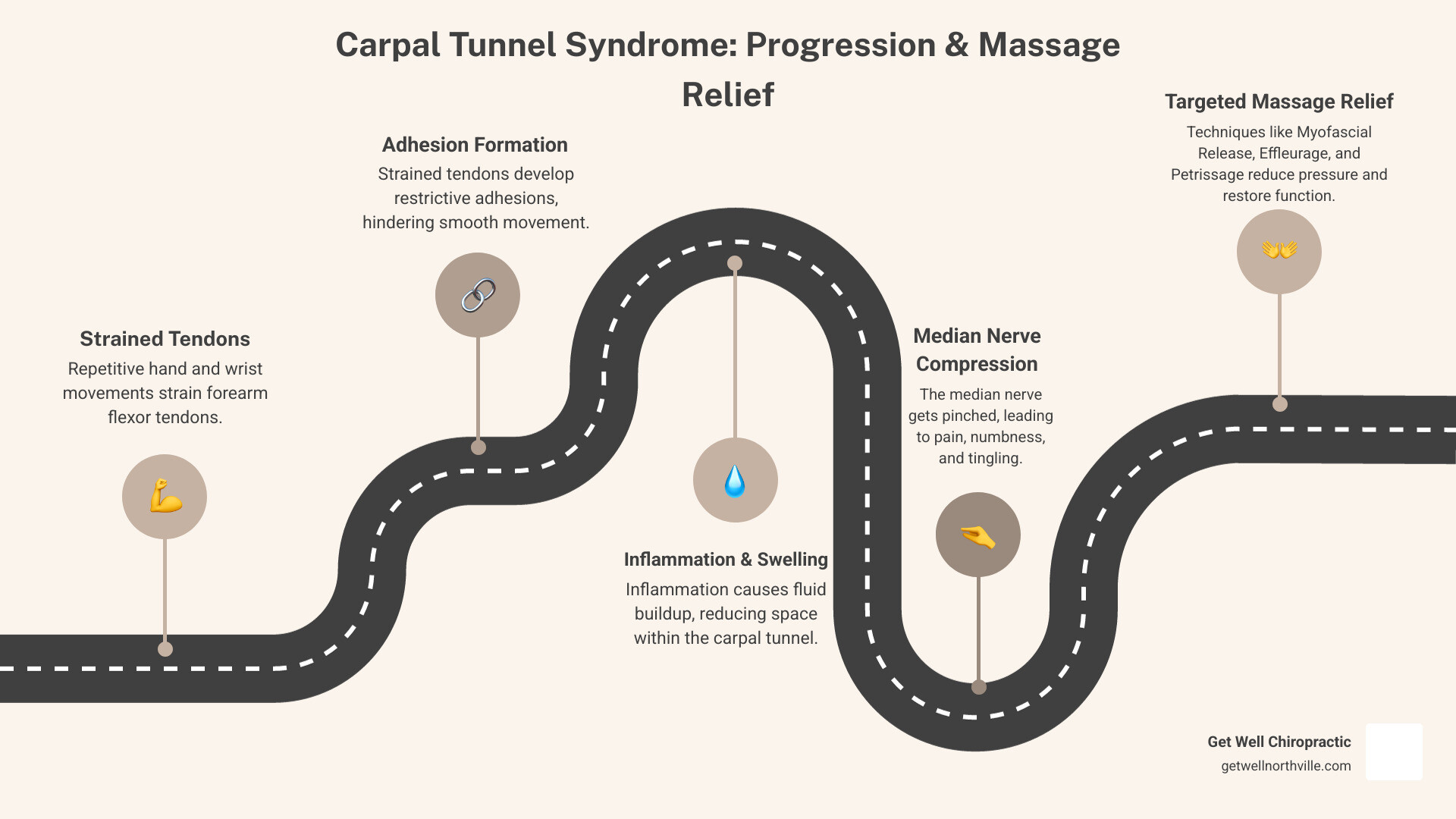
Crucially, carpal tunnel massage addresses the cause, not just the symptoms. Your discomfort stems from strained forearm tendons that develop adhesions, causing inflammation and fluid buildup that crushes the median nerve. Massage therapy uses techniques like myofascial release to break up these adhesions, drain excess fluid, and restore normal tendon function.
This guide will show you how carpal tunnel massage works, the most effective techniques, and how to combine it with other therapies for lasting relief. You’ll find practical, evidence-based solutions for both professional treatment and self-massage.
Understanding Carpal Tunnel Syndrome
Carpal tunnel syndrome (CTS) is a condition where the median nerve, which runs from your forearm into your hand, gets pinched at the wrist. The carpal tunnel is a narrow passageway containing this nerve and several finger tendons. When these tendons become inflamed or swollen, they take up more space and put pressure on the median nerve.
Common Symptoms and Causes
Symptoms usually develop gradually and often worsen at night. They can include:
- Numbness and tingling: Often in the thumb, index, middle, and ring fingers, feeling like “pins and needles.”
- Pain: Localized in the hand and wrist or extending up the forearm, sometimes with a burning sensation.
- Weakness: Reduced grip strength, clumsiness, or difficulty holding objects. An electric shock sensation is also possible.
Median nerve compression is often caused by a combination of factors:
- Repetitive hand movements: Typing, using a mouse, or operating tools can strain forearm tendons.
- Wrist anatomy: Some people have naturally smaller carpal tunnels.
- Health conditions: Diabetes, rheumatoid arthritis, thyroid issues, and obesity are risk factors.
- Fluid retention: Common during pregnancy, it can cause swelling and symptoms.
- Wrist injuries: Fractures or dislocations can alter the carpal tunnel and compress the nerve.
The median nerve provides sensation to the thumb, index, middle, and part of the ring finger, and also controls some thumb muscles. Its compression is what leads to the noticeable discomfort and loss of function associated with CTS.
The Science Behind Carpal Tunnel Massage: How It Works
Carpal tunnel massage isn’t just about relaxation; it’s a science-based therapy that provides relief by targeting the root of the problem.
CTS often stems from the forearm flexor tendons. Repetitive stress causes these tendons to develop adhesions—sticky spots that restrict movement and cause inflammation. This results in swelling within the wrist joint, which compresses the nearby median nerve.
How Massage Helps
Carpal tunnel massage works by directly addressing these underlying issues:
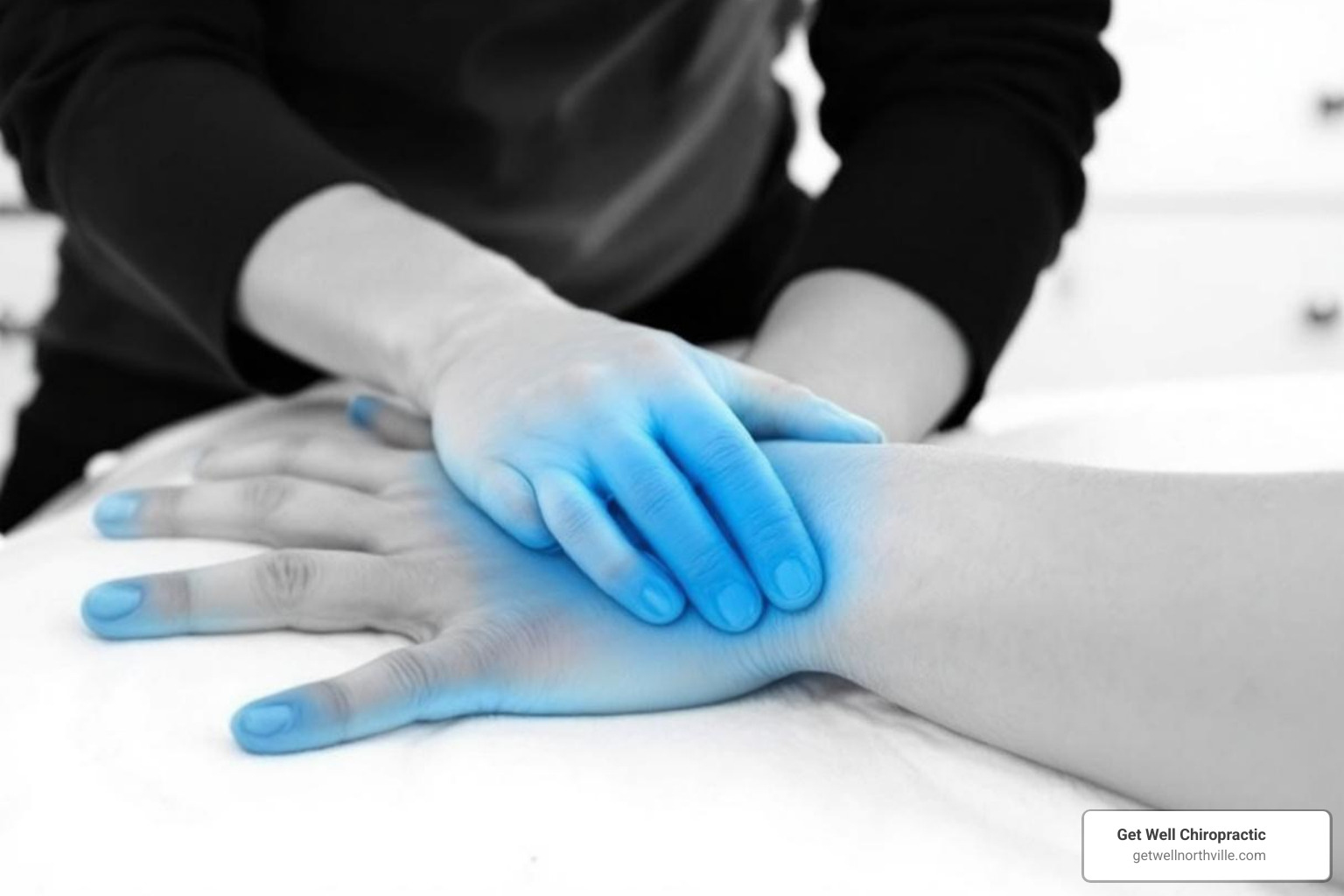
- Reduces Pressure: Massage loosens tight forearm and wrist muscles, creating more space in the carpal tunnel to relieve pressure on the median nerve.
- Improves Circulation: Increased blood flow delivers healing oxygen and nutrients while removing inflammatory waste products.
- Releases Tension: Targeted massage relaxes and lengthens chronically tight forearm and hand muscles that contribute to compression.
- Breaks Down Adhesions: Techniques like myofascial release break up adhesions and restrictions between tendons, allowing them to glide freely and addressing the root cause of the problem.
- Drains Excess Fluid: Massage techniques like effleurage help drain inflammatory fluid from the wrist, further reducing nerve pressure.
At Get Well Chiropractic in Northville, MI, our massage therapists are experts in these techniques. We understand the key differences between deep tissue massage and regular massage and how to apply them for maximum benefit.
Scientific Evidence
The effectiveness of massage for CTS is backed by research. A 2022 systematic review found that manual therapy, including massage, effectively reduced pain and improved function. Furthermore, a 2013 trial showed that 30-minute massages twice a week for six weeks significantly reduced symptoms and improved wrist function. This evidence supports carpal tunnel massage as a legitimate and effective non-surgical treatment option.
Effective Massage Techniques for Carpal Tunnel Relief
For carpal tunnel massage, specific techniques are needed for optimal relief. Our therapists at Get Well Chiropractic in Northville, MI, are skilled in these methods.
Myofascial Release
This is a cornerstone technique that focuses on the fascia—the connective tissue surrounding muscles—where adhesions form. It uses sustained pressure and stretching to release these restrictions. Key techniques include:
- Effleurage (Gliding Strokes): Light, flowing strokes to warm up tissues and increase circulation.
- Petrissage (Kneading): Deeper kneading and squeezing of muscles to improve flexibility and release tension.
- Friction Techniques: Targeted pressure with fingertips or thumbs to break down adhesions around the carpal tunnel.
- Shaking Movements: Gentle shaking of the hand and wrist to alleviate pain and loosen tight muscles.
Trigger Point Therapy
Trigger points are tight knots in muscles that can cause referred pain. For CTS, these often form in the forearm. Therapists apply firm, sustained pressure to these points to release tension and reduce pain.
What to Avoid
While massage is generally safe, it’s crucial to avoid:
- Excessive Pressure on the Median Nerve: Direct, intense pressure on the nerve can worsen symptoms. A skilled therapist works around the nerve.
- Vibrating Massagers: Never use a vibration massager for CTS. Vibrating tools can cause a similar condition and worsen symptoms.
- Improper Techniques: Self-applying complex techniques like myofascial release can be ineffective or harmful. Professional guidance is crucial.
Step-by-Step Guide to Self-Massage for Carpal Tunnel
While professional massage is best, you can perform simple self-massage at home to manage daily discomfort.
- Warm-up Strokes (Effleurage): Use gentle, broad strokes from your elbow down to your wrist and hand for 30 seconds to warm the area.
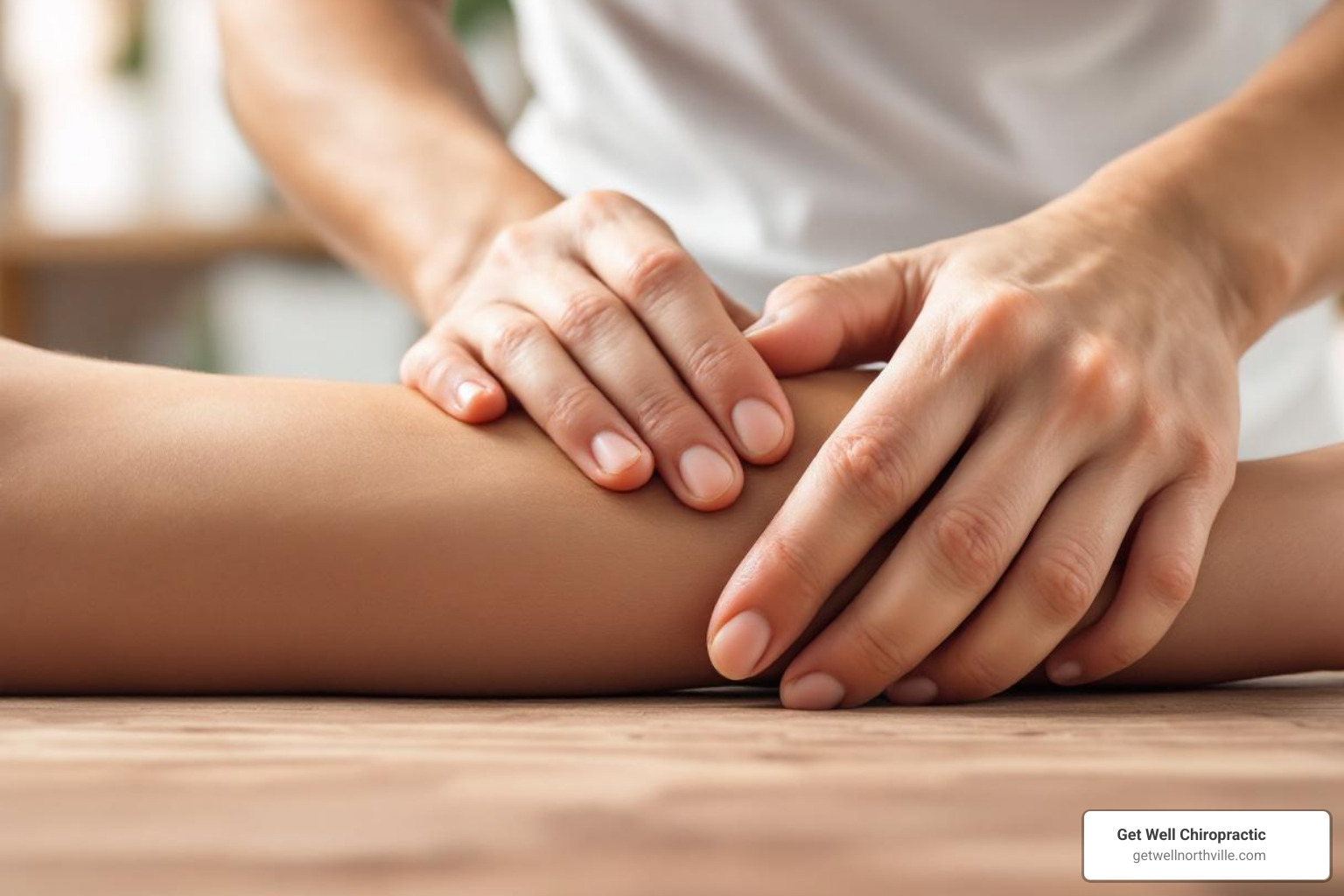
- Forearm Massage (Petrissage): With your opposite thumb and fingers, gently knead your forearm muscles, focusing on tender spots but avoiding deep pressure on the wrist. Continue for 1-2 minutes.
- Palm Massage: Use your thumb to apply gentle, circular pressure to the fleshy part of your palm below your thumb.
- Wrist Massage: Gently pinch and roll the skin around your wrist, staying away from the center where the nerve runs.
- Gentle Stretching: Finish with gentle wrist and finger stretches.
For deeper treatment, professional intervention is recommended. You can learn more about effective massage techniques for pain relief today.
What to Expect from a Professional Carpal Tunnel Massage
At Get Well Chiropractic in Northville, MI, a professional massage includes:
- Initial Assessment: A thorough review of your symptoms, medical history, and daily activities.
- Customized Treatment Plan: We create a personalized plan, as there is no one-size-fits-all approach to CTS.
- Focused Session: The session focuses on the hand, wrist, forearm, and even the shoulder and neck. We use techniques like myofascial release and trigger point therapy to release adhesions and reduce inflammation.
- Session Duration: Sessions typically last 30 to 60 minutes.
- Post-Session Advice: We provide advice on self-care, stretches, and ergonomics to prolong benefits.
Our goal is to provide lasting relief and empower you to maintain your hand health using our unique massage therapy approaches for pain management.
Complementary Exercises and Self-Care
Combining carpal tunnel massage with specific exercises and self-care practices can significantly improve your results and provide more lasting relief.
Nerve-Gliding Exercises
These exercises help the median nerve move more freely within the carpal tunnel.
- Start with your hand straight, fingers together.
- Bend your wrist and fingers slightly.
- Extend your wrist and fingers, keeping them together.
- Extend your wrist and fingers, then bend your thumb away from your palm.
- Extend your wrist and fingers, then bend your thumb away from your palm and turn your palm up.
- Extend your wrist and fingers, bend your thumb away from your palm, turn your palm up, and gently stretch your thumb back with your other hand.
Hold each position for five seconds. Perform five sets, four times daily.
Tendon-Gliding Exercises
These improve tendon flexibility, which can reduce pressure on the median nerve.
- Start with your hand straight, fingers extended.
- Make a hook fist (bend only the tips of your fingers).
- Make a flat fist (bend your fingers so they touch your palm).
- Make a full fist (clench your hand tightly).
- Return to fingers extended.
Hold each position for five seconds. Perform five sets, four times daily.
Wrist Flexion and Extension Stretches
These improve wrist and muscle flexibility.
- Wrist Extension: Straighten your arm, palm down. Lift your wrist so fingers point up. Gently pull your palm back. Hold for 15 seconds. Repeat five times, four times daily.
- Wrist Flexion: Straighten your arm, palm up. Bend your wrist down so fingers point down. Gently pull the back of your hand toward you. Hold for 15 seconds. Repeat five times, four times daily.
Stop any exercise if you feel significant pain. Our team at Get Well Chiropractic can guide you on exercises and explain how deep tissue massage enhances muscle recovery for your overall CTS recovery.
Ergonomic Adjustments
Small changes to your workspace can reduce wrist strain:
- Keyboard and Mouse Placement: Keep your wrists straight and neutral.
- Chair and Desk Height: Adjust so your forearms are parallel to the floor.
- Wrist Support: Use rests that support the heel of your hand, not the wrist.
Wrist Splinting
Wearing a wrist splint, especially at night, keeps your wrist in a neutral position, preventing pressure on the median nerve. It’s often recommended as a first-line treatment.
Taking Breaks and Lifestyle Adjustments
- Frequent Breaks: Take short breaks every 30-60 minutes to stretch.
- Maintain a Healthy Weight: Obesity is a risk factor for CTS.
- Avoid Sleeping on Your Hands: This puts prolonged pressure on your wrists.
- Ice/Warmth: Use ice packs for swelling or warm compresses for stiffness.
Integrating these strategies with regular carpal tunnel massage creates a powerful, holistic approach to managing your symptoms.
Professional Guidance and Best Practices
Navigating carpal tunnel syndrome can be overwhelming. Knowing when to seek professional help and how to integrate therapies like carpal tunnel massage is crucial for relief.
When to See a Doctor
CTS is a progressive condition that can lead to permanent nerve damage if untreated. Contact a doctor if you experience:
- Progressive Symptoms: Numbness, tingling, or pain is worsening or more frequent.
- Persistent Numbness: Constant numbness or tingling that doesn’t go away.
- Loss of Grip Strength: Difficulty holding objects or a noticeably weaker grip.
- Pain Extending Up the Arm: Pain radiating beyond the wrist into the forearm or shoulder.
- Symptoms Lasting Over Six Weeks: Symptoms persist despite self-care.
- Worsening Symptoms with Massage: Stop self-massage if it worsens symptoms and see a professional.
A proper diagnosis is essential to rule out other conditions.
Combining Therapies
While massage can be effective alone for mild symptoms, it works best when combined with other therapies. Major health organizations often recommend non-surgical options like massage before considering surgery. At Get Well Chiropractic in Northville, MI, we advocate for a comprehensive approach that may include chiropractic care, physical therapy, wrist splinting, and ergonomic adjustments. This integrated approach maximizes your chances of long-term relief and is a great alternative when comparing massage therapy techniques versus medication for pain.
Recommended Frequency
The frequency of carpal tunnel massage depends on your symptoms.
- Initial Phase: For moderate to severe symptoms, two to three sessions per week may be needed. A 2013 trial showed improvement with twice-weekly sessions for six weeks.
- Maintenance Phase: As symptoms improve, frequency can be reduced to weekly or bi-weekly for maintenance.
- Consistency is Key: Daily self-care combined with regular professional sessions yields the best results.
Potential Risks
While generally safe, massage carries rare risks. Improper or aggressive massage can cause nerve injury or worsen symptoms, highlighting the need for a qualified therapist. Certain conditions (acute inflammation, recent fractures, blood clotting disorders) may require modified techniques, so always discuss your full medical history with your therapist.
Frequently Asked Questions about Carpal Tunnel Massage
Here are answers to common questions about carpal tunnel massage.
Can massage make carpal tunnel worse?
While generally safe, improper or overly aggressive massage can, in rare cases, cause nerve injury and worsen symptoms. This is why it’s crucial to seek a qualified professional who understands the wrist’s anatomy and uses proper techniques without applying excessive pressure directly on the nerve.
How long does it take for massage to help carpal tunnel?
The timeline for relief varies. Mild symptoms may improve within 2-4 weeks, while moderate cases might take 4-6 weeks of consistent therapy. A 2013 study showed positive results after six weeks of twice-weekly sessions. Combining massage with exercises and ergonomic changes often speeds up recovery. Patience and consistency are key.
Is deep tissue massage good for carpal tunnel?
Yes, deep tissue massage from a qualified therapist can be very beneficial. It is excellent for breaking down the fibrous adhesions around the forearm tendons, which are a primary cause of nerve compression. It also releases chronic tension in the forearm, shoulders, and neck, improving blood flow and reducing strain. A skilled therapist is essential to ensure the techniques are applied safely. You can discover the astonishing benefits of deep tissue massage to learn more.
Find Lasting Relief and Restore Your Hands
Living with the pain, numbness, and tingling of carpal tunnel syndrome can be debilitating, affecting your daily life and overall well-being. But as we’ve explored, carpal tunnel massage offers a powerful, non-invasive path to relief. It’s a treatment that goes beyond simply masking symptoms, working to address the root causes of nerve compression by breaking down adhesions, reducing inflammation, and improving circulation.
We firmly believe in a holistic approach to your health. By combining professional carpal tunnel massage with targeted exercises, ergonomic adjustments, and personalized self-care, you can regain comfort, improve hand function, and restore your quality of life.
At Get Well Chiropractic in Northville, MI, our expert team is dedicated to providing comfortable, honest, and compassionate care focused on natural healing and long-term wellness. We’re here to help you understand your body, find the right balance of therapies, and guide you every step of the way.
Don’t let carpal tunnel syndrome hold you back any longer. Take the first step towards a pain-free future.
Relax, Heal, and Restore Naturally with professional massage therapy
